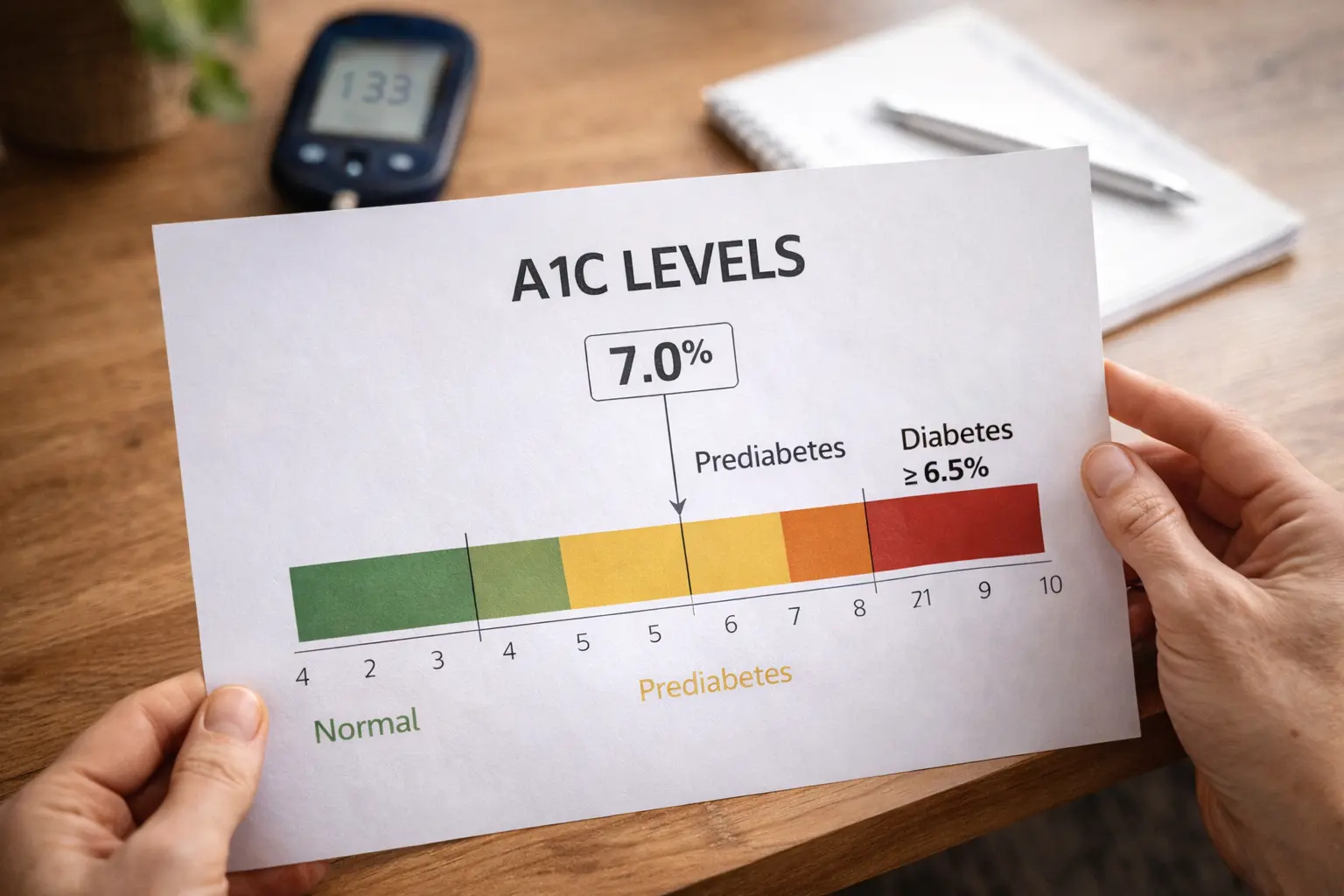
You check your A1C levels chart and the number stares back at you, higher than last time, and suddenly you’re wondering if you’ve lost control of your health.
Understanding A1C levels
Your A1C level represents your average blood sugar over the past 2 to 3 months, measured as a percentage. Think of it as your blood sugar report card. When you eat a meal with refined carbohydrates, your blood sugar spikes. When you exercise or manage stress, it drops. Your A1C captures all these ups and downs into one number. A woman in her 40s might notice her A1C creeping up after years of skipping breakfast or relying on afternoon coffee and pastries. That same woman could see improvement within weeks of switching to whole grains and adding a 20-minute walk after dinner. The higher your A1C, the greater your risk of complications like nerve damage, vision problems, and heart disease. Knowing this number gives you power. It tells you exactly where you stand and what direction you need to move.
- Regularly monitor your A1C levels to track changes over time.
- Consult your healthcare provider to understand your ideal A1C target.
- Maintain a healthy lifestyle through balanced diet, regular exercise, and adequate sleep.
Interpreting A1C range
The A1C scale is straightforward once you know the numbers. Below 5.7% means your blood sugar control is healthy and you are not at risk for diabetes. Between 5.7% and 6.4% signals prediabetes, a warning that changes are needed now before progression occurs. At 6.5% or higher, a diabetes diagnosis typically follows. Consider Sarah, a 35-year-old woman whose A1C came back at 6.2%. She was shocked because she felt fine. But her doctor explained that prediabetes often has no symptoms. Sarah had time to act. She cut sugary drinks, added vegetables to every meal, and started walking three times weekly. Six months later, her A1C dropped to 5.9%. She caught it early. Many women don’t. They wait until symptoms appear or an A1C reaches 7% or 8%. By then, damage may have already started. Knowing these ranges helps you recognize where you stand and understand the urgency of your next steps.
📘 Fix your day in under 2 minuteschoose where to begin:
Lifestyle changes for A1C control
Lifestyle changes are your most powerful tool for managing A1C. Food choices matter enormously. Swap white bread for whole grain, choose grilled chicken over fried, and fill half your plate with non-starchy vegetables like broccoli, spinach, and bell peppers. Movement matters too. A 30-minute walk after meals can lower blood sugar more effectively than medication alone for some women. Sleep is often overlooked but critical. When you sleep poorly, your body releases stress hormones that raise blood sugar. Aim for 7 to 9 hours nightly. Stress management works similarly. Chronic stress elevates cortisol, which pushes blood sugar higher. Try deep breathing, yoga, or meditation for 10 minutes daily. A woman named Maria started with one change: she replaced her afternoon soda with sparkling water. Within weeks, she had more energy. She then added a 15-minute evening walk. Her A1C dropped 0.3% in three months. Small changes compound. You don’t need perfection. You need consistency.
Monitoring your progress
Testing your A1C every three months gives you clear feedback on whether your efforts are working. Schedule these tests at the same time each quarter so you can compare apples to apples. Keep a simple log of your results with the date and your A1C number. Watch for trends. Is it dropping steadily? Staying flat? Creeping up? Your healthcare provider can help you interpret these patterns. Between A1C tests, you can use a home glucose meter to check your blood sugar before and after meals. This shows you which foods spike your levels. Many women are surprised to learn that their favorite breakfast cereal raises blood sugar more than a piece of whole wheat toast with peanut butter. This real-time feedback helps you make smarter choices. If your A1C isn’t improving after three months of effort, talk to your doctor. You might need medication support or adjustments to your plan. Progress isn’t always linear, but tracking it keeps you accountable and informed.
Seeking support and education
Managing A1C alone is harder than managing it with help. Diabetes education classes teach you carbohydrate counting, meal planning, and how to read nutrition labels. Many are free through hospitals or community health centers. Support groups connect you with other women facing the same challenges. You hear their stories, share yours, and realize you’re not alone in this struggle. Online communities offer 24/7 connection. A registered dietitian can create a meal plan tailored to your preferences and lifestyle, not a generic plan that doesn’t fit. Your primary care doctor is your partner, but so is a diabetes educator, a therapist if stress or anxiety is high, and your family if they support your efforts. When your spouse understands why you’re choosing grilled fish over takeout pizza, they’re more likely to join you. When your daughter sees you prioritizing your health, she learns to do the same. This isn’t just about you. It’s about building a life where managing your A1C feels normal and supported.
Your A1C level tells a story about your blood sugar control, and you have the power to rewrite that story. Understanding what your A1C means, learning which lifestyle changes work for you, monitoring your progress regularly, and building a support system around you creates the conditions for lasting change. Start with one small shift today. Test again in three months. Watch your numbers improve. That’s how women master their A1C levels.
What is a healthy A1C level for women?
For women, a healthy A1C level is typically below 5.7%. A level between 5.7% and 6.4% may indicate prediabetes, while a level of 6.5% or higher suggests diabetes.
How often should I get my A1C levels tested?
It is recommended to have your A1C levels tested at least twice a year if you have stable blood sugar control. If you are adjusting your treatment plan or experiencing fluctuations in your levels, more frequent testing may be necessary.
Others also read:
Disclaimer: This article is for informational purposes only and is not a substitute for professional medical advice. Always consult a healthcare professional for personal guidance.
This guide has been prepared and reviewed by the GlobalHealthBeacon editorial team and reflects current medical research as of 2026. It provides structured, evidence-based information to support informed health decisions.

