Your A1C results just came back and you have no idea what those numbers actually mean for your body, your future, or whether you should be worried right now.
Interpreting your A1C levels
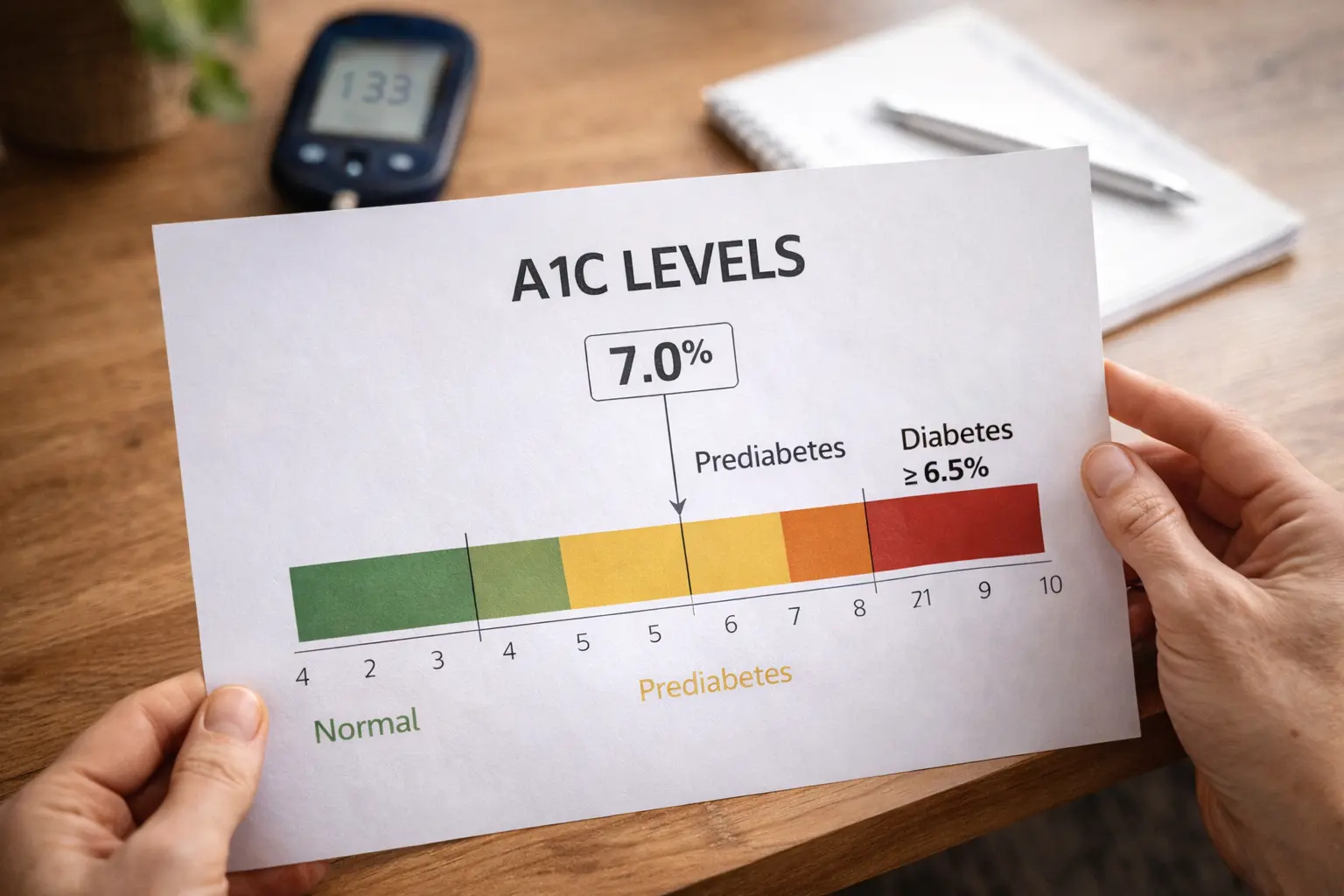
Your A1C levels tell a story about your blood sugar patterns over the past 2 to 3 months. Think of it as a report card for your glucose management. When you get your results back, the A1C levels chart becomes your decoder. Below 5.7% means your body is handling sugar the way it should. Between 5.7% and 6.4% is the warning zone, often called prediabetes, where your body is starting to struggle with insulin. At 6.5% or higher, you’re looking at a diabetes diagnosis. Understanding where you fall on this spectrum helps you see whether you need to make changes now or if you’re already in a healthy range. Many young adults are surprised to learn they fall into the prediabetes category during routine checkups, which is actually good news because it means you can still reverse the trend with lifestyle adjustments before it becomes diabetes.
- A1C below 5.7% is considered normal.
- A1C between 5.7% and 6.4% indicates prediabetes.
- A1C of 6.5% or higher suggests diabetes.
Monitoring your A1C regularly
Checking your A1C once and forgetting about it won’t help you. Regular monitoring is how you catch trends before they become problems. Most healthcare providers recommend testing at least twice a year if you’re in a healthy range, but if you have prediabetes or diabetes, quarterly checks make more sense. Set a calendar reminder so you don’t accidentally skip appointments. When you get your results, write them down with the date so you can see the pattern over time. Are your levels improving, staying stable, or creeping upward? This data tells you whether your current lifestyle is working or if you need to adjust your approach. Bring your results to every doctor visit and discuss what they mean for your specific situation. Your provider can spot patterns you might miss and help you understand whether medication, diet changes, or increased exercise is the right next move for your unique circumstances.
📘 Fix your day in under 2 minuteschoose where to begin:
Lifestyle changes for better A1C control
You don’t need a complete life overhaul to improve your A1C levels. Small, consistent changes add up faster than you’d expect. Start with movement: aim for 150 minutes of moderate exercise per week, which could mean three 50-minute walks, gym sessions, or even dancing at home. Next, look at what you’re eating. You don’t have to cut out carbs entirely, but choosing whole grains over refined ones, eating more vegetables, and watching portion sizes makes a real difference. Protein and healthy fats help slow down how quickly your body absorbs sugar, so adding those to meals helps stabilize your levels. Sleep matters too, probably more than you realize. When you’re sleep-deprived, your body becomes less efficient at managing glucose. Aim for 7 to 9 hours nightly. Stress also affects your A1C, so finding ways to manage it, whether through meditation, hobbies, or talking to friends, supports your overall metabolic health. Many young adults see measurable improvements in their A1C within 3 months of making these changes consistently.
Consulting healthcare professionals
Your doctor isn’t just there to deliver test results. They’re your partner in understanding what your A1C levels mean for your health and what to do about them. A good healthcare provider will ask about your eating habits, exercise routine, stress levels, and family history to give you personalized advice. If lifestyle changes alone aren’t bringing your numbers down, medication might be the right tool. There’s no shame in that. Some people’s bodies simply need pharmaceutical support alongside lifestyle changes. Registered dietitians are also incredibly valuable. They can create a meal plan that actually fits your life, your budget, and your taste preferences, not just hand you generic advice. Endocrinologists specialize in blood sugar management if you need expert-level guidance. Don’t hesitate to ask questions or ask for a second opinion if something doesn’t feel right. Your healthcare team should explain things in ways you understand and respect your goals for managing your health.
Staying informed and empowered
Knowledge about your A1C levels and what they mean is power. Understanding how different foods, activities, stress, and sleep affect your glucose helps you make intentional choices instead of guessing. Follow reputable sources like the American Diabetes Association or your healthcare provider’s resources for the latest research. Join online communities or local groups where young adults talk about managing their blood sugar. Hearing how others navigate similar situations normalizes the experience and gives you practical ideas. Track your own data if you can. Some people use continuous glucose monitors or apps to see real-time patterns. Others just keep a simple food and exercise log. The act of paying attention changes behavior. You start noticing that certain meals spike your levels or that walking after dinner helps stabilize them. This self-awareness is what transforms A1C management from something that feels like a burden into something that feels like taking care of yourself.
Understanding your A1C levels through the A1C levels chart is crucial for monitoring your blood sugar effectively and making informed health decisions.
How often should I check my A1C levels?
It is recommended to check your A1C levels at least twice a year if you are in a healthy range. If you have prediabetes or diabetes, quarterly testing is typically better. Your healthcare provider will give you a specific schedule based on your individual health status and how well your levels are controlled.
What should I do if my A1C levels are out of range?
If your A1C levels are elevated, consult your healthcare provider to discuss lifestyle changes, medication adjustments, or other interventions that can help bring your levels back in the target range. Start with diet and exercise modifications, but don’t hesitate to ask about medication if your provider recommends it.
Others also read:
Disclaimer: This article is for informational purposes only and is not a substitute for professional medical advice. Always consult a healthcare professional for personal guidance.
This guide has been prepared and reviewed by the GlobalHealthBeacon editorial team and reflects current medical research as of 2026. It provides structured, evidence-based information to support informed health decisions.

