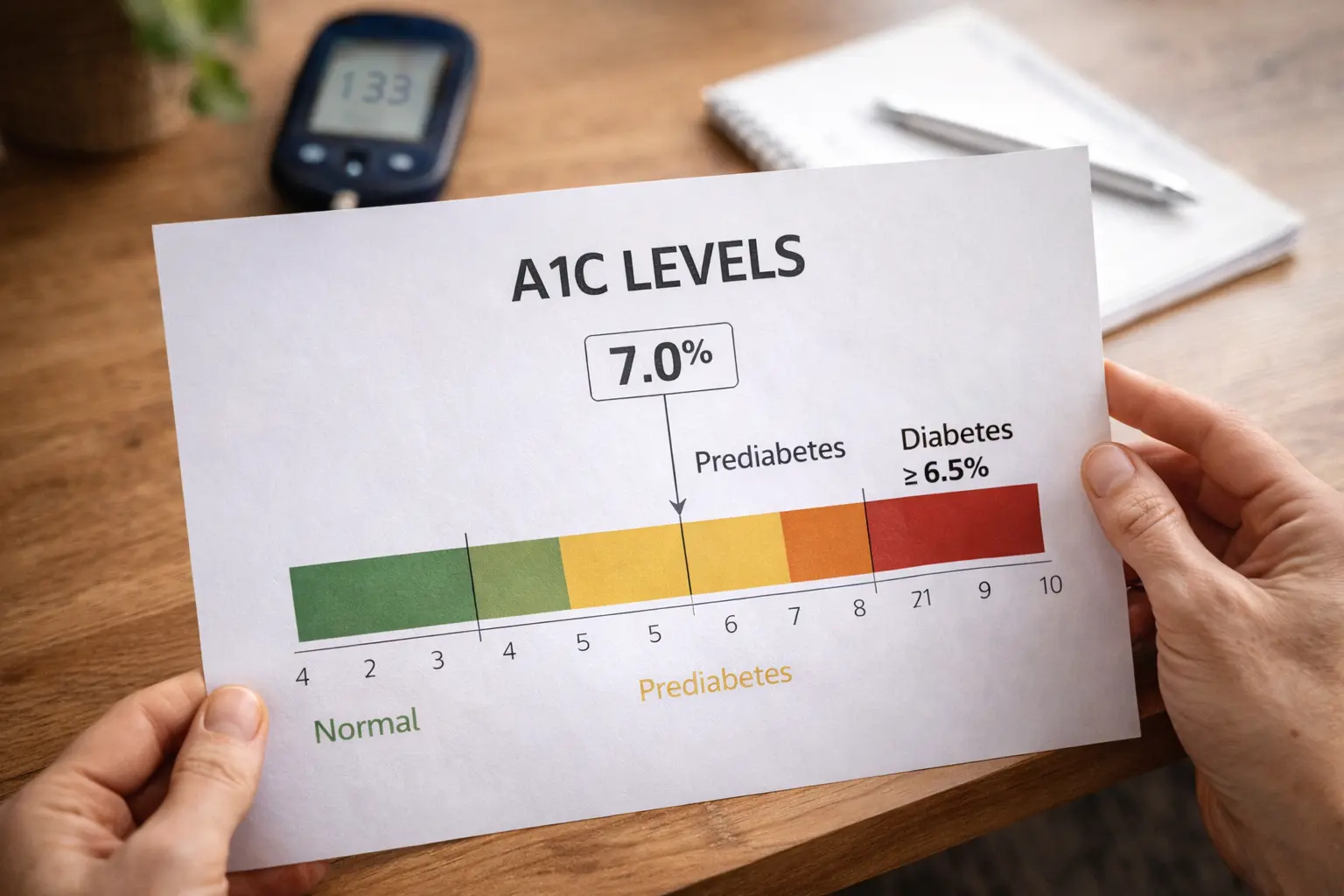
Your A1C levels chart just came back and the numbers feel like a wake-up call, but here’s what you actually need to know about what those percentages really mean for your body and your future.
Understanding A1C levels
A1C levels measure the average blood sugar control over the past 2 to 3 months by tracking how much glucose has attached to your hemoglobin, the protein in red blood cells that carries oxygen. Think of it as a three-month snapshot rather than a single moment in time. Normal A1C levels sit below 5.7%, which means your body is managing glucose efficiently. When A1C rises to between 5.7% and 6.4%, it signals prediabetes, a stage where your body is beginning to struggle with glucose regulation but intervention can still reverse the trend. At 6.5% or higher, a diabetes diagnosis typically follows. For seniors, understanding this measurement matters because your body’s ability to process glucose changes with age, and catching shifts early gives you more control over what happens next.
Impact of elevated A1C on health
High A1C levels don’t just sit quietly in your bloodstream. Over months and years, persistently elevated glucose damages the delicate lining of blood vessels and nerves throughout your body. This can lead to heart disease, where narrowed arteries restrict blood flow to your heart. Nerve damage, called neuropathy, often starts in the feet and creates numbness or tingling sensations that make walking uncomfortable. Kidney problems develop when high glucose damages the filtering units that clean your blood, potentially leading to dialysis. Vision issues emerge as glucose damages the tiny blood vessels in your eyes, sometimes causing blurred sight or blindness. For seniors, these complications aren’t theoretical. They’re the difference between maintaining independence and needing daily assistance. The good news is that understanding these risks isn’t meant to frighten you but to motivate action, because managing A1C levels now directly prevents these outcomes.
Managing A1C levels
Managing A1C requires a three-part approach that works together. First, diet matters profoundly. Instead of thinking about restriction, focus on abundance: fill your plate with colorful vegetables like spinach and bell peppers, choose whole grains like oatmeal and brown rice instead of white bread, include lean proteins like chicken or fish, and add healthy fats from nuts and olive oil. A practical example: swap your morning toast for steel-cut oats topped with berries and almonds, which provides sustained energy without blood sugar spikes. Second, movement is medicine. You don’t need intense workouts. A 30-minute walk after meals, gardening, or swimming three times weekly helps your muscles absorb glucose more efficiently. Third, monitoring creates awareness. Checking your blood sugar regularly, whether through finger pricks or continuous monitors, shows you which foods and activities affect your numbers. One senior discovered that her evening walks after dinner dropped her A1C by 0.8% in three months simply by being consistent. Track patterns, not just numbers, and you’ll understand your unique body.
- Modify your diet to include colorful vegetables, whole grains, lean proteins, and healthy fats while reducing refined sugars and processed foods.
- Incorporate movement into your daily routine through walking, swimming, gardening, or activities you genuinely enjoy for at least 150 minutes weekly.
- Regularly monitor your blood sugar levels and keep a simple log to identify patterns between food, activity, stress, and your readings.
🔬 Science-backed benefits in 2 minuteschoose where to begin:
Lifetime implications of A1C levels
Chronic high A1C levels act like a slow-moving storm that builds over years. The damage compounds quietly: blood vessel walls weaken, nerves fray, organs strain under the constant assault of excess glucose. For seniors, this matters because you have decades of life ahead, and the quality of those years depends heavily on decisions made today. A 65-year-old with an A1C of 8% who takes action now might prevent the kidney disease that would have emerged at 75. Another who ignores the warning might face amputation, blindness, or dialysis by 80. The research is clear: every 1% reduction in A1C cuts your risk of complications significantly. This isn’t about perfection. It’s about trajectory. Small, consistent changes compound into dramatically different futures. Seniors who view their A1C as a personal metric to improve, rather than a number to fear, tend to stay more engaged and achieve better outcomes over time.
Consulting healthcare professionals
Your doctor isn’t just there to scold you about numbers. A good healthcare provider helps you understand your individual A1C target, which might differ from standard guidelines based on your age, other health conditions, and life expectancy. Some seniors with multiple complications benefit from a target of 7% to 8%, while others aim lower. Your provider can also refer you to a registered dietitian who creates meal plans you’ll actually follow, not generic advice that feels impossible. Endocrinologists specialize in glucose management and can adjust medications if lifestyle changes alone aren’t enough. Diabetes educators teach practical skills like reading labels and managing sick days. Regular check-ins, ideally every three months when you’re making changes, keep you accountable and allow adjustments before small problems become big ones. Think of your healthcare team as your personal coaching staff, not judges. The best outcomes happen when you work together.
Embracing a healthier lifestyle
Lifestyle change isn’t about willpower or deprivation. It’s about building new habits that feel natural over time. Start small: add one vegetable to dinner, take a 10-minute walk, drink water instead of soda. After two weeks, these feel routine. Then add another change. Stress management matters too because cortisol, your stress hormone, raises blood sugar. Seniors who practice deep breathing, meditation, or simply spend time with loved ones often see A1C improvements without diet changes alone. Sleep quality affects glucose regulation, so prioritizing seven to nine hours nightly helps. Social support accelerates progress. Joining a diabetes support group, walking with a friend, or cooking with family makes changes sustainable. One 72-year-old reduced her A1C from 7.8% to 6.9% by walking with her grandchildren three times weekly and swapping her afternoon candy habit for cheese and nuts. She didn’t feel deprived because she focused on what she gained: more energy, better sleep, and the ability to keep up with her family.
A1C levels serve as a crucial indicator of how well your body manages blood sugar over months, not just days. For seniors, understanding what your A1C number means and why it matters is the first step toward taking control. Elevated A1C levels increase risks of serious complications like heart disease, nerve damage, kidney problems, and vision loss, but these outcomes are not inevitable. Managing A1C through balanced nutrition, regular movement, consistent monitoring, and strong partnerships with healthcare providers gives you real power over your health trajectory. The decisions you make today directly shape the quality of your life in the years ahead.
What are the ideal A1C levels for seniors?
Ideal A1C levels for most seniors are below 7%, though individual targets vary based on overall health, other conditions, and life expectancy. Some seniors benefit from slightly higher targets of 7% to 8% if they have multiple complications or limited life expectancy. Your healthcare provider will help determine your specific target based on your unique situation.
How often should seniors monitor their A1C levels?
Seniors with diabetes or prediabetes should monitor their A1C levels at least every three months, especially when making lifestyle changes or adjusting medications. More frequent monitoring every six to eight weeks helps track progress during the first few months of new habits. Once stable, some seniors monitor twice yearly, but your doctor will recommend the schedule that fits your situation.
Others also read:
Disclaimer: This article is for informational purposes only and is not a substitute for professional medical advice. Always consult a healthcare professional for personal guidance.
This article has been prepared and reviewed by the GlobalHealthBeacon editorial team and is based on current medical research and published scientific literature available in 2026. It provides structured, evidence-based information to support informed health decisions.

