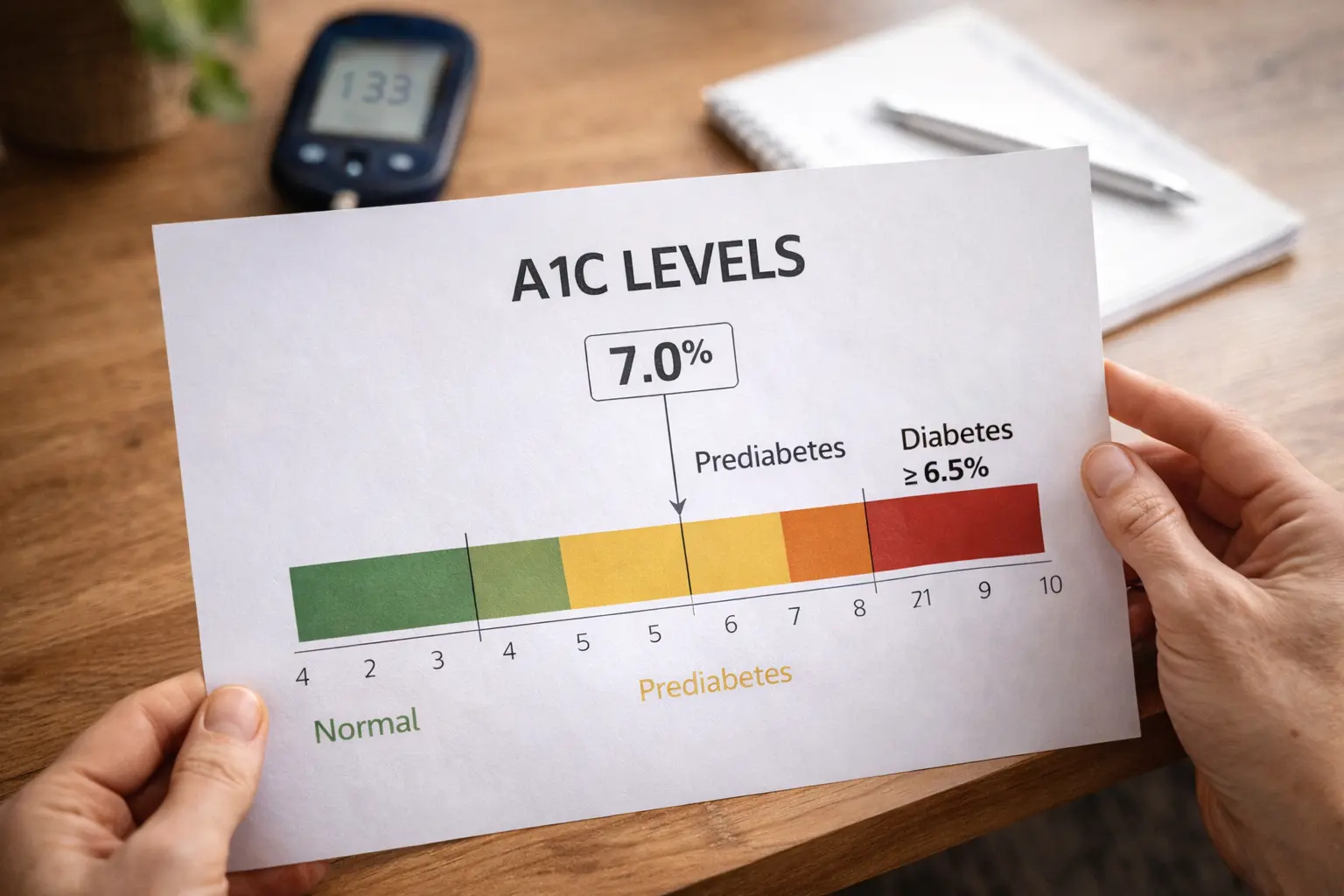
Your A1C test results just came back higher than expected, and now you’re staring at a number that feels like a wake-up call, wondering what it actually means and whether you can turn it around.
Understanding the A1C test
The A1C test measures your average blood sugar levels over the past 2 to 3 months, giving you a snapshot of how your body has been managing glucose. Think of it like a report card for your blood sugar control. When you eat a meal, your body breaks down carbohydrates into glucose, which enters your bloodstream. Your pancreas releases insulin to help cells absorb that glucose. If this process works smoothly, your blood sugar stays stable. The A1C test shows whether this has been happening consistently. For example, if you ate pizza one night and your blood sugar spiked, that single event contributes to your overall A1C. But so do your daily breakfast choices, afternoon snacks, and exercise habits. That’s why A1C is such a powerful tool. It doesn’t judge one bad day. It reflects the bigger picture of your lifestyle over months.
- Normal A1C levels are below 5.7%, while 5.7% to 6.4% indicates prediabetes, and 6.5% or higher suggests diabetes.
- A high A1C level increases the risk of diabetes complications such as heart disease, nerve damage, and kidney problems.
- Regular monitoring of your A1C levels can help you track your progress in managing diabetes.
Healthy eating for lower A1C
Your food choices directly impact your A1C, sometimes within weeks. Start by building meals around whole foods. A practical approach: fill half your plate with non-starchy vegetables like broccoli, spinach, or bell peppers. Add a quarter plate of lean protein such as chicken, fish, or beans. The final quarter goes to whole grains like brown rice or quinoa. This simple structure prevents blood sugar spikes. Avoid sugary beverages entirely. A single can of soda contains roughly 40 grams of sugar, which sends your blood glucose soaring. Swap it for water, unsweetened tea, or black coffee. Watch portion sizes with refined carbs like white bread and pasta. Instead of eliminating them, choose whole grain versions and eat smaller amounts. Common mistake: thinking you need to be perfect. You don’t. One cookie won’t ruin your A1C. Consistency over perfection wins every time.
📘 Fix your day in under 2 minuteschoose where to begin:
Stay active for better A1C
Exercise is one of the fastest ways to improve A1C because it makes your muscles more sensitive to insulin. When you move, your muscles pull glucose directly from your bloodstream without needing as much insulin. Aim for 150 minutes of moderate-intensity activity weekly. That sounds like a lot, but it breaks down to just 30 minutes, five days a week. Moderate intensity means you can talk but not sing during the activity. Brisk walking, cycling, swimming, or dancing all count. Add strength training twice weekly. Lifting weights or doing bodyweight exercises builds muscle, which is a glucose sink. The more muscle you have, the more glucose your body can absorb. A practical example: a 25-year-old who walks 30 minutes daily and does two weight sessions weekly could see A1C improvements within 8 to 12 weeks. The key is consistency. Even a 10-minute walk after meals helps stabilize blood sugar spikes.
Monitor blood sugar regularly
Regular monitoring reveals patterns you can’t see otherwise. Check your blood sugar as your healthcare provider recommends, typically before meals and two hours after eating. Keep a simple log or use a phone app. After a week, patterns emerge. You might notice your blood sugar spikes after breakfast but stays stable after lunch. Or that evening walks drop your levels significantly. These insights let you adjust your strategy. For instance, if you see a spike after oatmeal, try adding protein or fat to slow digestion. If evening walks help, schedule them regularly. Common mistake: checking once and assuming you know your pattern. Blood sugar varies based on stress, sleep, and activity. Track for at least two weeks to see the real picture. Some young adults use continuous glucose monitors, which track glucose every few minutes. This technology shows real-time trends and removes guesswork.
Consult with your healthcare team
Your doctor, diabetes educator, and nutritionist form your personal A1C support team. They create a plan tailored to your life, not a generic template. Your doctor monitors your overall health and may adjust medications. Your diabetes educator teaches you how to manage daily challenges. Your nutritionist designs meal plans that fit your schedule and preferences. A practical scenario: you’re a young adult who travels for work. A standard diet plan won’t work. Your nutritionist can teach you how to make smart choices at restaurants and airports. Your educator can show you how travel affects blood sugar. Your doctor can adjust medications if needed. Working together, they help you set realistic goals. Lowering A1C from 8% to 7% in three months is achievable. Lowering it to 5% in one month is not. Realistic goals keep you motivated and prevent burnout.
The A1C test is a key tool in managing diabetes, reflecting how well you control blood sugar levels. To lower your A1C fast, focus on healthy eating, regular exercise, monitoring blood sugar levels, and collaborating with your healthcare team.
How often should I have my A1C levels tested?
It’s typically recommended to have your A1C levels tested every 3 to 6 months, or more frequently if your levels are not well controlled.
Can A1C levels be lowered quickly?
While it’s essential to be patient and consistent, lifestyle changes like diet modifications and exercise can lead to significant improvements in your A1C levels over time.
Others also read:
Disclaimer: This article is for informational purposes only and is not a substitute for professional medical advice. Always consult a healthcare professional for personal guidance.
This guide has been prepared and reviewed by the GlobalHealthBeacon editorial team and reflects current medical research as of 2026. It provides structured, evidence-based information to support informed health decisions.
