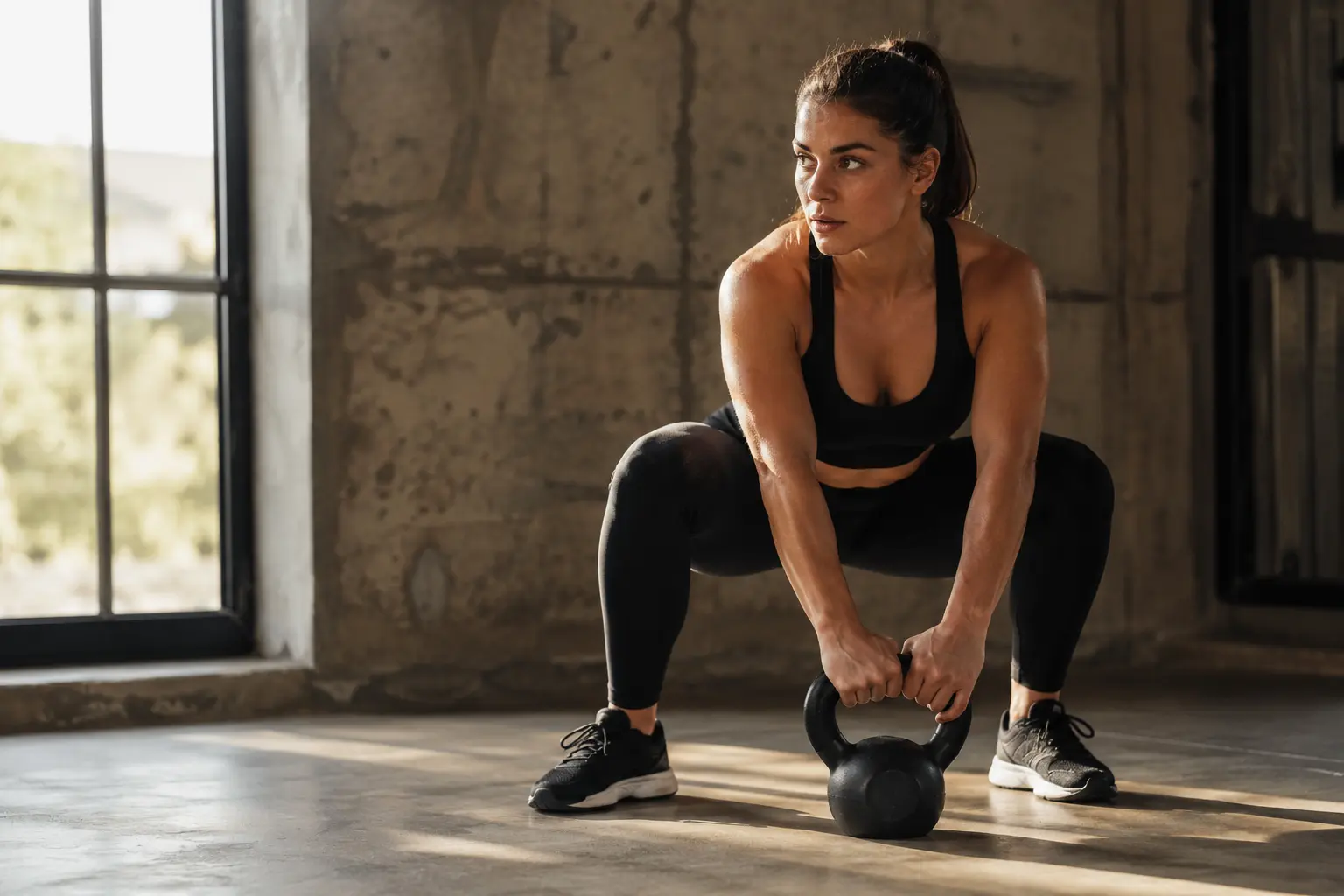
Your body feels stiff, your back aches after sitting all day, and climbing stairs leaves you winded, but functional strength training could be the game-changer that rewires how your muscles actually work in real life.
Understanding functional strength training
Functional strength training represents a departure from isolated muscle work toward movement patterns that mirror what your body does throughout daily life. When you pick up groceries, lift a grandchild, or rise from a chair, you’re engaging multiple muscle groups in coordinated sequences. This training method targets exactly those patterns. Rather than sitting on a machine that isolates your quadriceps, you perform a squat that engages your legs, core, glutes, and stabilizer muscles simultaneously. Consider Sarah, a 58-year-old woman who struggled with balance and feared falling. After six weeks of functional exercises like step-ups, lateral lunges, and single-leg stands, her proprioception improved dramatically. She could navigate uneven surfaces confidently. The science here is straightforward: your nervous system learns movement patterns, not just individual muscles. By practicing exercises that demand coordination across multiple joints and muscle groups, you train your body to move with greater efficiency, stability, and control in everyday situations.
Biological significance of strength training
When you engage in functional strength training, your muscles experience microscopic tears that trigger a cascade of biological responses. Your body releases growth factors and hormones like insulin-like growth factor and testosterone that signal muscle protein synthesis. Over time, this rebuilds muscle tissue stronger and denser than before. Women often worry about bone health as they age, and this is where strength training becomes particularly valuable. The mechanical stress placed on bones during resistance exercise stimulates osteoblasts, the cells responsible for building bone mineral density. Research consistently shows that women who strength train regularly have significantly higher bone density than sedentary peers, reducing fracture risk substantially. Additionally, functional strength training elevates your metabolic rate both during and after exercise through a process called excess post-exercise oxygen consumption. Your nervous system also adapts, improving neuromuscular coordination and firing patterns. These biological changes accumulate over weeks and months, creating measurable improvements in strength, endurance, and metabolic health that extend far beyond the gym.
Benefits of functional strength training
Improved posture emerges as one of the most noticeable benefits because functional training emphasizes core stability and proper alignment. When your deep abdominal muscles, back extensors, and stabilizer muscles strengthen, maintaining upright posture requires less effort. This reduces chronic back pain that plagues many women, especially those spending hours at desks. Enhanced mobility follows naturally because functional exercises take joints through their full range of motion under load. A woman who performs lunges, rotational exercises, and overhead movements experiences increased flexibility and joint resilience. She can bend, twist, and reach without restriction or discomfort. Increased energy levels represent another profound benefit that surprises many women. Strength training improves mitochondrial function and oxygen utilization, meaning your cells generate energy more efficiently. Women report feeling less fatigued throughout the day and sleeping more deeply at night. Beyond physical changes, functional strength training triggers endorphin release and provides a sense of accomplishment that elevates mood and confidence. The mental clarity that follows a workout session often lasts for hours, creating a positive feedback loop that motivates continued training.
- Start with bodyweight exercises to build a foundation of strength and learn proper movement patterns without external resistance.
- Incorporate resistance training using dumbbells, kettlebells, or resistance bands to progressively challenge your muscles and nervous system.
- Focus on proper form and technique by moving slowly, maintaining neutral spine alignment, and avoiding momentum or compensation patterns.
- Adjust your training routine every 3-4 weeks by changing exercise variations, increasing repetitions, adding weight, or reducing rest periods to continue challenging your muscles.
🔬 Science-backed benefits in 2 minuteschoose where to begin:
Nutritional support for strength training
Your muscles cannot rebuild and strengthen without proper nutritional support, making diet as important as the training itself. Lean proteins from sources like chicken, fish, Greek yogurt, and legumes provide amino acids that your body uses to repair muscle tissue damaged during exercise. Aim for protein at each meal to maintain steady amino acid availability throughout the day. Complex carbohydrates from whole grains, vegetables, and fruits fuel your workouts and replenish glycogen stores in muscles. Healthy fats from avocados, nuts, and olive oil support hormone production and reduce inflammation. Consider Margaret, a 62-year-old who combined functional strength training with a protein-rich diet emphasizing whole foods. Within three months, she noticed improved recovery between workouts and visible muscle definition. Hydration deserves equal attention because water facilitates nutrient transport, regulates body temperature during exercise, and supports muscle contraction. Most women need at least 8-10 glasses daily, more on training days. Timing matters too: eating a small meal with carbohydrates and protein 1-2 hours before training provides energy, while post-workout nutrition within 30-60 minutes supports recovery.
Incorporating functional training into your routine
Building a functional strength routine means selecting exercises that translate directly to daily activities. Squats strengthen your legs for climbing stairs and rising from chairs. Lunges improve single-leg stability for walking and stepping over obstacles. Planks and dead bugs build core strength that supports posture and protects your spine. Push-ups and rows strengthen your upper body for lifting and carrying. The beauty of functional training is its flexibility and adaptability. You can perform these exercises at home with minimal equipment, in a gym with full resources, or outdoors using natural objects. Start with 2-3 sessions weekly, allowing at least one rest day between workouts for recovery. Each session might include 5-6 exercises performed for 2-3 sets of 8-12 repetitions. As you progress over weeks and months, gradually increase intensity by adding weight, increasing repetitions, or reducing rest periods. A woman new to functional training might begin with assisted squats using a chair, then progress to bodyweight squats, then weighted squats with dumbbells. This progressive overload principle ensures continuous adaptation and improvement.
Safely progressing in functional strength training
Progression must balance challenge with safety to avoid injury and burnout. Common mistakes include advancing too quickly, sacrificing form for heavier weight, or training through pain signals. Your body communicates through discomfort, and learning to distinguish between productive muscle fatigue and warning pain is crucial. A fitness professional can assess your movement patterns, identify compensations or weaknesses, and design a program addressing your specific needs and goals. They teach proper technique that prevents injury and maximizes results. Rest and recovery are not laziness but essential components of strength building. During rest days, your body repairs muscle tissue and adapts to training stress. Sleep quality matters significantly because growth hormone peaks during deep sleep stages. Aim for 7-9 hours nightly. Overtraining leads to fatigue, increased injury risk, and diminished results. Listen to your body’s signals: persistent soreness, declining performance, or mood changes suggest you need additional recovery. A sustainable approach means training hard during workouts but respecting recovery equally, creating a balanced cycle that produces long-term progress.
Functional strength training offers women a scientifically-supported approach to building strength that directly improves daily life. By performing exercises that mimic real-world movements, you develop muscle coordination, balance, and stability that protect against falls and injury. The biological adaptations include increased bone density, improved metabolism, and enhanced nervous system function. Incorporating functional exercises like squats, lunges, and planks into your routine 2-3 times weekly, supported by proper nutrition and adequate recovery, creates measurable improvements in strength, energy, and confidence. Progress gradually, prioritize form over weight, and listen to your body’s signals. This balanced approach produces sustainable results that extend far beyond physical appearance into genuine functional capacity and quality of life.
Is functional strength training suitable for beginners?
Yes, functional strength training is highly accessible for beginners because exercises can be scaled to any fitness level. You can start with bodyweight versions of movements like wall push-ups, chair squats, or modified planks, then progress as strength improves. The key is learning proper form first, which prevents injury and builds confidence. Many women find functional training less intimidating than traditional weightlifting because it feels natural and immediately relevant to daily activities.
How often should I engage in functional strength training?
Research and practical experience suggest 2-3 sessions weekly provides optimal results for most women while allowing adequate recovery. This frequency is sufficient to stimulate muscle adaptation and strength gains without overtraining. Each session should last 30-45 minutes including warm-up and cool-down. Rest days between sessions allow your muscles to repair and strengthen. Some women benefit from adding a fourth session once they establish a solid foundation, but quality always trumps quantity. Listen to your body and adjust frequency based on recovery, energy levels, and life circumstances.
Others also read:
Disclaimer: This article is for informational purposes only and is not a substitute for professional medical advice. Always consult a healthcare professional for personal guidance.
This article has been prepared and reviewed by the GlobalHealthBeacon editorial team and is based on current medical research and published scientific literature available in 2026. It provides structured, evidence-based information to support informed health decisions.
