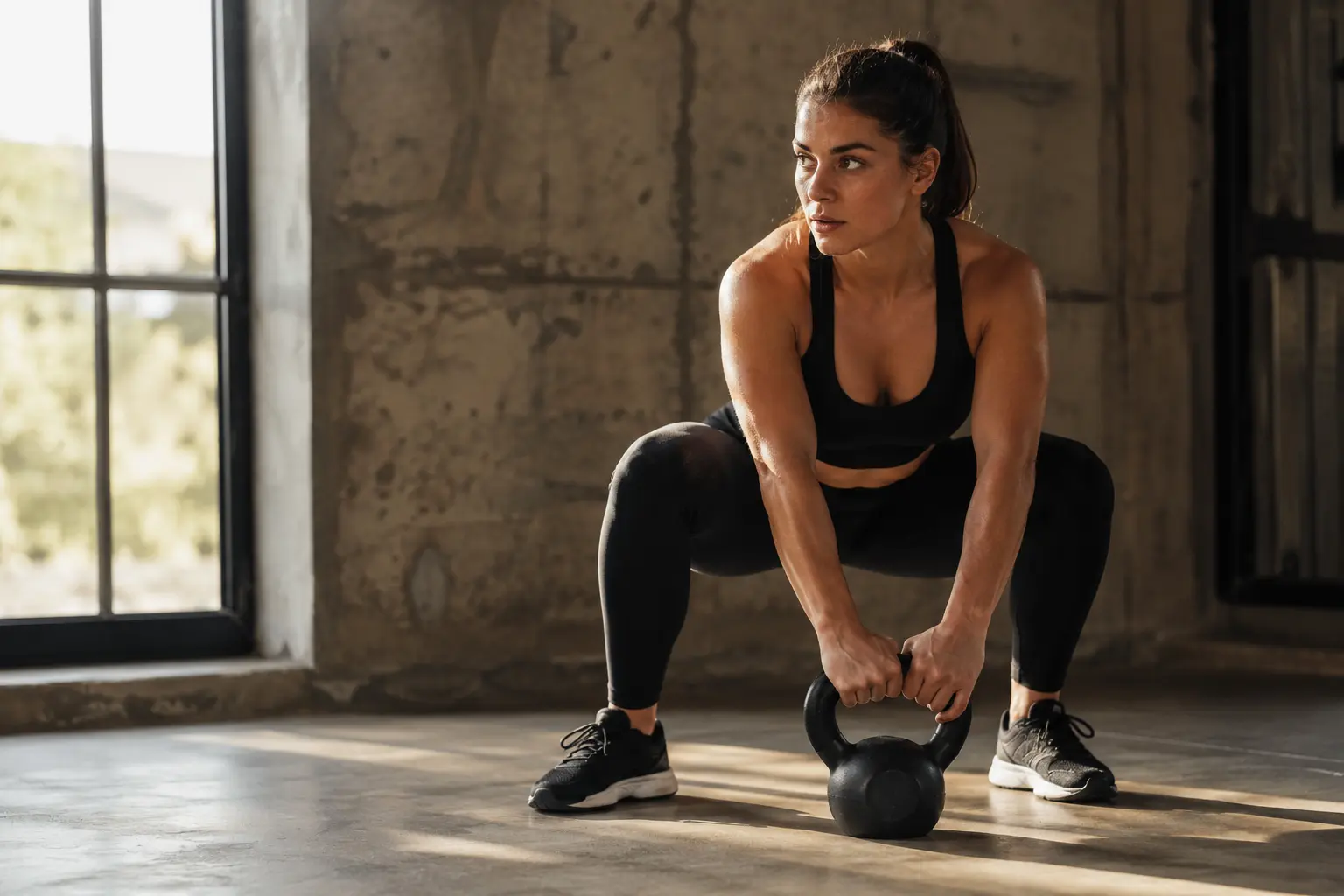
You’re stuck in a fitness rut where traditional gym routines feel disconnected from real life, leaving you stronger in isolation but clumsy when it actually matters, and functional strength training is the bridge that finally makes your body work the way it’s supposed to.
Understanding functional strength training
Functional strength training represents a shift away from isolated muscle work toward exercises that mirror how your body actually moves in daily life. Instead of sitting on a machine that isolates your biceps, you might perform a farmer’s carry, where you grip heavy weights and walk, engaging your grip strength, core stability, shoulders, and legs simultaneously. This approach is grounded in biomechanics research showing that compound movements activate multiple muscle groups in coordinated patterns. When you squat to pick up a heavy box, your quads, glutes, hamstrings, core, and stabilizer muscles all fire together. Functional training mimics this reality. A study published in the Journal of Strength and Conditioning Research found that individuals who trained functionally showed greater carryover to everyday tasks compared to those who relied solely on isolation exercises. The nervous system learns movement patterns rather than just building individual muscles, which explains why functional training often produces faster improvements in real-world performance.
Benefits of functional strength training
The research on functional strength training reveals benefits that extend well beyond the gym. Studies consistently show improvements in muscle strength and muscular endurance, but the advantages go deeper. Joint stability improves because functional exercises strengthen the muscles and connective tissues that support your joints from multiple angles. A 2023 analysis in Sports Medicine found that functional training reduced injury risk by approximately 25 percent in young adults compared to traditional strength routines. Your posture naturally improves because exercises like rows and carries activate the posterior chain muscles that counteract desk posture. Core stability strengthens not through endless crunches but through movements requiring your trunk to stabilize under load. Consider someone who struggles with lower back pain during daily activities. Functional training addressing hip mobility, core endurance, and glute activation often resolves these issues more effectively than isolated core work. Coordination and balance improve because your nervous system adapts to controlling your body through varied movement patterns. These benefits accumulate, making stairs easier, carrying groceries less taxing, and recreational activities more enjoyable.
Key strategies for effective functional strength training
Building an effective functional training program requires understanding which movements provide the most carryover to daily life. Compound movements form the foundation: squats teach your legs and core to work together during any bending motion, deadlifts train your posterior chain for lifting from the ground, and lunges develop single-leg stability crucial for walking and climbing stairs. Beyond these basics, incorporate stability challenges using balance trainers or resistance bands that force your stabilizer muscles to engage. A practical example: instead of a standard bench press, perform a dumbbell chest press on a stability ball, which requires your core to prevent you from rolling off while your chest, shoulders, and arms work. Core strengthening goes beyond planks. Russian twists, pallof presses, and dead bugs train your core to resist rotation and lateral movement, mimicking real-world demands. The progression matters too. Start with bodyweight versions, then add external load gradually. A young adult might begin with bodyweight squats, progress to goblet squats holding a kettlebell at chest height, then advance to barbell back squats. This systematic progression builds confidence and prevents injury.
- Engage in functional exercises at least 2-3 times per week, allowing 48 hours between sessions targeting the same movement patterns for adequate recovery.
- Gradually increase the intensity and resistance of your workouts by adding weight, increasing repetitions, reducing rest periods, or adding instability to established movements.
- Ensure proper form and technique to prevent injuries by starting lighter than you think necessary, filming yourself, or working with a coach initially to establish movement patterns.
🔬 Science-backed benefits in 2 minuteschoose where to begin:
Functional strength training equipment
One misconception about functional training is that you need an expensive gym membership or fancy equipment. The truth is simpler and more empowering. Bodyweight exercises form a complete foundation: push-ups, pull-ups, squats, and lunges require nothing but gravity and space. Resistance bands offer incredible versatility at minimal cost, allowing you to add load to any movement and create instability that challenges stabilizer muscles. A kettlebell, one of the most functional tools available, combines load with an offset center of gravity that forces your stabilizer muscles to work harder than dumbbells. Stability balls challenge your core during exercises like push-ups or chest presses because your body must prevent rolling. Suspension trainers like TRX systems use your body weight and leverage to create scalable difficulty. Many young adults successfully build impressive functional strength using only a pull-up bar, resistance bands, and a kettlebell. The equipment matters far less than consistent, intelligent training. Your living room, a park, or a basic home setup can deliver results equivalent to a fully equipped facility.
Progressing in functional strength training
Progression separates those who plateau from those who continue improving. Tracking performance creates accountability and reveals patterns. Keep a simple log noting which exercises you performed, weights used, and repetitions completed. Over weeks and months, you’ll see concrete evidence of improvement: more pull-ups, heavier kettlebell carries, or better balance on unstable surfaces. Gradually increasing difficulty prevents adaptation plateaus where your body stops responding. This might mean adding five pounds to a barbell, performing an extra repetition, reducing rest between sets, or advancing to a harder variation. Periodization, a technique used by athletes, involves cycling through phases emphasizing different qualities: strength phases with heavier loads and lower reps, hypertrophy phases with moderate loads and higher reps, and endurance phases with lighter loads and high reps. A young adult might spend four weeks building strength with heavy goblet squats, then four weeks performing higher-rep kettlebell swings, then four weeks doing single-leg variations. This cycling prevents boredom, manages fatigue, and ensures consistent progress. Deload weeks, where you reduce volume or intensity by 40-50 percent, allow your nervous system and joints to recover while maintaining fitness.
Nutrition and recovery in functional strength training
Training stimulus creates the signal for adaptation, but recovery is where actual improvement happens. Hydration affects muscle function, joint lubrication, and cognitive performance. Young adults often underestimate how much water they need, especially during or after training. Protein supports muscle repair and adaptation. Research suggests consuming 0.7 to 1 gram per pound of bodyweight daily for those training regularly. This might mean a chicken breast at lunch, Greek yogurt as a snack, and fish at dinner. A well-balanced diet rich in fruits and vegetables provides micronutrients essential for energy production and recovery. Healthy fats support hormone production and joint health. Sleep deserves emphasis because it’s where most adaptation occurs. During deep sleep, your body releases growth hormone, consolidates neural adaptations from training, and repairs muscle tissue. A young adult sleeping only six hours nightly will see dramatically slower progress than someone sleeping seven to nine hours. Consider sleep as part of your training program, not something separate. Stress management matters too because chronic stress elevates cortisol, which interferes with recovery. Functional training itself can be stress-reducing, but balancing it with adequate rest, good nutrition, and stress management creates the environment where progress accelerates.
Functional strength training enhances muscle strength, joint stability, and overall functional fitness through compound movements and core-strengthening exercises. Tracking progress, staying hydrated, and prioritizing proper nutrition and recovery are essential elements for long-term success in this training approach.
Are there age restrictions for engaging in functional strength training?
Functional strength training can be adapted for all age groups, but it’s recommended to start with proper guidance and gradually progress based on individual fitness levels.
How often should I engage in functional strength training sessions?
Ideally, aim for 2-3 sessions per week to allow adequate rest and recovery between workouts while maintaining consistency in building strength and endurance.
Others also read:
Disclaimer: This article is for informational purposes only and is not a substitute for professional medical advice. Always consult a healthcare professional for personal guidance.
This article has been prepared and reviewed by the GlobalHealthBeacon editorial team and is based on current medical research and published scientific literature available in 2026. It provides structured, evidence-based information to support informed health decisions.
