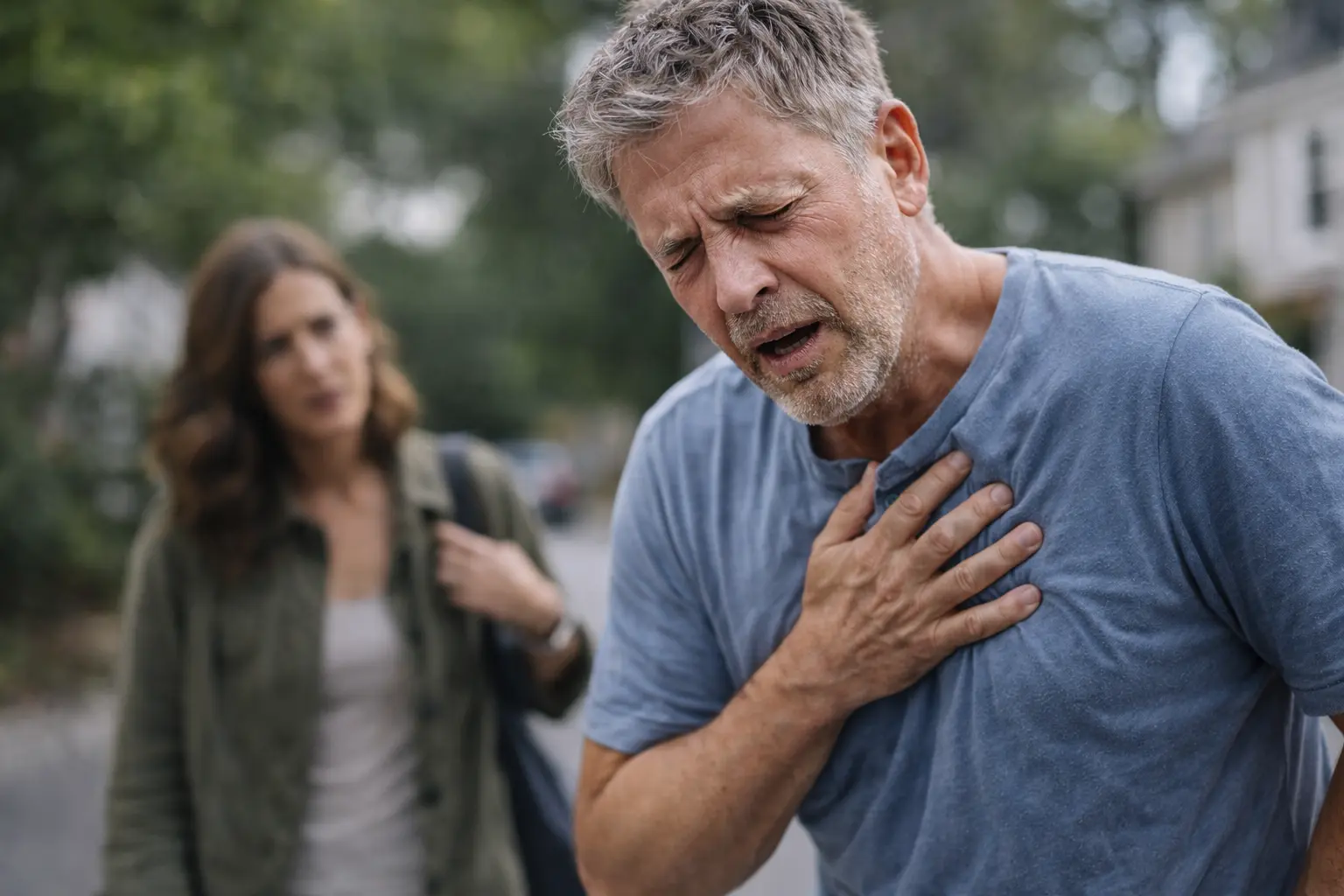
That crushing pressure in your chest that won’t quit, the breathlessness that comes out of nowhere, the cold sweat drenching your shirt at 3 AM – these are the heart attack warning signs that hit seniors harder than they ever expected, and they’re the moments that change everything.
Chest discomfort and pain
When Margaret felt that first squeeze in her chest while gardening, she thought maybe she’d pulled a muscle. But the pressure didn’t ease up like a normal ache would. It lingered, tightened, then seemed to radiate outward. That’s what chest discomfort feels like for many seniors experiencing a heart attack – not always the dramatic crushing pain you see in movies, but a persistent heaviness that builds and refuses to go away. Some describe it as fullness, others as squeezing or tightness. The discomfort might last minutes or stretch on for hours. It can feel centered in the chest, or it might radiate toward the arm, shoulder, or jaw. What makes it particularly confusing is that it often comes with other signals your body’s sending: shortness of breath, nausea creeping in, or that dizzy feeling that makes you grab onto the nearest wall.
- The discomfort may last for a few minutes or longer.
- It may be accompanied by other symptoms like shortness of breath, nausea, or lightheadedness.
- Seniors often describe the sensation as a heaviness or an unbearable tightness in their chest.
Shortness of breath
Robert was sitting in his favorite recliner watching the evening news when suddenly he couldn’t catch his breath. It wasn’t gradual – it hit him fast, like his lungs had forgotten how to work properly. Many seniors experience this sudden shortness of breath either before a heart attack strikes or during the event itself. What’s particularly unsettling is that it can happen without any chest pain at all, which is why so many people mistake it for anxiety or asthma. The breathlessness creates panic, which then makes breathing feel even harder. You’re gasping, your heart’s racing, and you can’t understand why your body won’t cooperate. Some seniors describe feeling like they’re suffocating or that there’s an invisible weight pressing down on their chest, stealing their air.
💬 Ready to feel better in 2 minutes?choose where to begin:
Vomiting and nausea
Helen remembers the nausea hitting her in waves while she was preparing dinner. At first she thought maybe the fish wasn’t fresh, but the queasiness persisted and intensified into actual vomiting. For seniors, nausea and vomiting during a heart attack can be especially confusing because these symptoms mimic so many other common issues – food poisoning, stomach bugs, medication side effects. The problem is that when nausea appears alongside other warning signs, it becomes part of a dangerous pattern your body’s trying to communicate. The vomiting can be violent and distressing, adding another layer of fear and physical exhaustion to an already terrifying situation. What makes it worse is the uncertainty: you’re sick, you’re uncomfortable, and you don’t immediately connect it to your heart.
Dizziness and sweating
James felt the room start spinning while he was walking to his mailbox. At the same time, sweat began pouring down his face despite the cool morning temperature. These physical sensations – dizziness, lightheadedness, and profuse sweating – are classic early warning signs that many seniors notice right before a heart attack. The dizziness can make you feel unsteady, like the ground is shifting beneath your feet, while the sweating is often cold and clammy rather than the warm perspiration from exercise or heat. Your body’s stress response kicks into overdrive, flooding your system with adrenaline. These symptoms together create a perfect storm of physical and emotional distress. You feel weak, disoriented, and your instinct tells you something serious is happening, even if you can’t quite name what it is.
Seniors recount experiencing chest discomfort, shortness of breath, vomiting, nausea, dizziness, and sweating as common warning signs of a heart attack. These symptoms often appear suddenly, causing anxiety and uncertainty about their health.
What should I do if I experience these symptoms?
If you suspect you’re having a heart attack, call emergency services immediately. It’s crucial to seek prompt medical attention to prevent complications and improve your chances of survival.
Are these symptoms exclusive to seniors?
While heart attack symptoms can vary among individuals, seniors should be aware of these warning signs as they are more prone to heart-related issues. However, people of all ages can experience similar symptoms and should not ignore them.
Others also read:
Disclaimer: This article is for informational purposes only and is not a substitute for professional medical advice. Always consult a healthcare professional for personal guidance.
This article presents an experience-based perspective and has been reviewed by the GlobalHealthBeacon editorial team in 2026. It provides structured, evidence-based information to support informed health decisions.
