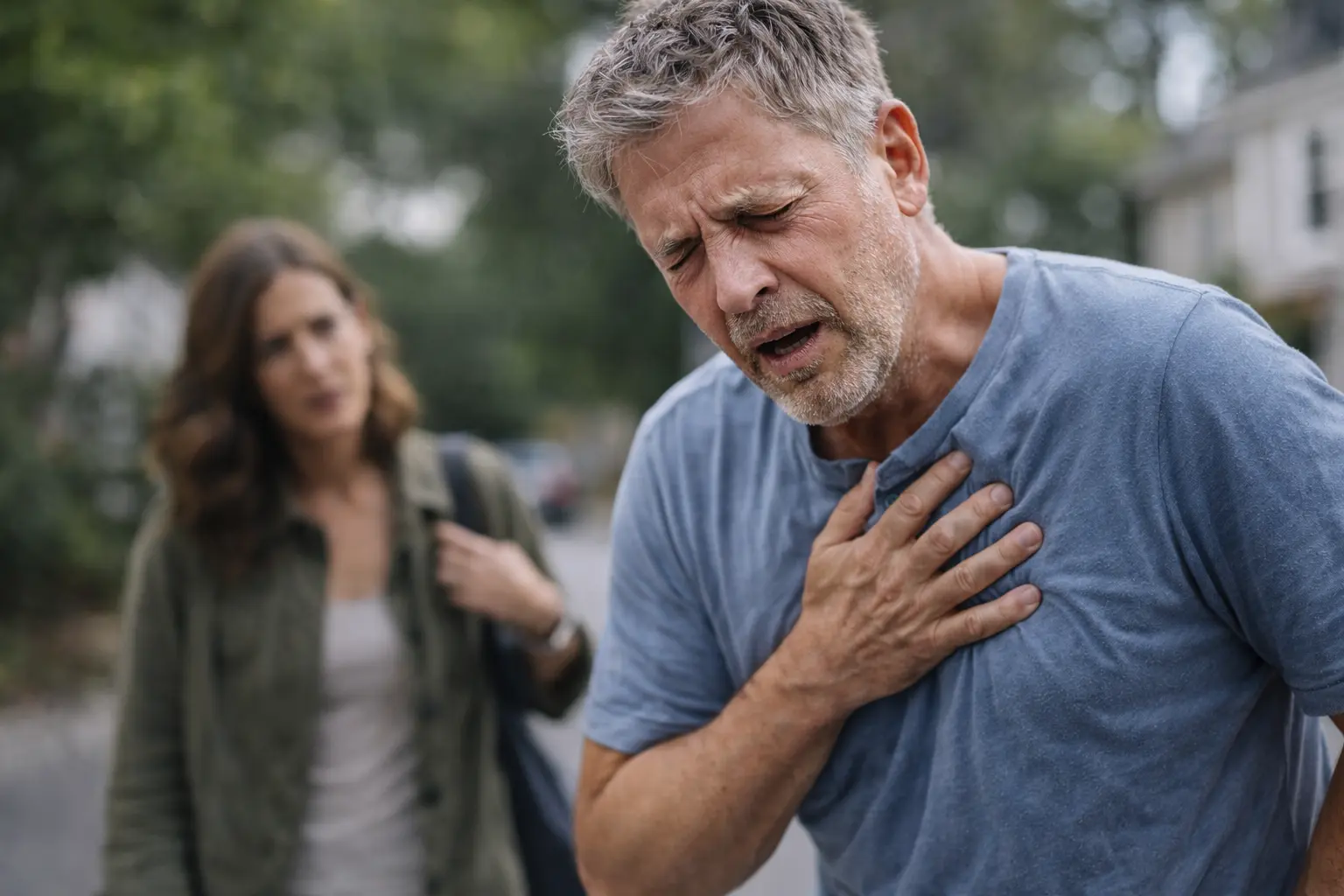
Your chest feels tight, you’re short of breath, and something inside is screaming that something’s wrong, but you convince yourself it’s just stress or indigestion because you’re too young for a heart attack, right? Wrong. Heart attack warning signs don’t care about your age, and ignoring them could cost you everything.
Recognizing the signals
Heart attack warning signs often manifest as chest pain, shortness of breath, and discomfort in the upper body, but the presentation varies more than many young adults realize. Consider Sarah, a 28-year-old marketing manager who felt a crushing pressure behind her breastbone while sitting at her desk. She initially dismissed it as anxiety from a deadline. Meanwhile, her coworker James experienced what he described as severe indigestion and fatigue that wouldn’t lift, symptoms he attributed to skipping lunch. Both were experiencing early cardiac distress. The challenge is that these signals should never be overlooked, especially by young adults who often lack the medical awareness that comes with age. Classic chest pain feels like pressure or heaviness, but some people describe it as squeezing, aching, or even a sharp stabbing sensation. Upper body discomfort can radiate to the shoulders, arms, neck, or jaw. Shortness of breath may occur with or without chest pain, and it can feel like you’re suffocating or unable to catch your breath even at rest. Understanding these variations is the first step toward recognizing when your body needs immediate medical attention.
The complexity of symptoms
It’s crucial to recognize that heart attack symptoms can vary significantly between individuals, and this variability is one reason why young adults often miss the warning signs entirely. Research shows that women, in particular, may experience atypical presentations like unexplained fatigue, nausea, or dizziness rather than the textbook chest pain that dominates public awareness. Imagine Marcus, a 32-year-old athlete who felt unusually exhausted after a routine workout, experiencing cold sweats and mild nausea. He assumed he was coming down with the flu. Days later, he learned he’d had a heart attack. His symptoms were so subtle that he almost waited too long to seek help. Some young adults report feeling a burning sensation in their chest, while others describe a feeling of fullness or heaviness in the center of their chest. Shortness of breath can occur during physical activity or even while resting. Nausea, dizziness, lightheadedness, and unexplained anxiety can all accompany or precede more obvious cardiac symptoms. The unpredictability of symptom presentation means that awareness and body literacy matter far more than relying on a single expected experience. Paying attention to what feels abnormal for your body, rather than waiting for a specific symptom pattern, could be the difference between a full recovery and a life-altering event.
Understanding the risks
Young adults tend to dismiss heart attack warning signs due to a perceived low risk at their age, a cognitive bias that can be dangerously misleading. The statistics tell a different story: heart attacks in people under 40 have been rising steadily over the past two decades. Risk factors like obesity, smoking, high cholesterol, and high blood pressure don’t respect age limits. Consider the case of David, a 26-year-old smoker with a family history of early heart disease who experienced chest pain one evening. He convinced himself it was muscle strain from the gym and waited 12 hours before seeking help. By then, significant damage had occurred. Ignoring symptoms can lead to delayed medical intervention, increasing the chances of severe complications including heart failure, arrhythmias, or sudden cardiac death. The longer heart muscle tissue remains without adequate blood flow, the more permanent damage occurs. Young adults often underestimate their personal risk because they compare themselves to older populations, but genetic factors, lifestyle choices, and underlying conditions can create vulnerability at any age. Understanding that heart attacks can occur in young adults, often due to underlying conditions, genetic predisposition, or cumulative lifestyle factors, is essential for shifting from denial to action.
- Educate yourself on the common warning signs of a heart attack by learning both classic and atypical presentations so you can recognize them in yourself or others.
- Listen to your body and seek medical attention if you experience any unusual symptoms, especially chest discomfort, shortness of breath, or unexplained fatigue that feels different from your normal baseline.
- Maintain a healthy lifestyle to reduce your risk of heart disease by managing stress, exercising regularly, eating a balanced diet, avoiding smoking, and monitoring your blood pressure and cholesterol levels.
🔬 Science-backed benefits in 2 minuteschoose where to begin:
Risk factors and prevention
Young adults should be aware of risk factors such as obesity, smoking, high cholesterol, and high blood pressure, all of which accelerate cardiovascular damage regardless of age. The science is clear: these factors don’t suddenly become dangerous at 50 or 60. They’re dangerous now. Consider the trajectory of someone like Jennifer, who started smoking at 18, gained weight during college, and developed high blood pressure by her mid-twenties. Each factor alone increases risk, but combined they create a dangerous multiplier effect. Adopting healthy habits such as regular exercise, balanced diet, and stress management can significantly reduce the risk of heart attacks. Exercise strengthens the heart muscle and improves blood flow. A diet rich in fruits, vegetables, whole grains, and lean proteins reduces inflammation and supports healthy cholesterol levels. Stress management through meditation, yoga, or other practices helps regulate blood pressure and reduces the constant activation of your fight-or-flight response. Quitting smoking immediately restores blood vessel function within weeks. Monitoring your blood pressure and cholesterol through regular check-ups gives you concrete data about your cardiovascular health. These aren’t abstract recommendations; they’re evidence-based interventions that directly protect your heart.
Seeking medical help
If you suspect you may be experiencing heart attack warning signs, do not hesitate to seek medical help immediately, even if you feel uncertain or embarrassed about potentially overreacting. This hesitation is common among young adults who fear looking foolish if symptoms turn out to be benign. But consider the alternative: the cost of being wrong is far lower than the cost of waiting. Think of Thomas, a 29-year-old who experienced chest pain and shortness of breath but waited four hours before calling an ambulance because he didn’t want to bother the emergency room with a false alarm. Early intervention can make a significant difference in the outcome and improve your chances of recovery. Emergency medical professionals are trained to quickly assess whether symptoms indicate a heart attack or something else. They can perform an EKG, measure troponin levels, and use imaging to determine what’s happening in your heart. If it is a heart attack, early treatment with medications like aspirin and antiplatelet drugs, or interventions like angioplasty, can restore blood flow and minimize damage. If it’s not a heart attack, you’ll have peace of mind and valuable information about your health. The phrase ‘better safe than sorry’ exists for a reason in emergency medicine.
Lifestyle changes and awareness
Young adults need to prioritize their heart health by staying informed about warning signs, maintaining regular check-ups, and making lifestyle changes to promote cardiovascular well-being, not as a distant future concern but as something that matters right now. This means understanding your family history of heart disease, knowing your blood pressure and cholesterol numbers, and recognizing how your daily choices impact your cardiovascular system. Imagine building a personal health dashboard where you track not just your weight or fitness level, but also your stress patterns, sleep quality, diet choices, and how you feel physically. This awareness creates a baseline so you’ll immediately notice when something feels off. Regular check-ups with your doctor give you professional assessment and early detection of risk factors before they become dangerous. Lifestyle changes don’t require perfection; they require consistency. Swapping sugary drinks for water, taking the stairs instead of the elevator, choosing grilled chicken over fried, and setting boundaries around work stress all compound over time. Young adults who adopt these practices now are investing in decades of healthy living ahead. The science shows that cardiovascular health is largely within your control, and the earlier you take action, the more powerful that control becomes.
Heart attack warning signs are crucial indicators of potential cardiac issues that should not be ignored, regardless of your age or perceived risk level. Understanding the symptoms, which can range from classic chest pain to subtle fatigue and nausea, is the foundation of early detection. Recognizing that young adults can and do experience heart attacks, often due to genetic factors, underlying health conditions, or lifestyle choices, shifts the conversation from abstract statistics to personal relevance. The path forward involves education about warning signs, honest assessment of your personal risk factors, lifestyle modifications that reduce cardiovascular strain, and a commitment to seeking immediate medical help if something feels wrong. Your heart doesn’t care how old you are; it only responds to how you treat it.
Can young adults have heart attacks?
Yes, heart attacks can occur in young adults, often linked to genetic factors, underlying health conditions, smoking, obesity, high cholesterol, high blood pressure, or a combination of lifestyle factors. The incidence in younger populations has been rising, making awareness and prevention increasingly important.
What should I do if I experience heart attack warning signs?
If you experience heart attack warning signs, such as chest pain, shortness of breath, nausea, or unexplained fatigue, seek immediate medical attention by calling emergency services or going to the nearest emergency room. Do not wait or try to self-diagnose. Early intervention significantly improves outcomes and minimizes heart damage.
Others also read:
Disclaimer: This article is for informational purposes only and is not a substitute for professional medical advice. Always consult a healthcare professional for personal guidance.
This article has been prepared and reviewed by the GlobalHealthBeacon editorial team and is based on current medical research and published scientific literature available in 2026. It provides structured, evidence-based information to support informed health decisions.
