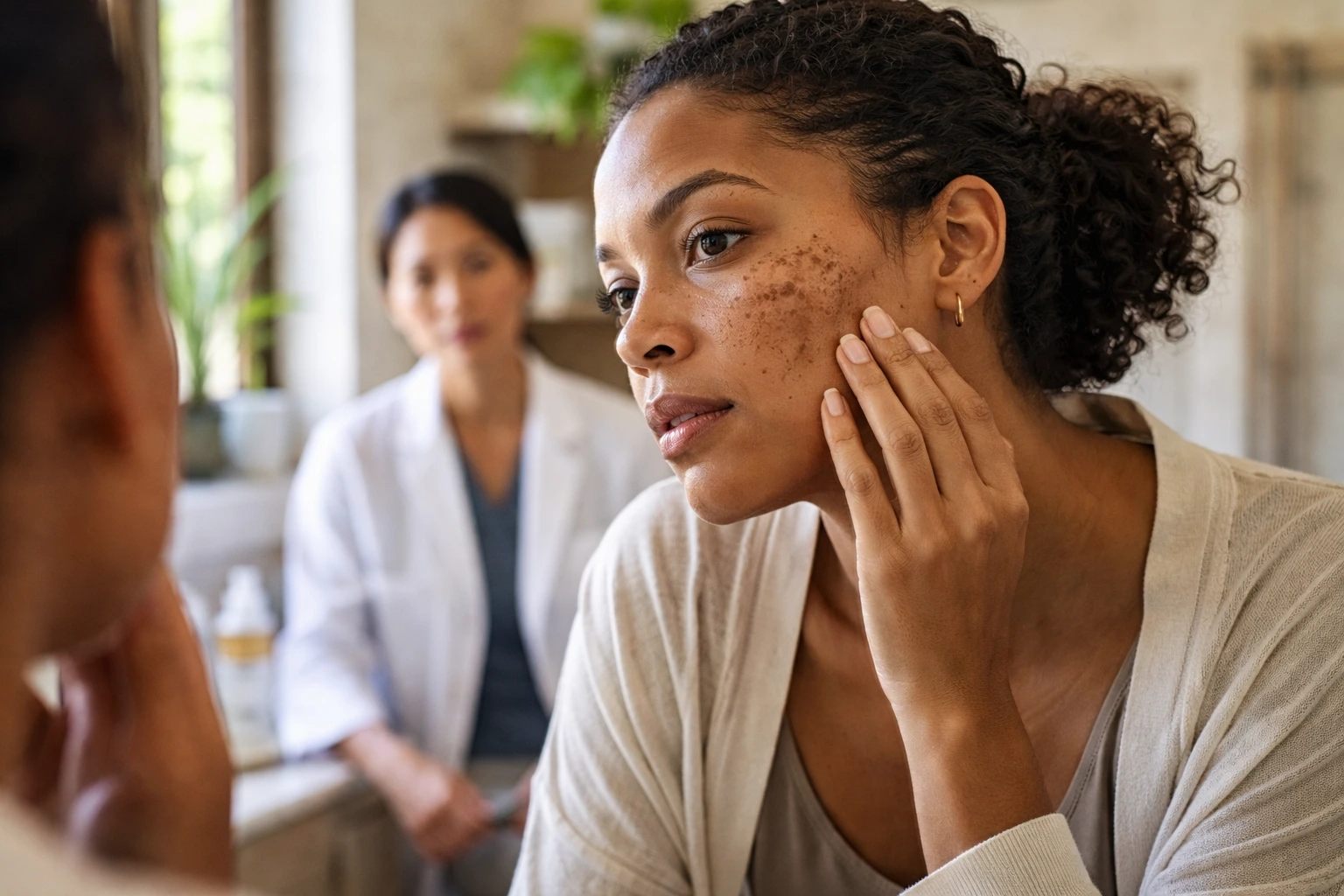
Dark patches creeping across your face, neck, or hands can feel like your skin is betraying you, but hyperpigmentation treatment options exist and they work, so stop hiding under makeup and start taking action today.
Lifestyle changes for hyperpigmentation
Your daily habits shape your skin more than you might realize. Sun exposure is the primary culprit behind hyperpigmentation, which is why consistent sun protection forms the foundation of any treatment plan. Imagine spending a summer without sunscreen and noticing new spots appear by fall, then watching them deepen over the next few years. This is preventable. Beyond sun protection, what you eat directly affects your skin’s ability to repair itself. Antioxidant-rich foods combat free radical damage that accelerates pigmentation. A woman who switched to a diet heavy in berries, citrus, and leafy greens reported visible lightening within three months when combined with sunscreen use. Hydration matters too, as dehydrated skin shows pigmentation more prominently and heals slower. These lifestyle shifts take consistency but cost nothing and complement every other treatment you pursue.
- Apply sunscreen with at least SPF 30 daily, reapplying every two hours if outdoors
- Consume foods high in vitamin C, such as citrus fruits and berries, to support collagen production
- Drink plenty of water to keep your skin hydrated and glowing
Topical treatments to lighten dark spots
Over-the-counter and prescription topical treatments offer a middle ground between lifestyle changes and professional procedures. Hydroquinone, the gold standard for decades, works by inhibiting melanin production and typically shows results within four to six weeks of consistent use. Vitamin C serums brighten and even out tone while protecting against future damage. Niacinamide reduces inflammation and strengthens your skin barrier, making it gentler for sensitive skin types. Kojic acid, derived from fungi, gradually fades spots without the irritation some women experience with stronger ingredients. A realistic scenario: you start with a vitamin C serum in the morning and a niacinamide cream at night, then add a hydroquinone treatment to stubborn areas after two weeks. Many women see subtle improvement by week four and more noticeable results by week twelve. The key is patience and consistency, as topical treatments work gradually but accumulate effects over time.
📘 Fix your day in under 2 minuteschoose where to begin:
Professional treatments for stubborn hyperpigmentation
When lifestyle and topical treatments plateau, dermatologists offer faster, more dramatic results. Chemical peels use acids to remove damaged outer skin layers, revealing clearer skin beneath, with results visible within days and improving over weeks. Laser therapy targets pigment directly, breaking it down so your body can naturally eliminate it, often requiring three to six sessions spaced weeks apart. Microneedling creates controlled micro-injuries that trigger collagen production and can be combined with topical treatments for enhanced results. A woman with melasma, the most stubborn form of hyperpigmentation, might spend two thousand to five thousand dollars on a series of laser treatments but see seventy to eighty percent improvement where topicals alone stalled at twenty percent. These procedures carry risks like temporary redness, sensitivity, or rarely, post-inflammatory hyperpigmentation, so choosing an experienced dermatologist matters. Professional treatments demand investment but deliver speed when you need results.
Natural remedies to brighten skin tone
If you prefer gentler, plant-based approaches, natural ingredients offer subtle but real benefits when given time. Aloe vera contains compounds that may inhibit melanin production while soothing irritated skin, making it ideal for sensitive types. Green tea extract is loaded with antioxidants that protect against further damage and may gradually lighten existing spots. Licorice extract has been shown in studies to reduce hyperpigmentation by up to twenty-seven percent over twelve weeks, though results vary. Rosehip oil provides vitamin A and C while improving skin texture, though it works best as a supporting treatment rather than a standalone solution. Consider a woman who applies aloe vera gel nightly for three months while using sunscreen religiously, then adds a green tea serum in the morning. She might notice a five to ten percent improvement, which feels modest but compounds over time. Natural remedies require patience and realistic expectations but appeal to those seeking minimal irritation and ingredient simplicity.
Embracing your skin’s unique beauty
Hyperpigmentation affects millions of women globally, from hormonal melasma triggered by birth control to post-inflammatory marks from acne or injuries. Your spots do not define your worth, and seeking treatment is valid whether you want results for yourself or for confidence. Some women choose aggressive treatment plans, others prefer gentle maintenance, and some decide their skin is fine as is. All these choices are legitimate. The pressure to have flawless skin is relentless, but real confidence comes from understanding your skin, making informed choices, and accepting that treatment is a journey, not an overnight fix. Whether you pursue professional procedures, consistent topicals, lifestyle changes, or a combination approach, you are taking control of your skin health. That agency itself is powerful.
Effective hyperpigmentation treatment options include lifestyle changes, topical treatments, professional procedures, natural remedies, and self-acceptance. These strategies collectively aim to improve skin tone and boost self-confidence.
Are natural remedies effective for treating hyperpigmentation?
Natural remedies like aloe vera and green tea extract may help lighten dark spots, but results can vary. It’s best to use them in conjunction with other treatments for optimal results.
Can hyperpigmentation treatments work for all skin types?
Hyperpigmentation treatments can be effective across various skin types, but individual response may vary. Consult a dermatologist to determine the best treatment plan for your specific skin concerns.
Others also read:
Disclaimer: This article is for informational purposes only and is not a substitute for professional medical advice. Always consult a healthcare professional for personal guidance.
This guide has been prepared and reviewed by the GlobalHealthBeacon editorial team and reflects current medical research as of 2026. It provides structured, evidence-based information to support informed health decisions.
