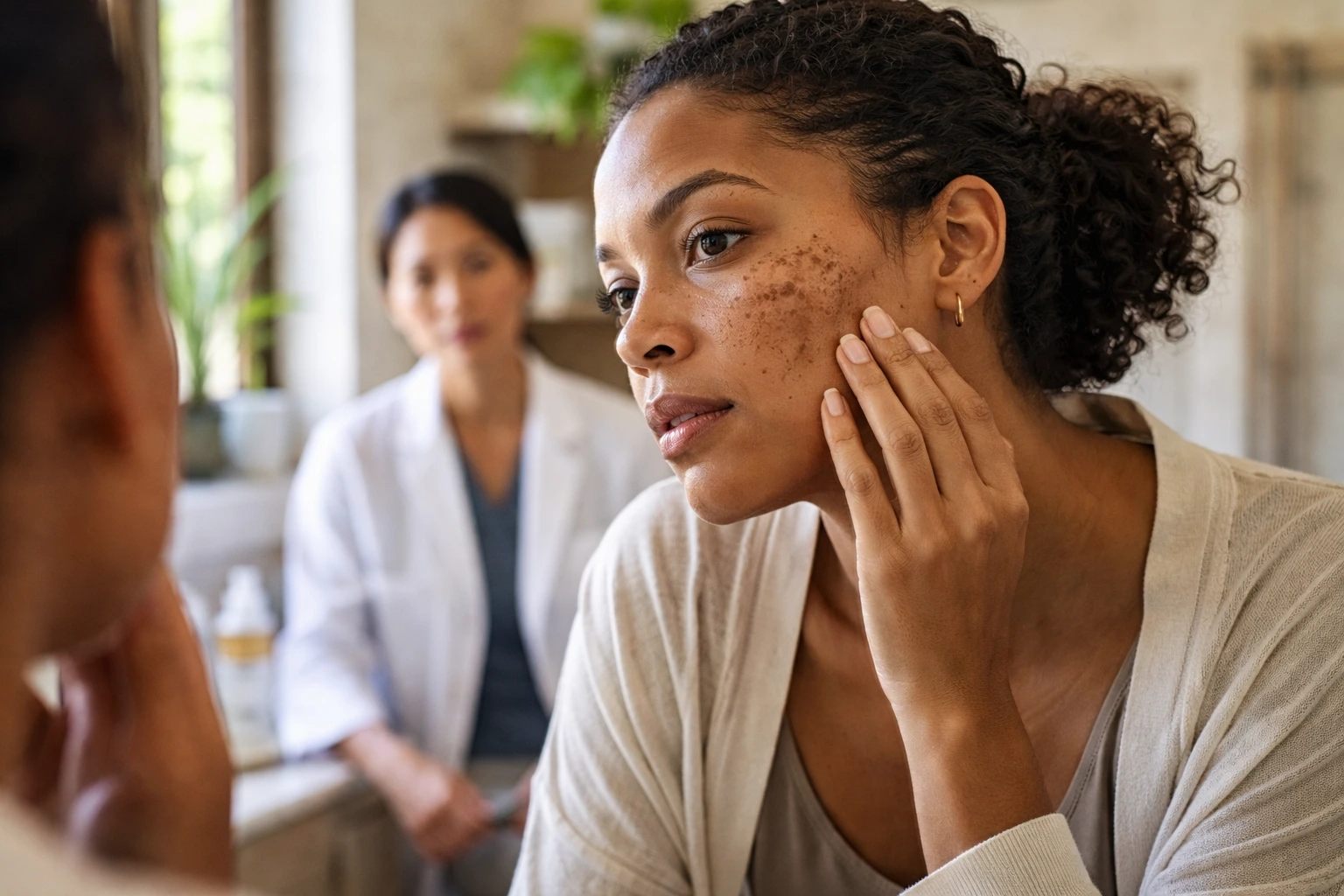
Dark spots creeping across your face after that beach trip or hormonal breakout, and nothing seems to fade them fast enough – but hyperpigmentation treatment options actually exist and work, you just need to know which ones match your skin.
Understanding hyperpigmentation
Hyperpigmentation happens when your skin produces too much melanin in certain areas, creating patches that look darker than your natural skin tone. Think of melanin as your skin’s pigment factory. When it goes into overdrive due to sun damage, hormonal shifts during your cycle, or even picking at a pimple, those factories keep pumping out color long after the trigger is gone. Young adults often experience this after acne breakouts or from inconsistent sun protection during outdoor activities. The condition isn’t dangerous, but it’s frustrating because it makes your complexion look uneven and aged. Understanding what triggers your specific hyperpigmentation is the first real step toward fixing it. Is it sun-related, hormonal, or post-inflammatory from acne? The answer changes your treatment approach entirely.
- Ensure daily sun protection with a broad-spectrum sunscreen SPF 30 or higher, even on cloudy days.
- Incorporate skin brightening ingredients like vitamin C and niacinamide into your skincare routine consistently.
- Consider professional treatments like chemical peels or laser therapy for stubborn pigmentation that doesn’t respond to topical products.
Natural remedies for hyperpigmentation
Natural ingredients can genuinely help fade hyperpigmentation, especially if you have sensitive skin or prefer avoiding prescription-strength treatments. Licorice extract works by inhibiting the enzyme that triggers melanin production, making it effective for gradual lightening over weeks. Kojic acid, derived from fungi, has similar melanin-blocking properties and is gentler than hydroquinone for many people. Aloe vera contains compounds that soothe inflammation while supporting skin healing. A practical approach: start with one natural ingredient at a time so you can track what actually works for your skin. For example, if you apply a licorice extract serum every morning for eight weeks, you’ll see real results before adding anything else. Many young adults find that combining a natural vitamin C serum with consistent sunscreen creates visible fading within two to three months. The trade-off is patience – natural remedies work slower than prescription options, but they’re gentler and often more sustainable long-term.
📘 Fix your day in under 2 minuteschoose where to begin:
Topical treatments and serums
Prescription and over-the-counter topical treatments pack more concentrated power than natural remedies. Hydroquinone, the gold standard for hyperpigmentation, directly inhibits melanin production and shows measurable results within four to six weeks when used correctly. Retinoids accelerate skin cell turnover, pushing out pigmented cells faster and revealing clearer skin underneath. Alpha hydroxy acids exfoliate the outer layer where pigmentation sits, gradually revealing the lighter skin below. Here’s the realistic scenario: you start a retinoid serum three nights per week, gradually increasing frequency as your skin adapts. After two weeks, you might experience slight dryness or sensitivity, which is normal. By week six, the dark spots noticeably fade. The key mistake young adults make is expecting overnight results or using treatments inconsistently. Hyperpigmentation responds to commitment. Apply your chosen treatment every single day or night as directed, and give it at least six to eight weeks before deciding it doesn’t work. Layering treatments carelessly can also backfire, so introduce one new product every two weeks maximum.
Healthy lifestyle habits for clear skin
Your skin reflects your internal health, and hyperpigmentation fades faster when you support your body’s natural healing processes. Hydration matters more than most people realize – drinking enough water helps your skin cells regenerate and flush out toxins that can trigger inflammation and pigmentation. Eating antioxidant-rich foods like berries, leafy greens, and fatty fish provides the nutrients your skin needs to repair itself. Sleep is when your body produces collagen and repairs damaged skin cells, so inconsistent sleep schedules directly impact how quickly hyperpigmentation fades. Stress triggers cortisol spikes, which can worsen inflammation and pigmentation issues. A practical routine: drink two liters of water daily, aim for seven to nine hours of sleep, and practice ten minutes of meditation or yoga when stress builds. Many young adults notice their dark spots fade faster during periods when they’re sleeping well and managing stress compared to stressful exam weeks or work deadlines. This isn’t coincidence – your skin genuinely heals better when your whole body is supported.
Consulting a dermatologist for personalized care
When hyperpigmentation persists despite three months of consistent home treatment, a dermatologist becomes your strategic partner. They can identify whether your hyperpigmentation is melasma, post-inflammatory hyperpigmentation, or sun damage, each requiring different approaches. A dermatologist performs professional treatments like chemical peels, which use stronger acid concentrations than at-home products, or laser therapy, which targets pigment directly without damaging surrounding skin. They can also prescribe combination treatments – for example, hydroquinone plus tretinoin plus a corticosteroid, which work synergistically and show faster results than single treatments. The consultation itself is valuable because dermatologists assess your skin type, ethnicity, and medical history to avoid treatments that could backfire. Young adults with darker skin tones, for instance, need different laser settings to prevent post-inflammatory hyperpigmentation from the treatment itself. A dermatologist also monitors your progress and adjusts your plan if results plateau. Think of this as upgrading from self-guided treatment to professional coaching – it costs more upfront but saves months of trial and error.
Hyperpigmentation responds to a layered approach: first understand what’s causing your specific dark spots, then choose between natural remedies for gentle fading, prescription topical treatments for faster results, or professional procedures for stubborn cases. Support your treatment with daily sunscreen, healthy lifestyle habits, and consistent application. When home treatments plateau after three months, consult a dermatologist for personalized professional care.
Are natural remedies effective for treating hyperpigmentation?
Natural remedies work well for mild to moderate hyperpigmentation, especially if you have sensitive skin. Licorice extract and kojic acid have proven melanin-blocking properties, but results take longer than prescription treatments – typically eight to twelve weeks. They’re most effective when combined with strict daily sunscreen use.
What professional treatments are available for severe hyperpigmentation?
Dermatologists offer chemical peels, laser therapy, and microneedling for severe cases. Chemical peels use stronger acids to exfoliate pigmented layers. Laser treatments target melanin directly. Microneedling stimulates collagen while promoting skin renewal. Results vary by skin type and hyperpigmentation cause, which is why professional assessment matters.
Others also read:
Disclaimer: This article is for informational purposes only and is not a substitute for professional medical advice. Always consult a healthcare professional for personal guidance.
This guide has been prepared and reviewed by the GlobalHealthBeacon editorial team and reflects current medical research as of 2026. It provides structured, evidence-based information to support informed health decisions.
