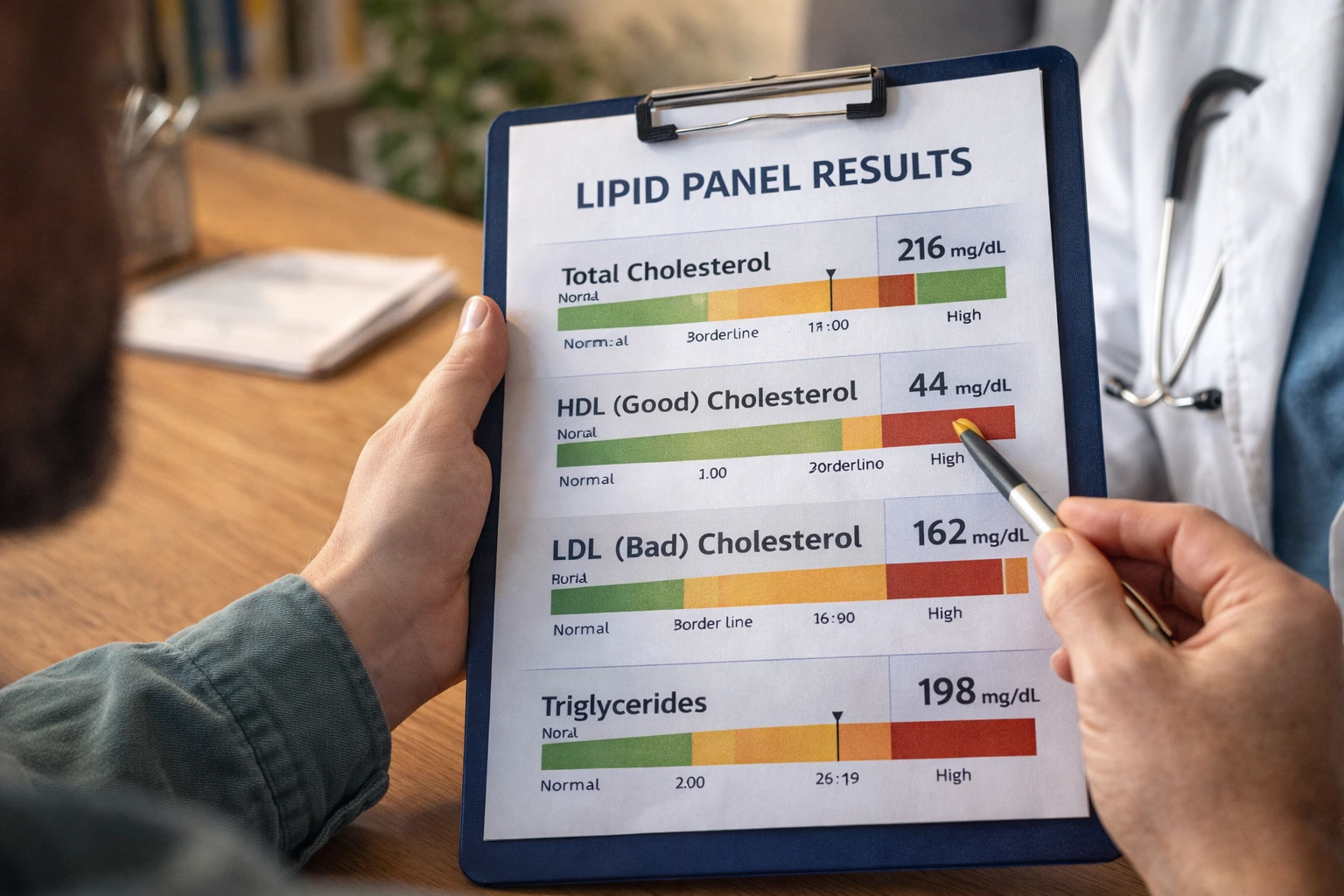
Your lipid panel results just came back and the numbers feel like a foreign language, leaving you wondering if your heart is actually in trouble or if you’re just overthinking it all.
Understanding lipid panel results
Decoding your lipid panel is like learning to read the dashboard of your heart health. Your results show four key players: LDL cholesterol (the troublemaker), HDL cholesterol (your protector), triglycerides (energy storage gone wrong), and total cholesterol. Think of LDL as the delivery truck bringing cholesterol to your arteries. Too many deliveries and buildup happens. HDL is your cleanup crew, removing excess cholesterol before it causes damage. A woman named Sarah got her results back showing LDL at 130 and HDL at 42. She felt panicked until her doctor explained that her HDL was the real concern because it wasn’t high enough to protect her. Understanding these numbers helps you see where your actual risk lies. Your healthcare provider can help interpret results in context of your age, family history, and overall health picture.
- LDL cholesterol should be below 100 mg/dL for optimal heart health.
- HDL cholesterol above 50 mg/dL is considered protective against heart disease.
- Triglyceride levels below 150 mg/dL are ideal.
Healthy diet for better lipid levels
Food is your most powerful tool for shifting lipid numbers. Start by crowding out the bad rather than obsessing over restriction. Fill half your plate with colorful vegetables, add a palm-sized portion of lean protein like salmon or chicken, and include whole grains like quinoa or brown rice. Salmon contains omega-3 fatty acids that actively lower triglycerides and boost HDL. A woman in her 50s swapped her usual sandwich lunch for grilled salmon with roasted vegetables and saw her triglycerides drop 40 points in three months. Nuts and seeds like almonds and flaxseeds are heart-healthy fats that satisfy cravings while improving cholesterol ratios. Avoid trans fats hidden in processed foods and limit saturated fats from full-fat dairy and fatty cuts of meat. Olive oil drizzled on salads and used for cooking provides polyphenols that protect your arteries. Small, consistent changes compound faster than dramatic overhauls.
📘 Fix your day in under 2 minuteschoose where to begin:
Regular exercise for heart health
Movement is medicine for your lipid profile. Aerobic exercise directly raises HDL and lowers triglycerides within weeks of starting. Brisk walking for 30 minutes five days a week is enough to trigger these changes. You do not need a gym membership or intense workouts. One woman started walking her neighborhood for 45 minutes each morning and watched her HDL climb from 44 to 58 over four months. Swimming and cycling offer low-impact alternatives if joints are sensitive. Strength training twice weekly builds muscle, which increases your metabolic rate and helps regulate cholesterol. Combine a 20-minute walk with two days of light weights or bodyweight exercises like squats and push-ups. Consistency matters more than intensity. Missing one workout is fine. Missing three weeks resets your progress. Find movement you actually enjoy so it becomes habit rather than chore.
Manage stress and sleep well
Chronic stress triggers inflammation and hormonal shifts that worsen lipid profiles. When cortisol stays elevated, your body produces more triglycerides and LDL cholesterol. Deep breathing for five minutes daily activates your parasympathetic nervous system, essentially telling your body it is safe. Meditation, even ten minutes, reduces stress markers linked to poor lipid levels. A woman practicing yoga three times weekly noticed her triglycerides dropped alongside her anxiety levels. Sleep deprivation disrupts the hormones that regulate cholesterol production. Aim for seven to nine hours nightly in a cool, dark room. Poor sleep increases hunger hormones, leading to late-night snacking that raises triglycerides. Establish a bedtime routine: dim lights one hour before sleep, avoid screens, and keep your bedroom temperature around 65 degrees Fahrenheit. Quality rest is when your body repairs and rebalances itself.
Monitor progress and stay consistent
Tracking your lipid panel every three to six months shows whether your efforts are working. Write down your numbers and note what you were doing differently in months when they improved. This creates a personal feedback loop. One woman discovered her numbers improved most when she combined three elements: walking, reducing processed foods, and sleeping eight hours. Without tracking, she would not have identified this specific combination. Consistency beats perfection. Missing one workout or eating one unhealthy meal does not erase your progress. What matters is the overall pattern across weeks and months. Celebrate small wins like choosing grilled chicken instead of fried or walking an extra ten minutes. These small choices compound into measurable changes on your next lipid panel. Share your goals with a friend or family member who can offer accountability and encouragement.
Proactively manage your lipid levels by understanding your lipid panel results, adopting a healthy diet and exercise routine, managing stress, and staying consistent. Regularly monitoring progress is key to safeguarding your heart health.
What are normal ranges for LDL and HDL cholesterol?
Normal LDL cholesterol levels are below 100 mg/dL, while HDL cholesterol levels above 50 mg/dL are considered protective against heart disease.
How often should I have my lipid panel checked?
Consult your healthcare provider for personalized recommendations, but generally, adults should have their lipid panel checked every 4-6 years starting at age 20.
Others also read:
Disclaimer: This article is for informational purposes only and is not a substitute for professional medical advice. Always consult a healthcare professional for personal guidance.
This guide has been prepared and reviewed by the GlobalHealthBeacon editorial team and reflects current medical research as of 2026. It provides structured, evidence-based information to support informed health decisions.
