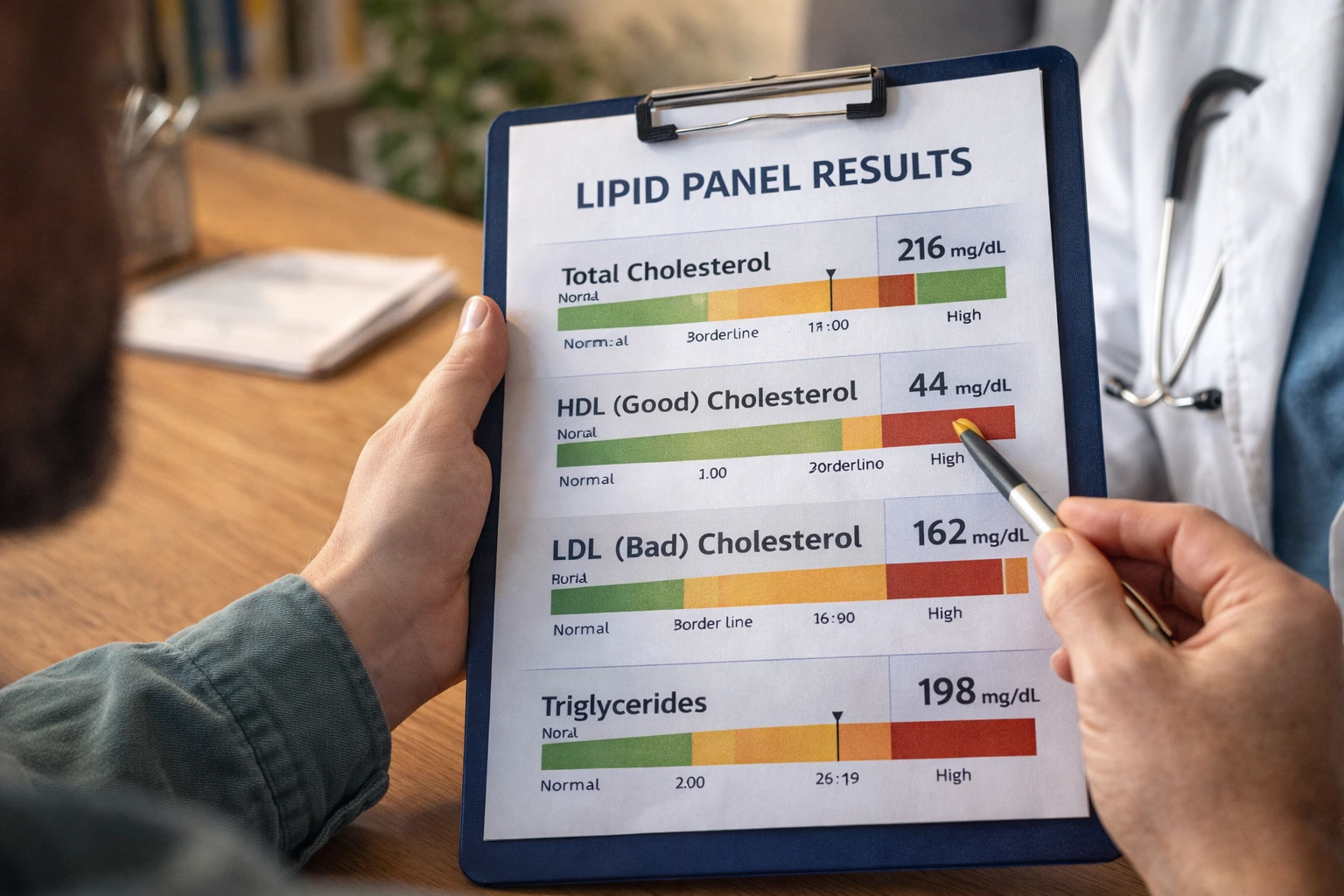
Your doctor hands you a lipid panel report with numbers that mean nothing, and suddenly you’re wondering if you’re a walking time bomb, but here’s what the science actually says about cholesterol in your 60s, 70s, and beyond.
Cholesterol basics: understanding the numbers
Cholesterol is a waxy substance your body produces naturally, and it’s essential for building cell membranes, producing hormones, and creating vitamin D. Think of it like the mortar holding your biological bricks together. The problem isn’t cholesterol itself, but rather when levels become imbalanced. A lipid panel breaks down your cholesterol into specific components: LDL cholesterol (often called bad cholesterol), HDL cholesterol (the good kind), and triglycerides (another type of blood fat). Imagine your bloodstream as a highway. When cholesterol levels are balanced, traffic flows smoothly. When they’re not, vehicles start piling up in dangerous places. For seniors, understanding these numbers isn’t about fear, it’s about clarity. Your lipid panel results offer a snapshot of how well your cardiovascular system is functioning and what preventive strategies might help you maintain independence and vitality in your later years.
Interpreting LDL cholesterol: the risk factor
LDL cholesterol is the primary culprit in cardiovascular disease development. When LDL levels remain elevated over time, these particles can penetrate artery walls and accumulate, forming plaque deposits that narrow blood vessels. Research spanning decades consistently shows a direct correlation between high LDL levels and increased risk of heart attack and stroke. Consider a 68-year-old named Robert who discovered his LDL was 180 mg/dL during a routine checkup. His doctor explained that at this level, his arteries were essentially being slowly clogged, like pipes accumulating mineral deposits. The critical insight from scientific studies is that even modest reductions in LDL can significantly lower cardiovascular risk. For every 39 mg/dL reduction in LDL cholesterol, research shows approximately a 22 percent decrease in major cardiovascular events. This means your lipid panel results aren’t just numbers, they’re actionable data points that can guide meaningful health decisions.
HDL cholesterol: the protective guardian
HDL cholesterol functions like your body’s cleanup crew, actively removing excess cholesterol from your arteries and transporting it to your liver for disposal. Higher HDL levels are consistently associated with better cardiovascular outcomes and reduced heart disease risk. A 72-year-old woman named Margaret learned her HDL was only 35 mg/dL, which put her at increased risk despite having acceptable LDL levels. Her doctor explained that she needed to boost this protective factor. Studies show that increasing HDL by just 1 mg/dL can reduce cardiovascular risk by approximately 2 to 3 percent. The fascinating part is that HDL responds well to lifestyle modifications. Regular aerobic exercise, such as brisk walking or swimming, can raise HDL within weeks. A heart-healthy diet rich in omega-3 fatty acids from fish, soluble fiber from oats and beans, and antioxidants from colorful vegetables all support HDL function. For seniors, maintaining strong HDL levels is like having a personal bodyguard protecting your cardiovascular system.
- Engage in regular physical activity such as brisk walking, swimming, or cycling for at least 150 minutes per week to boost HDL levels naturally.
- Adopt a heart-healthy diet rich in fruits, vegetables, whole grains, lean proteins, and omega-3 fatty acids while limiting processed foods.
- Limit intake of trans fats found in processed baked goods and saturated fats from fatty meats and full-fat dairy to support optimal HDL function.
🔬 Science-backed benefits in 2 minuteschoose where to begin:
Triglycerides: the fat story
Triglycerides are the most common type of fat in your blood, and they come primarily from the food you eat, particularly carbohydrates and alcohol. When you consume more calories than your body needs, it converts the excess into triglycerides for storage. A 70-year-old man named James was surprised to learn his triglycerides were 280 mg/dL after enjoying regular desserts and wine with dinner. His doctor explained that elevated triglycerides often travel alongside other risk factors, creating a compounding effect on cardiovascular health. Research shows that high triglyceride levels are linked to increased risk of heart disease, particularly when combined with low HDL cholesterol. The encouraging news is that triglycerides respond dramatically to lifestyle changes. Reducing refined carbohydrates, limiting alcohol consumption, increasing physical activity, and managing body weight can lower triglycerides by 20 to 30 percent within weeks. For seniors, understanding triglycerides means recognizing that dietary choices made today directly influence your cardiovascular health tomorrow.
Cholesterol medications: a tool for management
When lifestyle modifications alone don’t achieve target lipid levels, healthcare providers may recommend cholesterol-lowering medications as part of a comprehensive management strategy. Statins are the most commonly prescribed class, working by inhibiting an enzyme your liver needs to produce cholesterol. A 75-year-old woman named Dorothy started a statin after her LDL remained elevated despite diet and exercise changes. Within three months, her LDL dropped from 165 to 110 mg/dL, significantly reducing her cardiovascular risk. Other medication classes work differently: PCSK9 inhibitors help your body remove LDL from the bloodstream more efficiently, while ezetimibe reduces cholesterol absorption in your intestines. Research demonstrates that these medications, when combined with lifestyle changes, can reduce the risk of heart attack and stroke by up to 30 percent in seniors. The key understanding is that medications aren’t failures, they’re tools. They work best alongside dietary improvements and physical activity, creating a synergistic effect that maximizes cardiovascular protection.
Research insights: the future of cholesterol management
Modern cholesterol research is moving beyond one-size-fits-all approaches toward personalized medicine based on genetic factors and individual risk profiles. Scientists have identified specific genetic variations that influence how your body produces and processes cholesterol, explaining why some people maintain healthy levels effortlessly while others struggle despite excellent habits. Recent studies are exploring innovative therapies including RNA-based treatments that can reduce LDL cholesterol by 50 percent or more, and new drug classes targeting inflammation alongside cholesterol. For seniors, this evolving landscape means your lipid panel results can now be interpreted within a more nuanced context. Researchers are also discovering that the relationship between cholesterol and health outcomes varies by age, with some studies suggesting that very low LDL levels in advanced age require careful monitoring. By staying informed about emerging research, you can have more sophisticated conversations with your healthcare provider about personalized strategies that account for your unique biology, lifestyle, and health goals.
Your lipid panel results reveal critical information about your cardiovascular health, with LDL, HDL, and triglyceride levels each telling part of your health story. Understanding what these numbers mean, how they interact, and what research shows about their significance empowers you to make informed decisions about diet, exercise, and medication. The science is clear: managing cholesterol through lifestyle modifications and, when necessary, medications can substantially reduce your risk of heart disease and stroke, helping you maintain independence and quality of life in your senior years.
How can I improve my HDL cholesterol levels?
Regular aerobic exercise like brisk walking or swimming, following a diet rich in omega-3 fatty acids and soluble fiber, limiting trans fats and saturated fats, maintaining a healthy weight, and moderating alcohol consumption all help boost HDL cholesterol naturally.
What are the common risk factors for high cholesterol in seniors?
Risk factors for high cholesterol in seniors include genetic predisposition, sedentary lifestyle, poor dietary habits high in saturated and trans fats, obesity, type 2 diabetes, hypothyroidism, chronic kidney disease, and certain medications like corticosteroids.
Others also read:
Disclaimer: This article is for informational purposes only and is not a substitute for professional medical advice. Always consult a healthcare professional for personal guidance.
This article has been prepared and reviewed by the GlobalHealthBeacon editorial team and is based on current medical research and published scientific literature available in 2026. It provides structured, evidence-based information to support informed health decisions.
