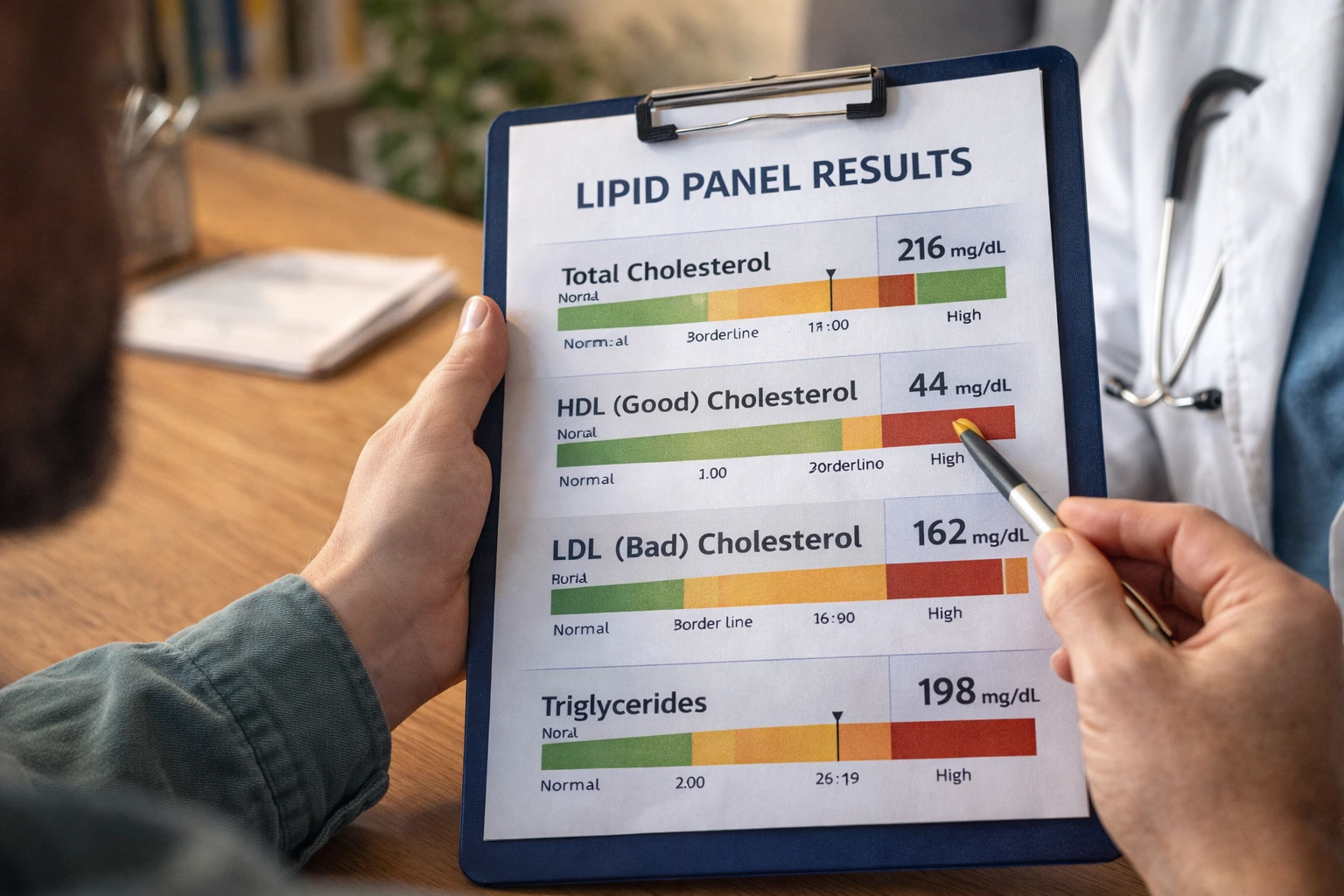
You get your blood work back and see numbers you don’t recognize, wondering if that LDL reading means you’re headed for a heart attack, but lipid panel results explained properly show you’re actually in control of what happens next.
Understanding lipid panel data
A lipid panel is a blood test that measures various types of fats circulating in your bloodstream, including cholesterol and triglycerides. Think of it as a snapshot of your blood chemistry at a specific moment in time. These fats are essential for your body’s function, helping build cell membranes, produce hormones, and create vitamin D. However, when levels become imbalanced, they can pose real risks to your cardiovascular system. High levels of LDL cholesterol, often called bad cholesterol because it can accumulate in artery walls, or elevated triglycerides can increase your risk of heart disease. For young adults, understanding this baseline now means you can track changes over time and catch potential issues early before they become serious problems.
Interpreting the results
When you receive your lipid panel results, you’ll typically see four key measurements: total cholesterol, HDL cholesterol (the protective good cholesterol), LDL cholesterol (the problematic kind), and triglycerides. Imagine your arteries as highways and LDL as debris accumulating on the road. High LDL cholesterol and triglyceride levels combined with low HDL cholesterol levels create a concerning pattern that suggests increased heart disease risk. For example, if your total cholesterol is 240 mg/dL but your HDL is only 30 mg/dL while LDL sits at 180 mg/dL, that combination tells a different story than the same total with better distribution. Your healthcare provider looks at these relationships, not just individual numbers, to assess your actual risk profile and determine whether intervention is needed.
Factors influencing lipid levels
Your lipid levels aren’t fixed or predetermined. They’re influenced by multiple factors including diet, exercise habits, genetics, age, stress levels, sleep quality, and underlying health conditions like diabetes or thyroid dysfunction. Someone might inherit a genetic predisposition toward higher cholesterol but still improve their numbers significantly through lifestyle changes. A young adult eating a diet high in saturated fats and trans fats while sitting sedentary will likely see worse lipid profiles than someone with similar genetics who exercises regularly and eats whole foods. The encouraging part is that many of these factors are within your control. Making deliberate lifestyle changes such as eating a diet lower in saturated fats and dietary cholesterol, exercising regularly, quitting smoking, managing stress, and improving sleep can help improve your lipid profile substantially and reduce your cardiovascular risk.
- Maintain a healthy diet low in saturated fats and cholesterol by choosing lean proteins, whole grains, and plenty of vegetables.
- Engage in regular physical activity for at least 150 minutes per week to keep your heart healthy and improve lipid metabolism.
- Quit smoking to improve your overall cardiovascular health and allow your body to repair damage from tobacco exposure.
🔬 Science-backed benefits in 2 minuteschoose where to begin:
Role of lipids in heart health
Lipids play a crucial role in heart health by providing energy for your cells, insulating organs, and aiding in the absorption of fat-soluble vitamins like A, D, E, and K. Your body needs lipids to function properly. However, when lipid levels become elevated, particularly LDL cholesterol and triglycerides, they can contribute to a process called atherosclerosis where plaque gradually builds up inside artery walls. This buildup narrows the arteries, reducing blood flow and oxygen delivery to your heart and brain. Over time, this plaque can rupture, triggering blood clots that cause heart attacks or strokes. Young adults might think this is a distant concern, but the plaque formation process often begins in your twenties and thirties, making early intervention through lifestyle changes or medication particularly effective at preventing serious cardiovascular events later.
Monitoring and managing lipid levels
Regular monitoring of your lipid levels through blood tests is essential to assess your heart disease risk and track whether your current lifestyle or treatment approach is working. Most young adults should have their lipid panel checked at least once during their twenties, then every four to six years if results are normal. If your lipid panel results indicate high cholesterol or triglyceride levels, your healthcare provider may recommend several approaches. Lifestyle modifications come first for many people, including dietary changes, increased physical activity, weight management, and stress reduction. If these changes don’t produce sufficient improvement within three to six months, medications like statins might be introduced. Some people benefit from additional supplements or medications targeting triglycerides specifically. The key is establishing a partnership with your healthcare provider to monitor progress and adjust your approach as needed.
Understanding your heart risk
By understanding and interpreting your lipid panel results, you gain valuable insights into your cardiovascular risk profile and what you can actually do about it. This knowledge shifts you from passive to active in your health journey. Taking proactive steps now to improve your lipid profile, whether through dietary changes, exercise, stress management, or medication if needed, can significantly lower your risk of cardiovascular events and contribute to a longer, healthier life. Young adults have a unique advantage: time. The changes you make today compound over decades, and early intervention is far more effective than trying to reverse damage that’s accumulated over years of neglect. Your lipid panel results aren’t a verdict; they’re a conversation starter between you and your health.
Lipid panel data provides vital information about your heart disease risk by measuring cholesterol and triglyceride levels in your blood. Understanding and managing your lipid levels through lifestyle changes and medical interventions can help reduce the risk of heart disease and support long-term cardiovascular health.
What is a lipid panel test?
A lipid panel test is a blood test that measures various types of fats in your blood, including total cholesterol, HDL cholesterol, LDL cholesterol, and triglycerides, to assess your heart disease risk and overall cardiovascular health.
How can I improve my lipid profile?
You can improve your lipid profile by adopting a healthy diet low in saturated fats, engaging in regular exercise for at least 150 minutes weekly, quitting smoking, managing stress effectively, improving sleep quality, and following your healthcare provider’s recommendations.
Others also read:
Disclaimer: This article is for informational purposes only and is not a substitute for professional medical advice. Always consult a healthcare professional for personal guidance.
This article has been prepared and reviewed by the GlobalHealthBeacon editorial team and is based on current medical research and published scientific literature available in 2026. It provides structured, evidence-based information to support informed health decisions.
