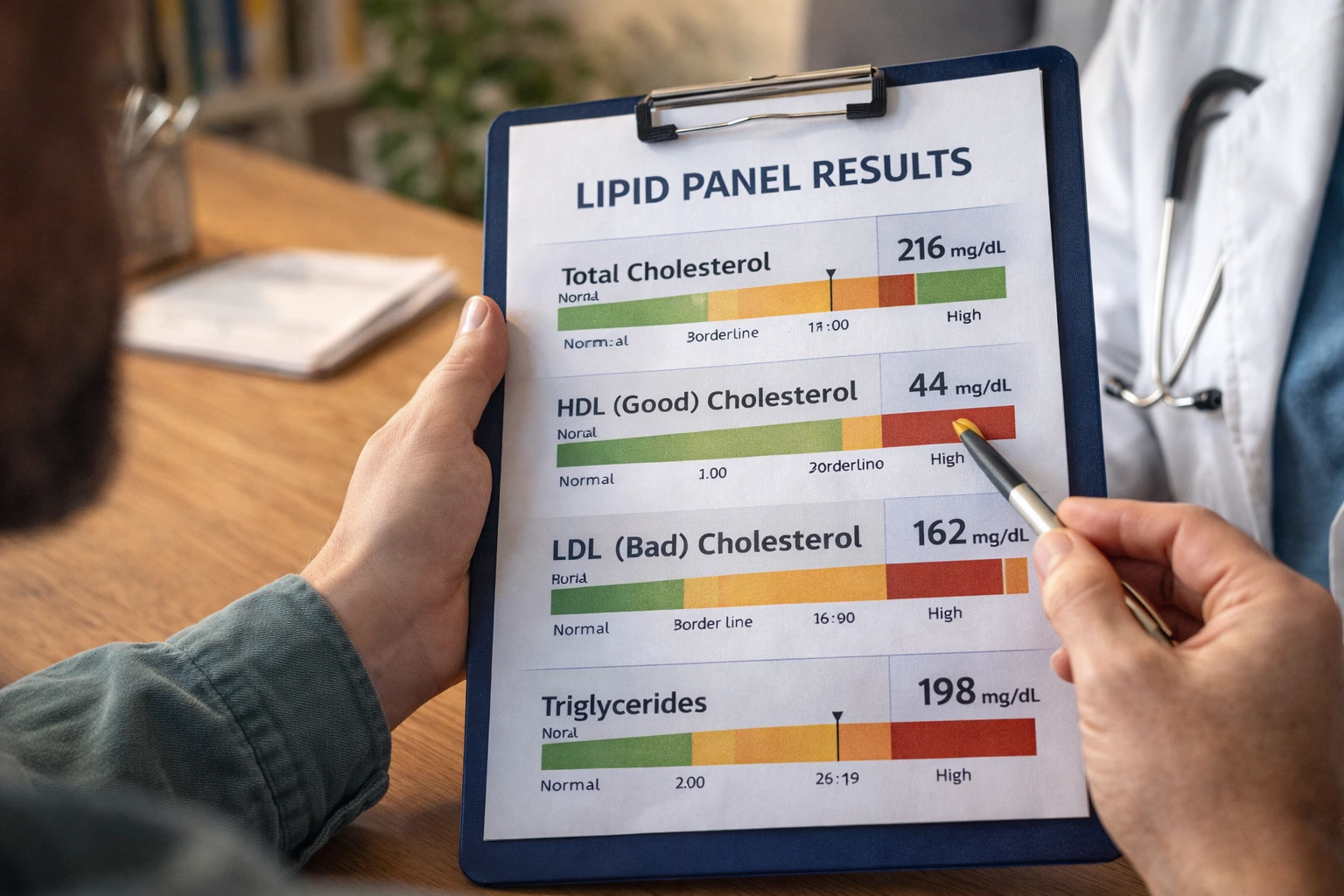
Your doctor hands you a lab report filled with numbers you don’t recognize, mentions something about cholesterol being too high, and suddenly you’re left wondering if you’re headed for trouble – but nobody really explains what lipid panel results actually mean for your life.
Unlocking lipid panel results
Understanding your lipid panel results is like deciphering a secret code that holds the key to your heart health, and honestly, it can feel overwhelming at first. When you sit down with those numbers in front of you, you’re looking at cholesterol levels, triglycerides, and lipoproteins all playing vital roles in your body’s intricate balance. Think of it this way: your lipid panel is essentially a snapshot of how well your body is managing fats in your bloodstream. HDL is the good cholesterol that actually helps clean out your arteries, LDL is the kind that builds up and causes problems, and triglycerides are another type of fat that matters more than most people realize. For seniors especially, these numbers tell a story about decades of dietary choices, activity levels, and genetics all working together. When you finally understand what each number means, it stops feeling like medical jargon and starts feeling like actionable information about your own body.
- Learn the significance of HDL, LDL, and total cholesterol levels
- Discover the impact of high triglycerides on your health
- Understand the role of lipoproteins in transporting fats in your bloodstream
Navigating the numbers
Each number in your lipid panel tells a unique story about your heart health, and the journey of understanding them is deeply personal. Whether it’s the thrill of improved numbers after months of dietary changes or the road bumps of high cholesterol that seem stubborn no matter what you do, every result is a chapter in your health journey. Imagine getting your results back and seeing your LDL has dropped by 20 points after you started walking daily and cutting back on fried foods – that’s real progress you can feel proud of. Or perhaps you’re facing the opposite scenario where despite your best efforts, your numbers haven’t budged, which is frustrating but also more common than you’d think, especially if genetics play a strong role in your family. The key is learning to read these numbers not as pass or fail grades, but as feedback from your body telling you what’s working and what needs adjustment. Many seniors find that tracking their numbers over time, rather than obsessing over a single result, helps them see the bigger picture and stay motivated.
💬 Ready to feel better in 2 minutes?choose where to begin:
Embracing lifestyle changes
Your lipid panel results can guide you towards a healthier lifestyle, and the beautiful part is that you have more control than you might think. From dietary tweaks like swapping butter for olive oil and choosing fish twice a week instead of red meat, to regular exercise that doesn’t have to mean running marathons but could mean a 30-minute walk most days, small changes genuinely add up. Consider the story of Margaret, a 68-year-old who discovered her triglycerides were dangerously high after her annual checkup. Instead of feeling defeated, she joined a local walking group, started cooking with her daughter who helped her learn heart-healthy recipes, and within six months her numbers improved so much her doctor reduced her medication. It’s never too late to rewrite your health story, and many seniors are surprised by how quickly their bodies respond when they make consistent, sustainable changes rather than extreme ones. The key is finding changes that fit your life, not forcing your life to fit someone else’s idea of what’s healthy.
Seeking support and guidance
Don’t navigate your lipid journey alone, because the emotional weight of managing health numbers can be just as heavy as the physical challenge. Consulting with healthcare professionals gives you personalized guidance based on your specific situation, not generic advice from the internet. Joining support groups, whether in person at your community center or online, connects you with other seniors facing similar challenges and wondering the same questions you are. Empowering yourself with knowledge means reading reputable sources, asking your doctor questions until you truly understand, and keeping a simple record of your results over time so you can see patterns. Many seniors find that having an accountability partner, whether that’s a spouse, friend, or even a healthcare coach, makes the journey feel less isolating and more sustainable. Together, we can overcome the challenges posed by lipid panel results and transform what might feel like bad news into a roadmap for better health.
Deciphering lipid panel results unveils the intricate dance of cholesterol, triglycerides, and lipoproteins in your body. By understanding these numbers, embracing lifestyle changes, and seeking support, you can take control of your heart health journey.
How often should seniors get a lipid panel test?
Seniors should discuss with their healthcare provider the frequency of lipid panel tests based on their individual health history and risk factors. Generally, screening every 4-6 years is recommended for individuals aged 40-75.
Can lifestyle changes alone improve lipid panel results?
Yes, adopting a heart-healthy lifestyle that includes a balanced diet, regular exercise, and avoiding tobacco can positively impact lipid panel results. However, in some cases, medication may also be necessary to manage cholesterol levels.
Others also read:
Disclaimer: This article is for informational purposes only and is not a substitute for professional medical advice. Always consult a healthcare professional for personal guidance.
This article presents an experience-based perspective and has been reviewed by the GlobalHealthBeacon editorial team in 2026. It provides structured, evidence-based information to support informed health decisions.
