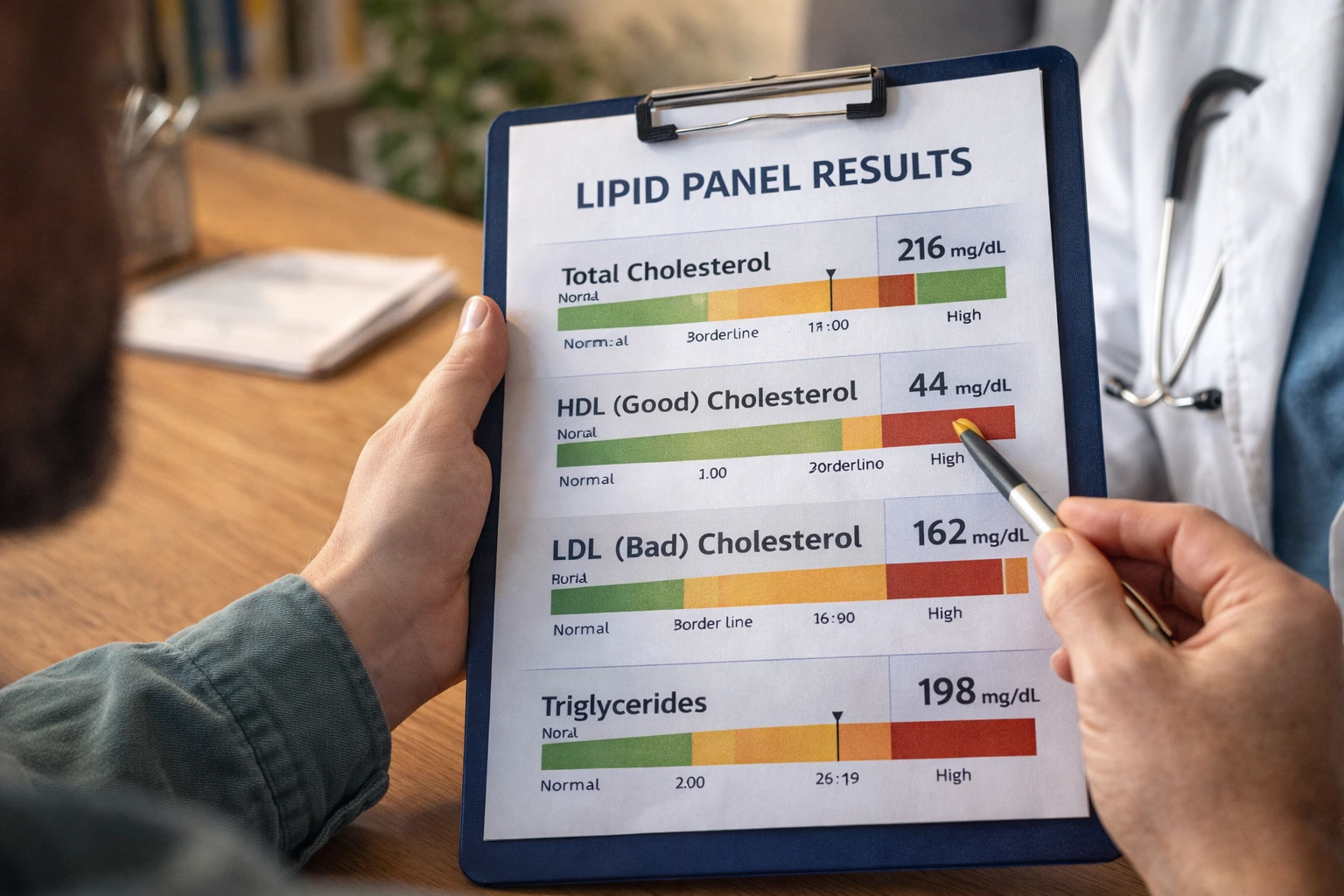
Your lipid panel results just came back and the numbers feel like a foreign language, but here’s what you need to know: lipid panel results explained properly can actually be your roadmap to better health, not a reason to panic.
Decoding lipid panel results
When you receive your lipid panel results, it may seem like a jumble of numbers, but each one tells a specific story about your cardiovascular health. Total cholesterol reflects the sum of your LDL, HDL, and 20% of your triglycerides, giving you an overall snapshot. LDL (low-density lipoprotein) cholesterol is the ‘bad’ type that can clog arteries over time, like buildup in a pipe. HDL (high-density lipoprotein) cholesterol is the ‘good’ type that helps clear LDL from your blood, acting like a cleanup crew. Triglycerides are a type of fat in your blood that can increase your risk of heart disease, especially when elevated. Think of it this way: if you’re 28 and your total cholesterol is 240, your LDL is high, and your HDL is low, you’re getting an early warning sign that your lifestyle choices need adjustment before problems develop.
- Total cholesterol comprises LDL, HDL, and 20% of triglycerides.
- LDL cholesterol is the ‘bad’ type that can clog arteries.
- HDL cholesterol is the ‘good’ type that helps clear LDL from your blood.
- Triglycerides are fats that can increase your heart disease risk.
Interpreting the numbers
Understanding what your values mean is crucial for taking action. Aim for a total cholesterol below 200 mg/dL, with LDL under 100 mg/dL to decrease heart disease risk significantly. HDL above 60 mg/dL can protect your heart, while triglycerides below 150 mg/dL are ideal. For example, if you’re a 25-year-old with a total cholesterol of 195, LDL of 85, HDL of 65, and triglycerides of 120, you’re in a healthy range and should maintain your current habits. However, if your numbers show total cholesterol at 220, LDL at 140, HDL at 35, and triglycerides at 200, these are red flags that demand immediate lifestyle intervention. Knowing these target ranges can guide your lifestyle choices and help you understand whether your current diet, exercise routine, and stress levels are working for you or against you.
📘 Fix your day in under 2 minuteschoose where to begin:
Actionable steps for improvement
Lowering your lipids involves concrete lifestyle changes that you can start implementing today. Eat heart-healthy foods like fruits, vegetables, whole grains, and lean proteins by swapping your usual lunch of a burger and fries for grilled chicken with quinoa and roasted broccoli. Exercise regularly to boost HDL and lower LDL, aiming for at least 150 minutes of moderate cardio weekly or 75 minutes of intense activity. Limit saturated fats and sugars in your diet by reading labels and avoiding processed snacks, and avoid smoking entirely. A common mistake young adults make is thinking one week of healthy eating will fix months of poor choices, so expect gradual progress over 8-12 weeks. Consulting your healthcare provider for personalized advice is essential for managing your lipid levels effectively, especially if you have family history of heart disease.
Monitoring your progress
Regular lipid panel tests are necessary to monitor your progress, typically every 3-6 months when you’re actively working to improve your numbers. Tracking changes allows you to adjust your lifestyle effectively and see the real impact of your efforts. For instance, if you started with LDL at 130 and after three months of diet and exercise changes it drops to 110, that’s measurable progress worth celebrating. Stay consistent with your healthy habits and make adjustments as needed based on your results, such as increasing exercise intensity if cholesterol isn’t budging or consulting a dietitian if you’re struggling with dietary changes. Remember, progress takes time, so persistence is key, and expecting dramatic changes within weeks will only lead to disappointment. Keep a simple log of your diet, exercise, and stress levels alongside your test results to identify patterns and understand what actually works for your body.
Seeking support and guidance
Navigating lipid panel results can be challenging, but you are not alone in this journey. Joining support groups or seeking guidance from healthcare professionals like cardiologists, registered dietitians, or health coaches can provide valuable insights and motivation tailored to your situation. Sharing your experiences and challenges with others who are also managing their cholesterol can make the journey towards healthier lipid levels more manageable and less isolating. Many young adults find that having an accountability partner, whether a friend also working on health or a professional, significantly increases their success rate. Your primary care doctor can refer you to resources, apps, or programs designed specifically for lipid management, and some insurance plans even cover preventive cardiology consultations for young adults with elevated lipid levels.
Understanding lipid panel results is essential for maintaining a healthy heart. Decoding the numbers and taking actionable steps towards improvement through lifestyle changes are key to managing your lipid levels effectively.
How often should I get a lipid panel test?
For young adults, getting a lipid panel test every 4-6 years is recommended as a baseline. If you have risk factors for heart disease or abnormal results, your healthcare provider may suggest more frequent testing.
Can I improve my lipid levels through diet and exercise alone?
Diet and exercise play a significant role in improving lipid levels. However, some individuals may require medication in addition to lifestyle changes to reach target lipid levels. Consulting a healthcare provider will help determine the best approach for you.
Others also read:
Disclaimer: This article is for informational purposes only and is not a substitute for professional medical advice. Always consult a healthcare professional for personal guidance.
This guide has been prepared and reviewed by the GlobalHealthBeacon editorial team and reflects current medical research as of 2026. It provides structured, evidence-based information to support informed health decisions.
