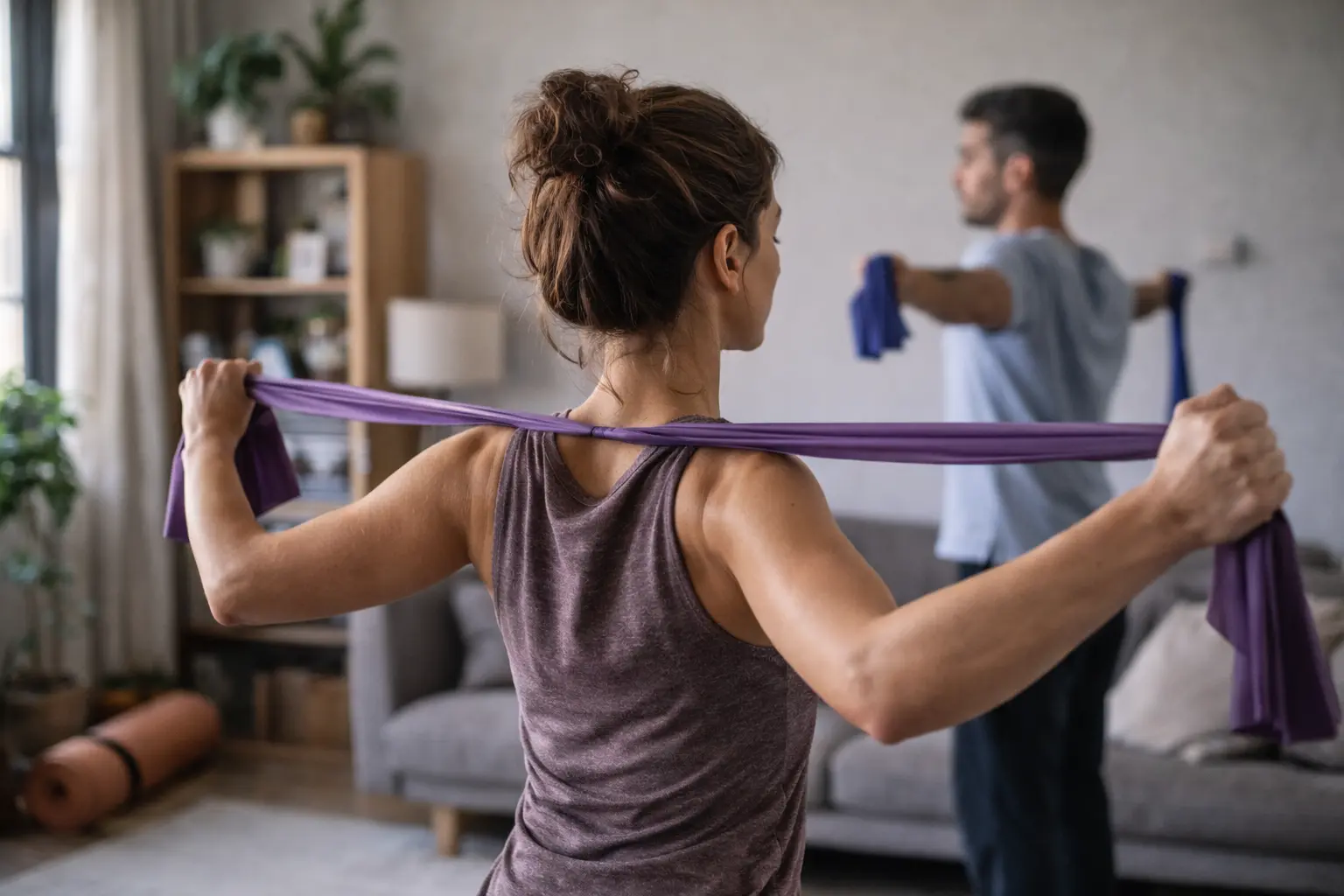
Your back aches, your shoulders creep toward your ears, and you catch yourself hunched over again without even realizing it happened – but posture correction exercises can actually rewire those stubborn patterns and give you back the upright, confident stance you remember having.
Understanding posture correction exercises
Posture correction exercises are targeted movements designed to strengthen and activate the muscles that naturally support your spine, shoulders, and neck. Think of your body like a building: without proper support structures, everything starts to sag and shift out of alignment. Over decades, many seniors develop muscular imbalances where some muscles become tight and overworked while others weaken from disuse. For example, if you spend hours sitting at a desk or hunched over a phone, your chest muscles tighten while your upper back muscles lengthen and weaken. Posture correction exercises address these specific imbalances by retraining your nervous system to recognize and maintain proper alignment. These exercises work by engaging your stabilizer muscles, which are often neglected in daily life. When you perform these movements consistently, you’re essentially teaching your body a new default position. The process involves both strengthening weak muscles and gently lengthening tight ones, creating a more balanced muscular system that naturally supports good posture without constant conscious effort.
Benefits of posture correction exercises
The benefits of posture correction exercises extend far beyond simply standing straighter. When your spine is properly aligned, your internal organs have more space to function efficiently, which can improve digestion and breathing capacity. Many seniors report that after several weeks of consistent practice, they experience reduced neck and lower back pain because the muscles are finally doing their job instead of the joints bearing all the stress. Improved balance is another significant benefit, particularly important for seniors who want to reduce fall risk. When your core and postural muscles are stronger, your body’s center of gravity is more stable, making everyday movements like reaching for items on shelves or turning to look over your shoulder safer and more controlled. Enhanced breathing happens naturally when your chest isn’t compressed by rounded shoulders. Some seniors find they have more energy throughout the day simply because their lungs can expand fully. Perhaps most importantly, better posture often leads to improved confidence and mood. When you stand tall, your brain receives signals that influence how you feel emotionally. The combination of reduced pain, better balance, easier breathing, and increased confidence creates a positive cycle that motivates continued practice.
Expert recommended posture correction exercises
Physical therapists and exercise specialists recommend several foundational exercises that work well for seniors. The shoulder blade squeeze is deceptively simple but highly effective. Sit or stand with your back straight, then slowly draw your shoulder blades down and back as though trying to squeeze a pencil between them. Hold this contraction for five to ten seconds while breathing normally, then release. Repeat this eight to twelve times. This exercise directly targets your rhomboid muscles, which are crucial for pulling your shoulders back and preventing the forward slouch that develops from years of reaching forward. The chin tuck exercise addresses forward head posture, one of the most common alignment problems in seniors. Sit tall, keep your eyes forward, then gently move your head straight back as though creating a double chin. You should feel a slight stretch at the back of your neck. Hold for three to five seconds and release. Repeat ten to fifteen times. Wall angels are excellent for opening your chest and mobilizing your shoulders. Stand with your back against a wall, feet about six inches away from the wall, and slowly slide your arms up and down in a snow angel motion while keeping your lower back against the wall. This teaches your shoulders to move freely while your spine stays stable. Start with ten repetitions and gradually increase as you become more comfortable.
- Practice these exercises daily for best results, ideally at the same time each day to build a consistent habit
- Ensure proper form to avoid injury by moving slowly and deliberately, never forcing any movement
- Gradually increase repetitions as you get stronger, adding one or two more reps each week
🔬 Science-backed benefits in 2 minuteschoose where to begin:
Challenges in correcting posture
One of the biggest challenges seniors face when correcting posture is breaking decades of ingrained movement patterns. Your nervous system has spent fifty, sixty, or seventy years learning that slouched posture is normal, so retraining it requires patience and repetition. Many people expect results within days or weeks, but meaningful postural change typically takes four to eight weeks of consistent practice before it starts feeling natural. Another common challenge is remembering to maintain good posture throughout the day. You might do your exercises perfectly in the morning, but by afternoon you’re back to your old habits without even noticing. This is completely normal and doesn’t mean you’re failing. The key is gentle, consistent practice without self-judgment. Some seniors also struggle with exercises that cause discomfort if they have existing pain or arthritis. This is where working with a professional becomes invaluable, as they can modify exercises to work around your specific limitations. Additionally, motivation can wane if you don’t see immediate results. Understanding that posture correction is a gradual process that compounds over time helps maintain commitment. Think of it like saving money: small daily deposits eventually create significant wealth.
Seeking professional guidance
Consulting with a physical therapist, chiropractor, or qualified fitness instructor who works with seniors can be transformative. These professionals can assess your specific postural deviations and identify which muscles are tight, weak, or imbalanced in your particular case. What works perfectly for one person might not be ideal for another. For instance, if you have osteoporosis, certain exercises need modification to protect your bones. If you have a history of shoulder problems, some movements might need adjustment. A professional can also teach you proper form, which is crucial because doing an exercise incorrectly can reinforce bad patterns rather than fix them. They can provide real-time feedback, catching subtle mistakes you might not notice yourself. Many insurance plans cover physical therapy if prescribed by a doctor, making it more accessible than you might think. Even just a few sessions with a professional can give you the knowledge and confidence to continue on your own. Some seniors find that periodic check-ins, perhaps monthly or quarterly, help them stay on track and adjust their routine as their strength improves.
Maintaining good posture for life
Once you’ve made progress with posture correction exercises, the key to long-term success is integration into daily life. This means being mindful of your posture during routine activities like sitting at the dinner table, watching television, or reading. Many seniors find it helpful to set reminders on their phone or place sticky notes in common areas as gentle prompts to check their alignment. The goal isn’t perfection but rather frequent awareness. You might notice that your posture naturally improves during certain activities and slips during others. For example, you might maintain good posture while walking but slouch while sitting. Identifying these patterns helps you focus your attention where it matters most. Continuing your posture exercises even after you achieve good alignment is important because muscles have memory, and without ongoing practice, old patterns can gradually return. Many seniors find that reducing their exercise frequency from daily to three or four times per week works well for maintenance once they’ve established good posture. Combining exercise with other habits like staying active, maintaining a healthy weight, and managing stress all contribute to sustained postural health. Remember that posture is a lifelong practice, not a destination. The awareness and strength you build through these exercises become part of how you move through the world.
Posture correction exercises offer a scientifically-supported approach to addressing postural problems common in aging. By understanding how these exercises work to rebalance your muscles, recognizing the multiple benefits they provide, and committing to consistent practice with proper form, you can meaningfully improve your alignment and overall well-being. Professional guidance can accelerate your progress and ensure you’re exercising safely, while long-term success comes from integrating good posture habits into your daily life.
How often should I perform posture correction exercises?
It is recommended to perform posture correction exercises at least three to four times per week to see noticeable improvements in your alignment and muscle strength. Daily practice during the first four to eight weeks can accelerate results, after which maintenance at three to four times weekly is typically sufficient to sustain improvements.
Can posture correction exercises help alleviate back pain?
Yes, engaging in posture correction exercises can help alleviate back pain by strengthening the muscles that support your spine and improving your overall alignment. Many seniors experience reduced pain within four to six weeks of consistent practice because their muscles are finally providing proper support instead of allowing joints to bear excessive stress.
Others also read:
Disclaimer: This article is for informational purposes only and is not a substitute for professional medical advice. Always consult a healthcare professional for personal guidance.
This article has been prepared and reviewed by the GlobalHealthBeacon editorial team and is based on current medical research and published scientific literature available in 2026. It provides structured, evidence-based information to support informed health decisions.
