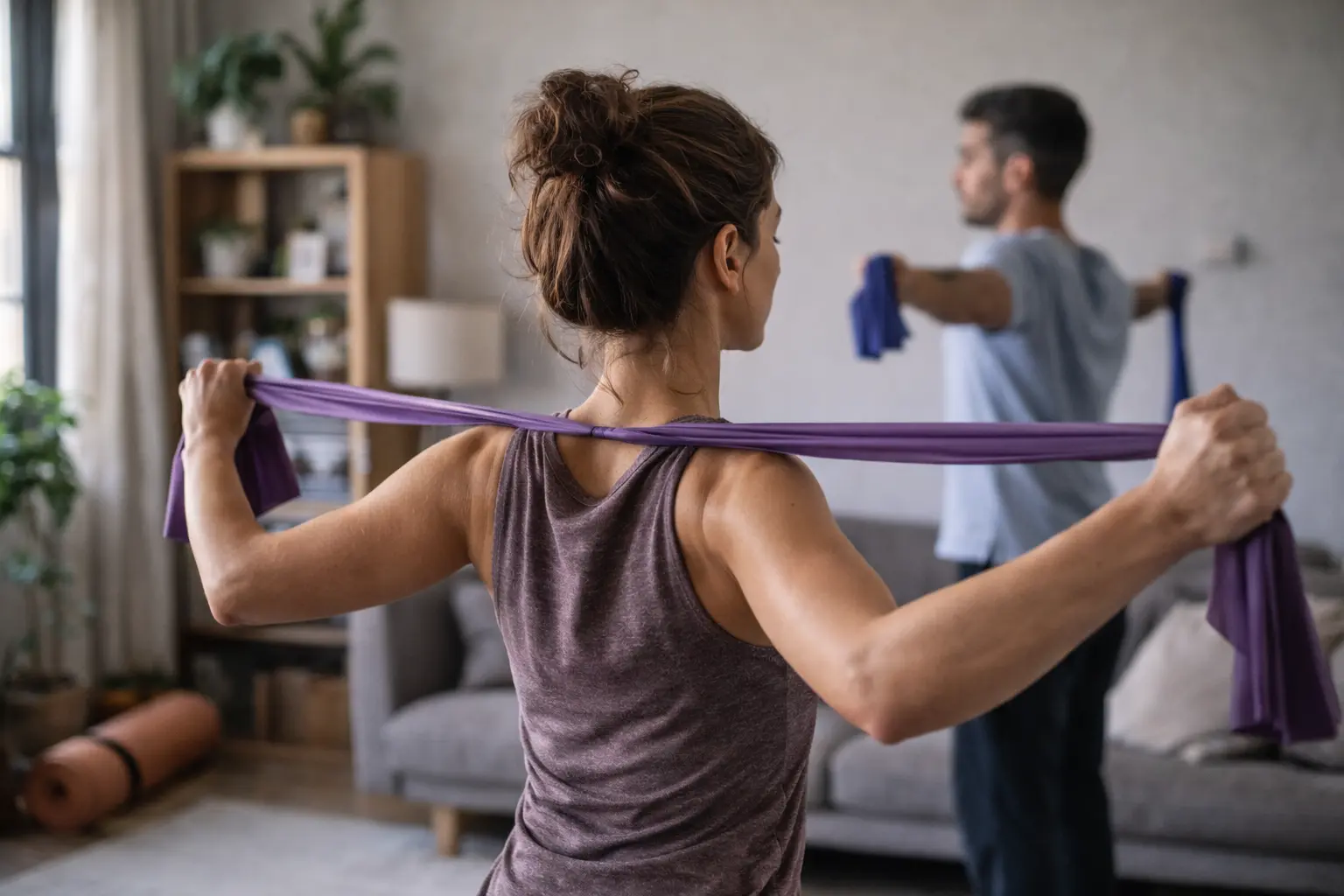
Your shoulders are creeping toward your ears, your lower back aches by 3pm, and you catch yourself hunched over your phone again—posture correction exercises are the evidence-based solution that actually works, and here’s exactly why.
Understanding posture correction exercises
Posture correction exercises work by systematically strengthening the deep stabilizer muscles that run along your spine and support your skeletal frame. Think of your spine like a tent pole: without proper guy-wires (your muscles), it collapses under pressure. When you perform these exercises, you’re essentially retraining your neuromuscular system to recognize and maintain proper alignment. Research shows that women often develop postural imbalances due to factors like prolonged sitting, repetitive work tasks, and even the biomechanics of carrying weight in the upper body. For example, a woman who spends eight hours daily at a desk may develop forward head posture as her chest muscles tighten and her upper back weakens. Posture correction exercises counteract this by lengthening tight muscles and activating dormant stabilizers. The process isn’t instantaneous; it typically takes three to six weeks of consistent practice before your nervous system begins to recognize the corrected position as normal. This gradual retraining is what makes these exercises so effective long-term.
Benefits of posture correction exercises for women
For women specifically, maintaining proper spinal alignment offers measurable benefits across multiple health domains. Beyond the obvious aesthetic improvement, correct posture optimizes lung capacity, allowing for deeper breathing and better oxygen delivery throughout your body. When your ribcage sits in its proper position rather than collapsed forward, your diaphragm can function more efficiently. Additionally, proper alignment reduces compensatory strain on joints and ligaments. Consider a woman experiencing chronic neck pain: often, this pain stems not from the neck itself but from forward head posture that places excessive load on cervical vertebrae. By correcting posture through targeted exercises, that load redistributes properly across the spine. Research also indicates that posture influences mood and confidence. Studies show that adopting an upright posture can positively affect psychological states, partly through biomechanical feedback to the brain. Women who address postural issues frequently report feeling more energized, less fatigued, and more self-assured in social and professional settings.
Key posture correction exercises to try
Three foundational exercises form the cornerstone of most posture correction programs. The shoulder blade squeeze targets your rhomboid and middle trapezius muscles, which are often weakened from forward-rounded shoulders. Sit or stand with your shoulders relaxed away from your ears, then deliberately draw your shoulder blades down and back as if trying to hold a pencil between them. Hold this contraction for five seconds while maintaining normal breathing, then release. Repeat ten times. The chin tuck addresses forward head posture by engaging your deep neck flexors. Gently draw your chin straight back without tilting your head up or down, creating a subtle double-chin appearance. Hold for three seconds and release. This exercise feels awkward initially because your body isn’t accustomed to this position, but that discomfort signals you’re activating underused muscles. Wall angels combine multiple movement patterns by having you stand with your back flat against a wall, feet six inches away, and slowly raise your arms overhead while keeping your lower back neutral. Slide your arms up and down the wall in a snow-angel motion, focusing on keeping contact with the wall throughout. This exercise reveals mobility restrictions and retrains your shoulder girdle to move properly.
- Practice these exercises daily for optimal results, ideally splitting them into two sessions of five to ten minutes each.
- Ensure proper form and alignment while performing each exercise; quality repetitions matter far more than quantity.
- Gradually increase the intensity and duration as your strength improves, adding resistance bands or increasing hold times after two weeks.
🔬 Science-backed benefits in 2 minuteschoose where to begin:
Understanding the importance of posture alignment
Proper spinal alignment is fundamentally about load distribution. Your spine consists of vertebrae stacked like building blocks, with discs between them that absorb shock and allow movement. When you slouch or adopt poor posture, you’re essentially tilting those blocks, forcing discs to compress unevenly and ligaments to stretch abnormally. Over time, this creates inflammation, pain, and accelerated wear. Women are particularly vulnerable to certain postural issues: pregnancy shifts the center of gravity forward, high heels alter ankle and knee alignment, and hormonal changes affect ligament laxity. A woman in her forties who has spent decades with forward shoulders may develop degenerative changes in her cervical spine that become increasingly difficult to reverse. By incorporating posture correction exercises now, you’re essentially performing preventive maintenance on your skeletal system. Proper alignment also optimizes muscle efficiency. When muscles work from their ideal length-tension relationship, they require less energy to produce force. This means you feel less fatigued throughout your day and experience fewer muscle cramps and spasms.
Tips for long-term posture improvement
Sustainable posture improvement requires addressing your entire environment and lifestyle, not just exercise. Start by auditing your workspace: your monitor should be at eye level, your chair should support your lower back curve, and your keyboard should allow your elbows to bend at ninety degrees. Many women work from home now, often on kitchen tables or couches, which creates ideal conditions for postural breakdown. Beyond ergonomics, develop body awareness through mindfulness practices. A simple technique involves setting hourly phone reminders to pause and assess your current posture without judgment. Notice where tension accumulates, where you habitually collapse, and where you feel strong. This awareness is the first step toward change. Additionally, schedule periodic posture assessments with a physical therapist or chiropractor who can identify your specific imbalances and adjust your exercise program accordingly. What works for one woman may not work for another; your postural issues are unique to your body, history, and habits. Consistency matters more than intensity. Five minutes daily of focused posture work outperforms sporadic intense sessions.
Embracing posture correction as a health habit
Making posture correction a genuine health habit requires shifting your mindset from viewing it as a chore to recognizing it as an investment in your future self. Imagine yourself at seventy: would you rather move with ease and confidence, or experience the cumulative effects of decades of poor posture? This perspective helps prioritize posture work in your busy schedule. Start small by integrating one exercise into your existing routine. If you drink coffee each morning, do shoulder blade squeezes while your coffee brews. If you watch television, perform wall angels during commercials. These micro-habits compound over time. Track your progress not just through how you look, but through how you feel: less neck tension, improved breathing during exercise, better sleep quality. Many women report that once they experience the benefits of corrected posture, maintaining it becomes intrinsically rewarding rather than obligatory. Your posture is a reflection of how you carry yourself through the world, and improving it sends a powerful message to yourself about self-care and respect for your body.
Posture correction exercises offer women a scientifically-supported pathway to improve spinal alignment, reduce pain, and enhance overall physical function. By understanding the biomechanics behind these exercises and committing to consistent practice, women can strengthen key stabilizer muscles, optimize breathing and circulation, and experience the psychological benefits that accompany improved posture. The key lies in starting with foundational exercises, maintaining proper form, and integrating posture work into daily routines rather than treating it as a separate task.
How often should I do posture correction exercises?
Ideally, aim to practice posture correction exercises at least five days per week for optimal results, with sessions lasting five to fifteen minutes. Daily practice is even better if you can manage it, as consistency allows your nervous system to more quickly recognize and maintain corrected posture as your new baseline. Many women find that splitting exercises into two shorter sessions (morning and evening) is more sustainable than one longer session.
Can posture correction exercises help with back pain?
Yes, posture correction exercises can significantly help alleviate back pain by strengthening the deep stabilizer muscles that support your spine and promoting proper vertebral alignment. Many cases of back pain stem directly from postural imbalances that create uneven load distribution across discs and joints. However, back pain has multiple potential causes, so it’s important to consult with a healthcare professional to rule out serious conditions and receive personalized guidance tailored to your specific situation.
Others also read:
Disclaimer: This article is for informational purposes only and is not a substitute for professional medical advice. Always consult a healthcare professional for personal guidance.
This article has been prepared and reviewed by the GlobalHealthBeacon editorial team and is based on current medical research and published scientific literature available in 2026. It provides structured, evidence-based information to support informed health decisions.
