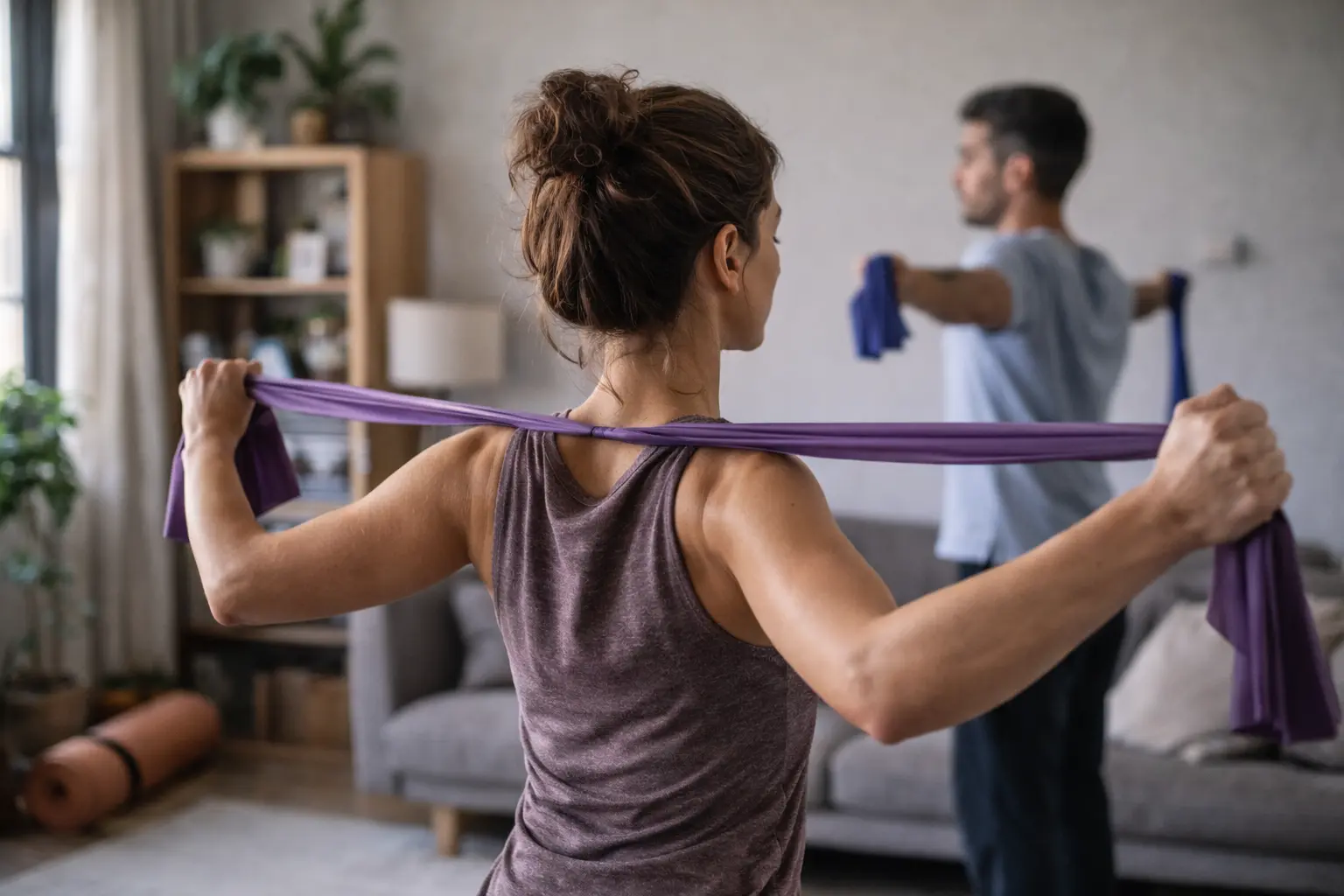
Your shoulders are creeping up toward your ears again, your neck feels like it’s permanently jutting forward, and by 3pm you’re battling a dull ache that makes you want to collapse into your chair, but here’s what actually works: real posture correction exercises that women swear by.
Effective posture correction exercises
Think about the last time you caught your reflection in a store window and didn’t recognize yourself. Rounded shoulders, a forward head position, that collapsed feeling across your chest. It happens to so many of us, especially when we spend hours hunched over desks or scrolling through phones. The good news? Specific posture correction exercises can genuinely reshape how you carry yourself. Sarah, a marketing manager, started with just five minutes of shoulder blade squeezes each morning and noticed within two weeks that her clothes fit differently and she felt taller. The key is understanding that these aren’t random movements. Each exercise targets the exact muscles that have gotten lazy or tight from poor habits. When you do chest stretches like doorway stretches, you’re literally opening up the front of your body that’s been compressed all day. Planks and their variations rebuild the deep core muscles that act like an invisible corset, supporting your spine naturally. It’s not about perfection; it’s about consistency and actually feeling the difference as your body remembers how to stand tall.
- Shoulder blade squeezes: Pull your shoulder blades together and down, holding for 5 seconds before releasing.
- Plank variations: Engage your core with planks, side planks, and reverse planks to improve overall posture.
- Chest stretches: Open up your chest and shoulders with stretches like doorway stretches or arm circles.
Building core strength for better posture
Here’s something most people don’t realize: your posture isn’t really a back problem, it’s a core problem. When your abdominal and deep spinal muscles are weak, your body compensates by collapsing forward or arching awkwardly. Jennifer, a mother of two, struggled with chronic lower back pain until a physical therapist explained that her weak core was forcing her back muscles to work overtime. Once she started doing deadbugs and bird-dogs three times a week, everything changed. Deadbugs teach your body how to move without arching your lower back, while bird-dogs build stability on one side at a time, mimicking real-life movements. The beautiful part about core work is that it’s not just about looking better; it’s about feeling supported and pain-free. When your core is strong, standing and sitting become effortless. You’re not constantly adjusting, shifting, or feeling that familiar fatigue by day’s end. Many women report that stronger cores also improve their confidence in how they move through the world, whether they’re walking into a meeting or playing with their kids.
💬 Ready to feel better in 2 minutes?choose where to begin:
Mindful movement and posture awareness
Imagine this: you’re at your desk, completely absorbed in work, and suddenly you realize your chin is practically touching your keyboard and your shoulders are up by your ears. Sound familiar? Most of us spend our days on autopilot, unaware of how we’re actually positioned. Mindfulness about posture starts with noticing these moments without judgment. Emma discovered that setting phone reminders every hour to check her posture was transformative. She’d pause, roll her shoulders back, sit up tall, and take a breath. Over time, good posture became her default rather than something she had to force. Workspace ergonomics matter too. Your monitor should be at eye level, your feet flat on the floor, and your elbows at a 90-degree angle. But beyond setup, it’s about building awareness. When you catch yourself slouching and gently correct it, you’re retraining your nervous system. Stretching breaks every 30 minutes aren’t luxuries; they’re essential resets that prevent your muscles from locking into poor positions. The magic happens when good posture stops feeling like work and becomes just how you naturally exist.
Professional guidance and support
Sometimes DIY approaches hit a wall, and that’s completely okay. If you’ve been trying exercises for weeks without seeing changes, or if you have chronic pain alongside your posture issues, a professional can be the missing piece. Physical therapists assess not just how you stand, but why you stand that way. Maybe you have muscle imbalances from an old injury, or your body has adapted to compensate for something. Chiropractors and posture specialists bring different expertise, and many women find that working with one person who understands their specific situation accelerates their progress dramatically. Michelle thought she was doing everything right with her exercises, but a physical therapist spotted that her left hip was tilted higher than her right, throwing off her entire alignment. Once that was addressed, the rest of her posture work finally clicked. Professional guidance also provides accountability and motivation. Someone checking your form, celebrating your wins, and adjusting your plan keeps you moving forward. Whether you choose virtual sessions or in-person appointments, having expert eyes on your situation can save months of frustration and ensure you’re actually building sustainable habits rather than just going through the motions.
Discover effective posture correction exercises, strengthen your core, practice mindfulness, and seek professional guidance to improve your posture. By incorporating these strategies into your routine, you can achieve a healthier, taller stance and alleviate the strain of poor posture.
How long does it take to see improvement in posture with exercises?
Consistency is key when it comes to posture correction exercises. Depending on your starting point and the exercises you choose, you may begin to see improvements in posture within a few weeks to a couple of months.
Can poor posture lead to health issues?
Yes, prolonged poor posture can contribute to various health issues, including neck and back pain, muscle imbalances, and reduced flexibility. Improving posture through exercises and mindful habits can help prevent these issues.
Others also read:
Disclaimer: This article is for informational purposes only and is not a substitute for professional medical advice. Always consult a healthcare professional for personal guidance.
This article presents an experience-based perspective and has been reviewed by the GlobalHealthBeacon editorial team in 2026. It provides structured, evidence-based information to support informed health decisions.
