Your shoulders are creeping toward your ears, your lower back aches by 3pm, and you catch yourself hunched over your phone again, wondering if posture correction exercises could actually fix what feels broken in your body.
The importance of posture correction
Maintaining proper posture does far more than create a polished appearance. When you sit or stand with alignment, your body distributes weight evenly across your skeletal system, reducing unnecessary strain on muscles and joints. Research indicates that good posture can help prevent muscle imbalances that develop over years of desk work, driving, or phone use. Consider Sarah, a 52-year-old office manager who spent two decades hunched over spreadsheets. By addressing her posture, she not only reduced chronic neck tension but also noticed improved breathing capacity and energy levels throughout the day. The science shows that proper alignment reduces compensatory stress on surrounding muscles, which means your body works more efficiently. Beyond physical benefits, studies suggest that upright posture correlates with improved mood and confidence, likely due to both biomechanical and psychological factors working together.
Common posture misconceptions
Many women believe that simply standing straighter will solve posture problems, but this oversimplifies how the body actually works. Forcing yourself into an exaggerated military stance creates tension rather than sustainable alignment. The real issue is that poor posture develops from muscle weakness and imbalance, not just habit. If your chest muscles are tight and your back muscles are weak, no amount of conscious standing will fix it. Think of it like trying to hold a heavy door open with your arm while your shoulder muscles are exhausted. Effective posture correction requires targeted strengthening of specific muscle groups, particularly the deep stabilizers in your core and upper back. Many women also assume that posture correctors or braces will solve the problem permanently, but research shows these devices provide only temporary support without addressing the underlying muscular weakness. True improvement comes from consistent exercise that retrains your nervous system and builds endurance in postural muscles.
Understanding the core posture correction exercises
Targeted movements work by engaging the muscles responsible for holding your body upright against gravity. Planks activate your deep core stabilizers, the transverse abdominis and multifidus muscles that act like a corset for your spine. Shoulder blade squeezes strengthen your rhomboids and lower trapezius, muscles that pull your shoulders back and down from their forward-rounded position. Cat-cow stretches mobilize your thoracic spine, the mid-back region that often becomes stiff from forward-facing activities. Picture yourself doing a plank and feeling tension build in your abdominal wall, or performing shoulder squeezes and feeling your shoulder blades draw together. These sensations indicate the muscles are engaging and adapting. The key is consistency and proper form. Many women rush through these exercises, but slow, controlled movements with attention to muscle engagement produce better results than quick repetitions. Start with what feels manageable, focus on feeling the target muscles work, and gradually increase duration or intensity as your strength improves.
- Practice planks for 30 seconds daily, focusing on keeping your body in a straight line from head to heels.
- Perform shoulder blade squeezes for 15 repetitions, pulling your shoulder blades down and back with control.
- Include cat-cow stretches in your daily routine, moving slowly between positions to mobilize your mid-back.
🔬 Science-backed benefits in 2 minuteschoose where to begin:
The role of resistance training
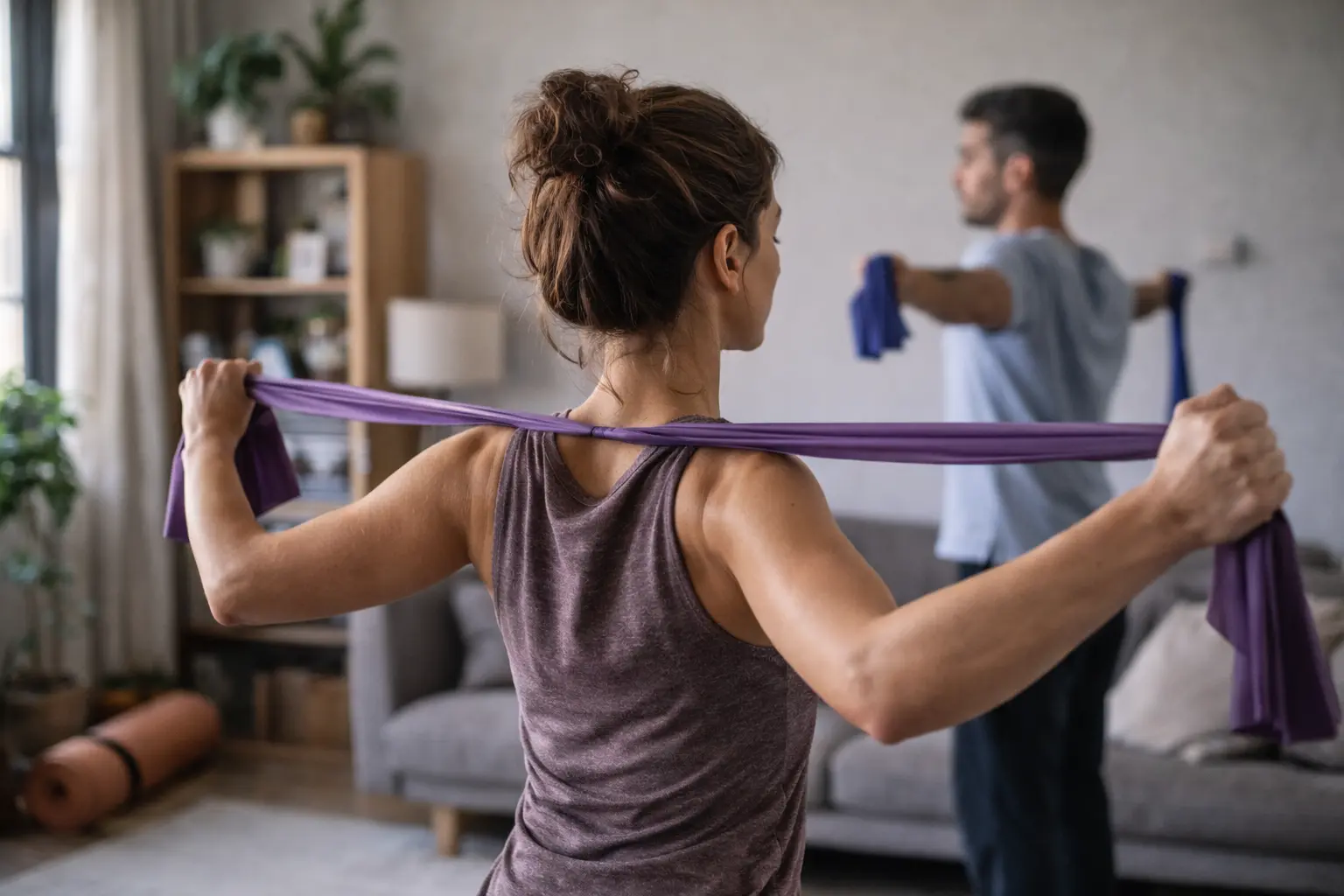
Adding resistance to your posture work accelerates muscle adaptation and builds lasting strength. Resistance bands and light weights challenge your muscles beyond bodyweight exercises, forcing them to recruit more fibers and develop greater endurance. When you perform a banded row, for example, you’re not just moving your arms; you’re teaching your back muscles to work harder and maintain tension longer. This increased demand triggers muscle growth and neural adaptation, meaning your body becomes more efficient at maintaining good posture throughout the day. Many women worry that resistance training will make them bulky, but posture-focused resistance work actually creates lean, functional strength. Research shows that combining bodyweight exercises with resistance training produces faster improvements in posture and reduces pain more effectively than either approach alone. Start with light resistance and focus on controlled movement rather than heavy weight, allowing your muscles to adapt gradually while building confidence in your strength.
Maintaining posture throughout the day
Exercises alone cannot fix posture if you spend eight hours daily in positions that undo your work. Awareness becomes your second tool. Notice how you sit at your desk, how you hold your phone, how you stand while cooking or waiting in line. These micro-moments throughout your day either reinforce good posture or reinforce poor patterns. When sitting, position your feet flat on the floor with knees at 90 degrees, keep your back against the chair, and position your screen at eye level to avoid forward head posture. During phone calls, use a headset rather than cradling the phone between your ear and shoulder. When standing, distribute weight evenly across both feet rather than shifting to one side. These adjustments feel awkward initially because your body is accustomed to poor positioning, but within weeks they become automatic. Think of it as retraining your proprioception, your body’s sense of where it is in space. Small, consistent corrections throughout the day amplify the benefits of your dedicated exercise time.
Seeking professional guidance
While self-directed exercise helps many women, professional assessment provides personalized insight into your specific postural patterns and limitations. A physiotherapist or posture specialist can identify which muscles are tight, which are weak, and which movement patterns are causing problems. They observe how you move, assess your flexibility and strength, and understand your individual anatomy. Some women have naturally longer torsos or different spinal curves that require modified approaches. A professional can also rule out underlying conditions like scoliosis or disc issues that might affect your exercise choices. They create a progression plan tailored to your starting point, ensuring you challenge yourself appropriately without injury. Many insurance plans cover physiotherapy, especially when referred by a physician, making professional guidance more accessible than many assume. Even a few sessions can provide clarity and confidence, setting you on a path toward sustainable improvement rather than guessing which exercises might help.
Scientific research demonstrates that effective posture correction requires targeted exercises addressing specific muscle groups rather than conscious standing alone. Combining bodyweight movements like planks and shoulder squeezes with resistance training accelerates results, while consistent awareness of posture during daily activities reinforces improvements. Professional guidance can personalize your approach based on your individual anatomy and needs, supporting long-term success.
How long does it take to see results from posture correction exercises?
Most people notice subtle improvements within two to three weeks of consistent practice, though visible changes typically emerge over six to twelve weeks. The timeline varies based on how long poor posture has been present, your starting strength level, and how consistently you practice. Some women feel immediate relief in tension or pain, while structural changes take longer. Consistency matters more than intensity; daily practice of even ten minutes produces better results than sporadic longer sessions.
Are posture correctors effective for improving posture?
Posture correctors provide temporary support and can serve as useful reminders of proper alignment, but they do not build the underlying muscle strength needed for lasting improvement. Relying solely on braces or correctors without exercise typically results in returning to poor posture once you remove the device. They work best as a short-term aid while you develop strength through targeted exercises, not as a permanent solution.
Others also read:
Disclaimer: This article is for informational purposes only and is not a substitute for professional medical advice. Always consult a healthcare professional for personal guidance.
This article has been prepared and reviewed by the GlobalHealthBeacon editorial team and is based on current medical research and published scientific literature available in 2026. It provides structured, evidence-based information to support informed health decisions.
