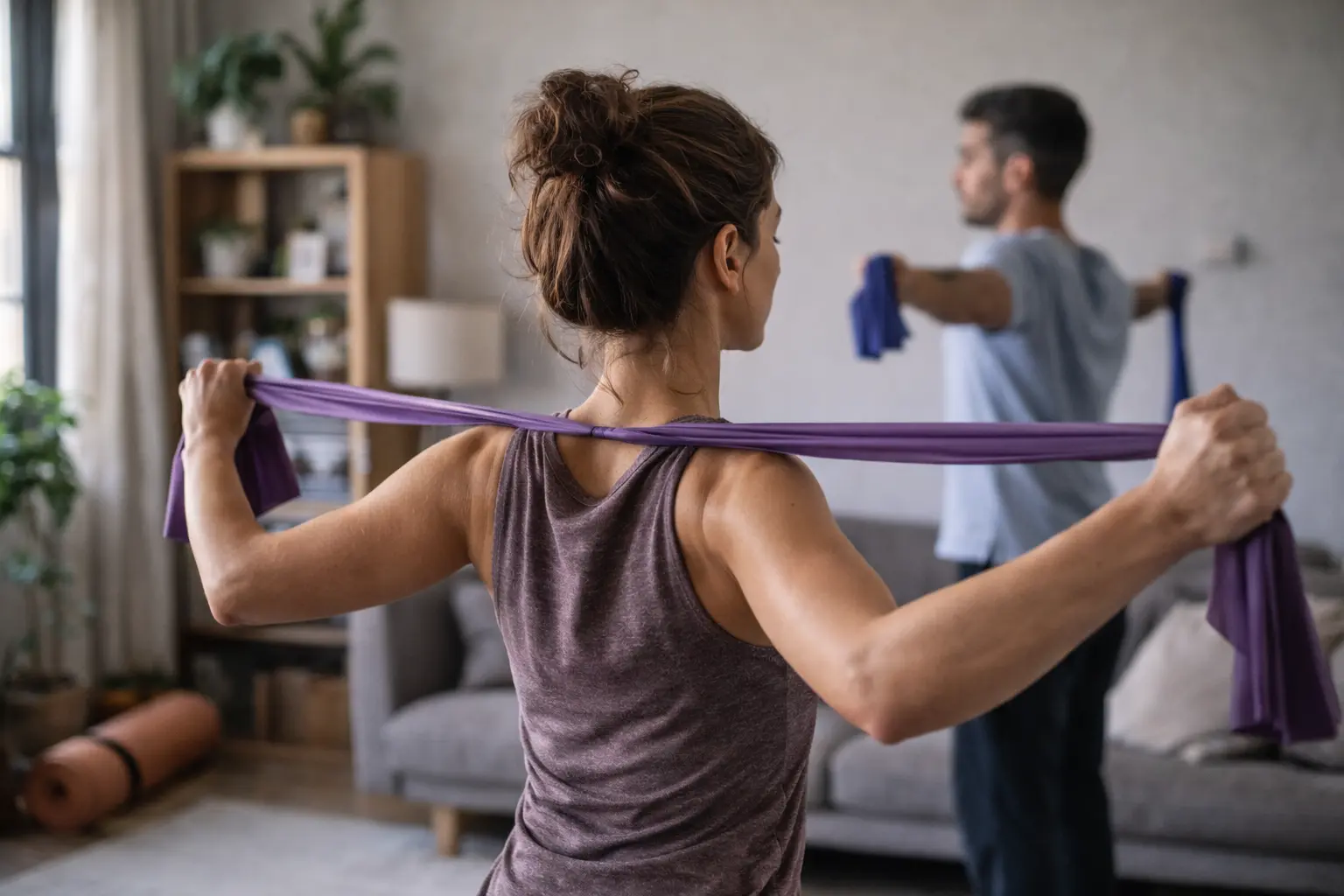
Your neck aches after scrolling, your shoulders creep up to your ears during work, and by evening your lower back feels like it’s staging a revolt – but what if those nagging aches are actually your body’s way of telling you that posture correction exercises could transform how you feel every single day?
Understanding posture correction: the basics
Posture is far more than just standing up straight. It’s the intricate alignment of your head, shoulders, spine, hips, knees, and ankles working together as an integrated system. When you’re in proper alignment, your bones stack efficiently, muscles work with minimal effort, and your nervous system functions optimally. Think of it like the foundation of a building: if it’s off by even a few degrees, the entire structure bears unnecessary stress. In young adults, poor posture often develops gradually and silently. You might not notice it until you catch your reflection in a mirror or feel that familiar twinge in your neck after a long study session. The fascinating part is that your postural habits become deeply ingrained neural patterns. Your brain essentially learns and remembers your slouched position, making it feel normal even when it’s causing harm. Understanding this helps explain why posture correction isn’t just about willpower; it’s about retraining your neuromuscular system through consistent, targeted practice.
Causes of poor posture among young adults
Modern life has essentially engineered poor posture into our daily routines. Consider a typical day: you wake up, check your phone in bed (head flexed forward), sit at a desk for eight hours hunched over a laptop, then spend your evening scrolling through social media with your chin jutting toward your chest. This forward head posture, sometimes called tech neck, has become so prevalent that researchers now track it as a distinct postural pattern. Prolonged sitting itself is problematic because it deactivates your glute muscles and hip flexors, which then tighten and pull your pelvis out of alignment. Add in stress, and your body naturally contracts, shoulders rising toward your ears as if bracing for impact. Inadequate ergonomics amplify the problem: a monitor positioned too low, a chair without lumbar support, or a desk at the wrong height forces your body into compensation patterns. Even your emotional state matters. Anxiety and depression often manifest as rounded shoulders and a collapsed chest, creating a feedback loop where poor posture actually reinforces negative mood states. Understanding these causes helps you identify which factors are affecting your specific postural habits.
Posture correction exercises recommended for young adults
These three foundational exercises target the most common postural dysfunctions in young adults. Shoulder Blade Squeeze directly addresses the rounded shoulder posture caused by desk work and phone use. Sit or stand with your arms relaxed at your sides, then deliberately pull your shoulder blades down and back as if trying to squeeze a pencil between them. Hold this contraction for five seconds while breathing normally, then release. The key is quality over quantity: ten slow, controlled repetitions will strengthen your rhomboid and lower trapezius muscles far more effectively than twenty rushed ones. Chin Tuck corrects forward head posture by retraining the deep neck flexors. Imagine a string attached to the crown of your head gently pulling you upward, then slowly draw your chin straight back without tilting your head up or down. You’ll create a slight double chin appearance, which actually indicates correct positioning. Hold for five seconds and repeat ten times. This exercise is particularly powerful because you can practice it anywhere: at your desk, while watching TV, or standing in line. Cat-Cow Stretch mobilizes your entire spine and alternates between spinal extension and flexion. Get on your hands and knees with wrists under shoulders and knees under hips. Inhale as you drop your belly, lift your gaze, and arch your back like a stretching cat. Exhale as you round your spine, tuck your chin, and draw your navel toward your spine like a cow. Move slowly and deliberately through ten repetitions, syncing movement with breath. This exercise awakens proprioceptive awareness throughout your spine and gently decompresses vertebrae.
- Shoulder Blade Squeeze
- Chin Tuck
- Cat-Cow Stretch
🔬 Science-backed benefits in 2 minuteschoose where to begin:
Benefits of correcting posture early
The research is compelling: young adults who address postural issues now avoid decades of chronic pain and dysfunction. When your spine is properly aligned, vertebral discs experience balanced pressure rather than concentrated stress on one side, significantly reducing herniation risk. Your breathing improves dramatically because your rib cage isn’t compressed by a collapsed chest, allowing your diaphragm to function fully. This enhanced oxygen intake boosts cognitive performance, mood, and energy levels. Correcting posture also enhances circulation throughout your body, improving nutrient delivery and waste removal at the cellular level. Beyond the physical, there’s a psychological component: research shows that upright posture correlates with increased confidence, better mood, and improved self-perception. Young adults who maintain good posture report feeling more capable and assertive. Your muscles strengthen and become more efficient, reducing fatigue during daily activities. Perhaps most importantly, addressing posture early creates a foundation for lifelong health. The habits you build now become automatic, protecting you from the postural degeneration that typically accelerates in your thirties and forties.
Tips to maintain better posture daily
Sustainable posture improvement requires environmental design and behavioral reminders working together. Start by auditing your workspace: your monitor should be at eye level, keyboard and mouse positioned so your elbows bend at ninety degrees, and your chair supporting your lower back’s natural curve. Set phone reminders every two hours to pause and perform a quick posture check: shoulders back and down, chin parallel to the ground, spine neutral. This interrupts the autopilot slouch that creeps in during focused work. When using your phone, bring it to eye level rather than looking down; this single change eliminates tech neck strain. During breaks, stand up and do a gentle backbend or shoulder rolls to counteract forward flexion. Practice the wall test: stand with your back against a wall, heels about six inches away, and check if your head, shoulders, and buttocks touch the wall. This gives you a physical reference for neutral spine position. Be mindful during leisure activities too: when watching TV, use a pillow to support your lower back; when reading, hold your book at eye level. These aren’t rigid rules but rather awareness practices that gradually reshape your postural habits.
Importance of seeking professional advice
While self-directed posture exercises help many young adults, certain situations warrant professional evaluation. If you experience persistent pain, numbness, tingling, or weakness despite consistent exercise, underlying structural issues may exist that require diagnosis. A physiotherapist can perform movement assessments to identify specific dysfunctions unique to your body. They might discover that your poor posture stems from muscle imbalances, joint restrictions, or neurological patterns that generic exercises won’t address. Some young adults have postural deviations like scoliosis or kyphosis that need specialized intervention. A professional can also ensure you’re performing exercises with correct form, which is crucial because improper technique can reinforce bad patterns or cause injury. They provide personalized progression, gradually increasing difficulty as your body adapts. Think of it like having a coach who sees what you can’t see about yourself. Even if you’re doing well with self-directed exercises, a single professional consultation can validate your approach and optimize your routine, potentially accelerating your results and preventing future problems.
Posture correction exercises offer young adults a practical, evidence-based approach to preventing chronic musculoskeletal issues and enhancing overall well-being. By understanding how modern lifestyle factors contribute to poor posture and consistently practicing targeted exercises like shoulder blade squeezes, chin tucks, and cat-cow stretches, you can retrain your neuromuscular system. The benefits extend beyond pain prevention to include improved breathing, circulation, confidence, and long-term spinal health. Maintaining better posture requires environmental adjustments and daily mindfulness, while professional guidance ensures you’re on the right track. Starting these habits now creates a foundation for decades of better health and vitality.
Are posture correction exercises suitable for all young adults?
Yes, posture correction exercises benefit most young adults, particularly those experiencing postural challenges from modern lifestyles like prolonged sitting and device use. However, if you have existing pain, injury, or structural conditions, consult a healthcare professional before starting any new exercise program to ensure the exercises are appropriate for your specific situation.
How often should I perform posture correction exercises?
For optimal results, incorporate posture correction exercises into your daily routine. Begin with three to four sessions per week, performing each exercise for five to ten minutes. As your body adapts and the movements become more natural, gradually increase frequency to daily practice. Consistency matters more than intensity; daily five-minute sessions outperform sporadic intense workouts.
Others also read:
Disclaimer: This article is for informational purposes only and is not a substitute for professional medical advice. Always consult a healthcare professional for personal guidance.
This article has been prepared and reviewed by the GlobalHealthBeacon editorial team and is based on current medical research and published scientific literature available in 2026. It provides structured, evidence-based information to support informed health decisions.
