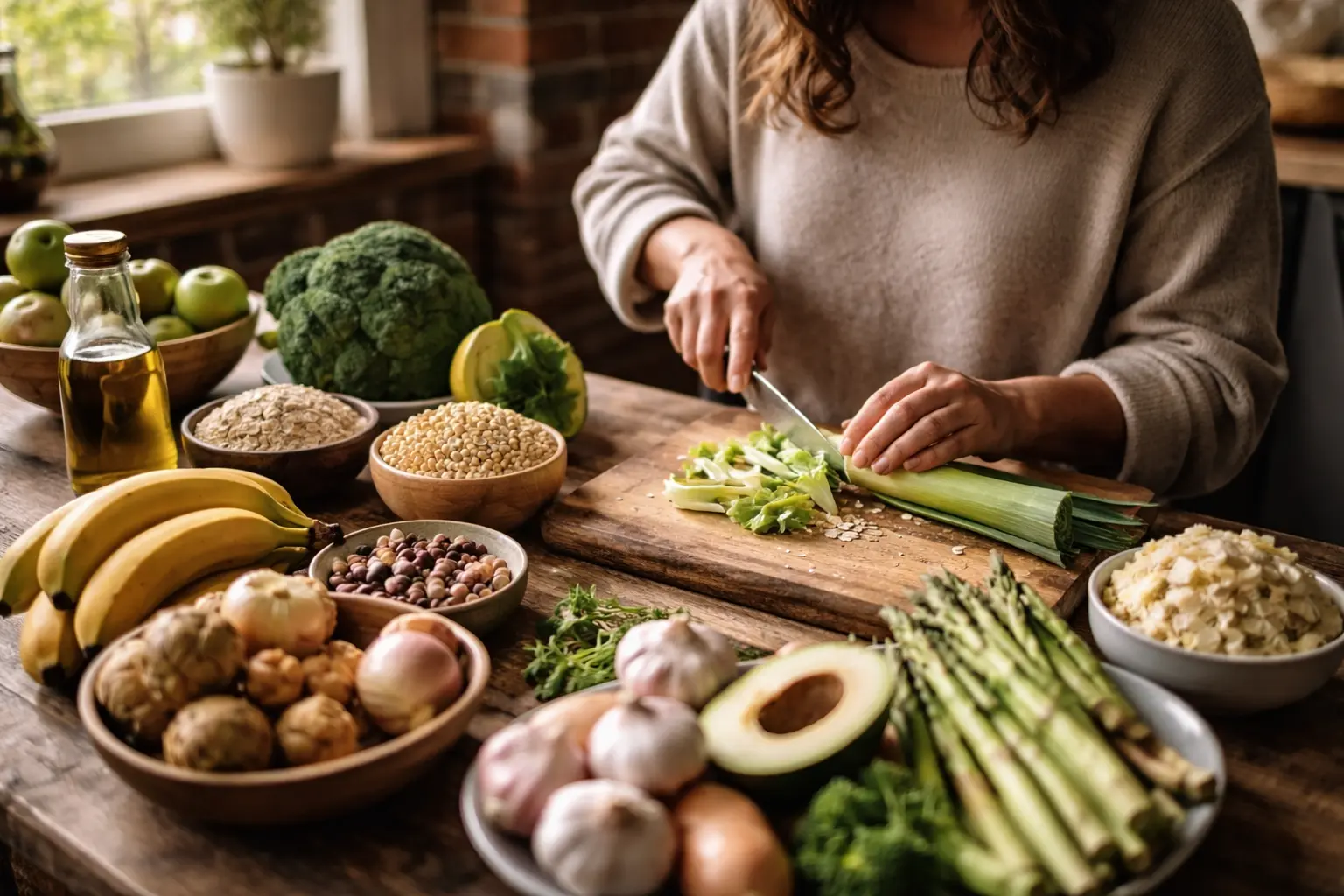
Bloating, irregular digestion, and that heavy feeling after meals is stealing your quality of life, and it doesn’t have to be this way – this prebiotics foods list is exactly what your gut has been asking for.
What are prebiotic foods?
Prebiotic foods are fiber-rich plant materials that your body cannot digest on its own, but your gut bacteria absolutely thrive on them. Think of them as fertilizer for the beneficial microorganisms living in your digestive system. When you eat foods like bananas, garlic, or oats, you’re not just feeding yourself – you’re nourishing trillions of helpful bacteria that keep your digestive system running smoothly. These good bacteria ferment the prebiotic fiber and produce short-chain fatty acids that protect your gut lining and reduce inflammation. For seniors especially, this becomes crucial because as we age, our natural bacterial populations decline and our digestive efficiency drops. By deliberately consuming prebiotic foods, you’re essentially restocking your gut’s beneficial population and giving them the fuel they need to work harder for you.
- Boosts gut health by nourishing beneficial gut bacteria
- Supports regular bowel movements and overall gut function
- May improve gut immunity and reduce inflammation
Top prebiotic foods to include
The best prebiotic foods are ones you likely already have access to or can easily find at your local grocery store. Bananas, especially slightly underripe ones, contain resistant starch that feeds your good bacteria beautifully. Onions and garlic are prebiotic powerhouses – just one small clove of garlic contains enough inulin to make a real difference. Leeks, asparagus, and chicory root are also excellent sources. Whole oats provide beta-glucans that your bacteria love, while apples with their skin intact offer pectin. Flaxseeds, though tiny, pack an enormous prebiotic punch. A practical approach is to build meals around these foods rather than treating them as supplements. For instance, a breakfast of oatmeal topped with sliced banana and ground flaxseed gives you three prebiotic sources in one bowl. Dinner could feature roasted asparagus with garlic and onions. The key is variety and consistency – rotating through different prebiotic sources ensures you’re feeding different strains of beneficial bacteria.
📘 Fix your day in under 2 minuteschoose where to begin:
Simple ways to add prebiotics to your meals
Adding prebiotics doesn’t require special recipes or complicated meal prep. Start your morning by sprinkling ground flaxseeds over your yogurt or cottage cheese – they add a subtle nuttiness without changing the taste much. Slice a banana into your oatmeal or cereal for natural sweetness and prebiotic fiber. When making salad dressings, mince raw garlic into olive oil and vinegar rather than using jarred versions. Roast onions and garlic alongside your regular vegetables at dinner. If you enjoy soups, add chopped leeks early in the cooking process so they soften completely. For snacks, keep apples on hand and eat them with the skin on. Even simple additions like adding a handful of asparagus to your scrambled eggs or including sliced onions in your sandwich can boost your prebiotic intake. The strategy is to think of these foods as flavor enhancers and nutritional boosters rather than separate items you need to force down. When prebiotics are woven naturally into meals you already enjoy, consistency becomes effortless and sustainable.
Importance of prebiotics for seniors
As we age, our digestive system undergoes significant changes that many seniors don’t fully understand. Your stomach produces less acid, your intestinal muscles contract less efficiently, and the bacterial diversity in your gut naturally declines. This combination often leads to constipation, bloating, nutrient malabsorption, and that general sense of digestive discomfort that becomes increasingly common after 60. Prebiotics directly address these issues by restoring bacterial diversity and promoting the growth of bacteria that produce butyrate, a compound that strengthens your gut barrier and improves nutrient absorption. For seniors dealing with medication side effects that disrupt digestion, or those with reduced appetite who need maximum nutrition from smaller portions, prebiotics become even more valuable. They help your body extract more vitamins and minerals from the food you do eat. Additionally, a healthy gut microbiome supports immune function, mood regulation, and even bone health – all areas where seniors benefit significantly from support. Investing in prebiotic foods is essentially investing in your body’s ability to maintain independence and quality of life.
Consult your healthcare provider
Before making significant dietary changes, especially if you take medications for conditions like diabetes, heart disease, or digestive disorders, have a conversation with your doctor or registered dietitian. Some prebiotics can interact with medications or cause temporary digestive adjustment symptoms like mild gas or bloating as your bacterial population shifts. Your healthcare provider can review your specific situation and recommend the right pace for introducing prebiotic foods. If you have conditions like IBS, Crohn’s disease, or small intestinal bacterial overgrowth (SIBO), prebiotics might need to be introduced more carefully or in specific forms. Your provider can also help you identify which prebiotic foods work best for your individual system and in what quantities. This isn’t about getting permission – it’s about getting personalized guidance that accounts for your unique health picture. A quick conversation could prevent unnecessary discomfort and ensure you’re making changes that genuinely support your long-term wellness.
Prebiotic foods are essential for nurturing a healthy gut microbiome and improving digestive health. Incorporate fiber-rich foods like bananas, onions, and garlic to support beneficial gut bacteria and overall well-being.
Can prebiotic foods improve digestion in seniors?
Yes, prebiotic foods can enhance digestive health in seniors by promoting the growth of beneficial gut bacteria, supporting regular bowel movements, and potentially reducing inflammation.
Are there any risks associated with consuming prebiotic foods?
While prebiotic foods are generally safe for most individuals, some people may experience digestive discomfort like gas or bloating when first increasing their intake. Start with small portions and gradually increase consumption.
Others also read:
Disclaimer: This article is for informational purposes only and is not a substitute for professional medical advice. Always consult a healthcare professional for personal guidance.
This guide has been prepared and reviewed by the GlobalHealthBeacon editorial team and reflects current medical research as of 2026. It provides structured, evidence-based information to support informed health decisions.
