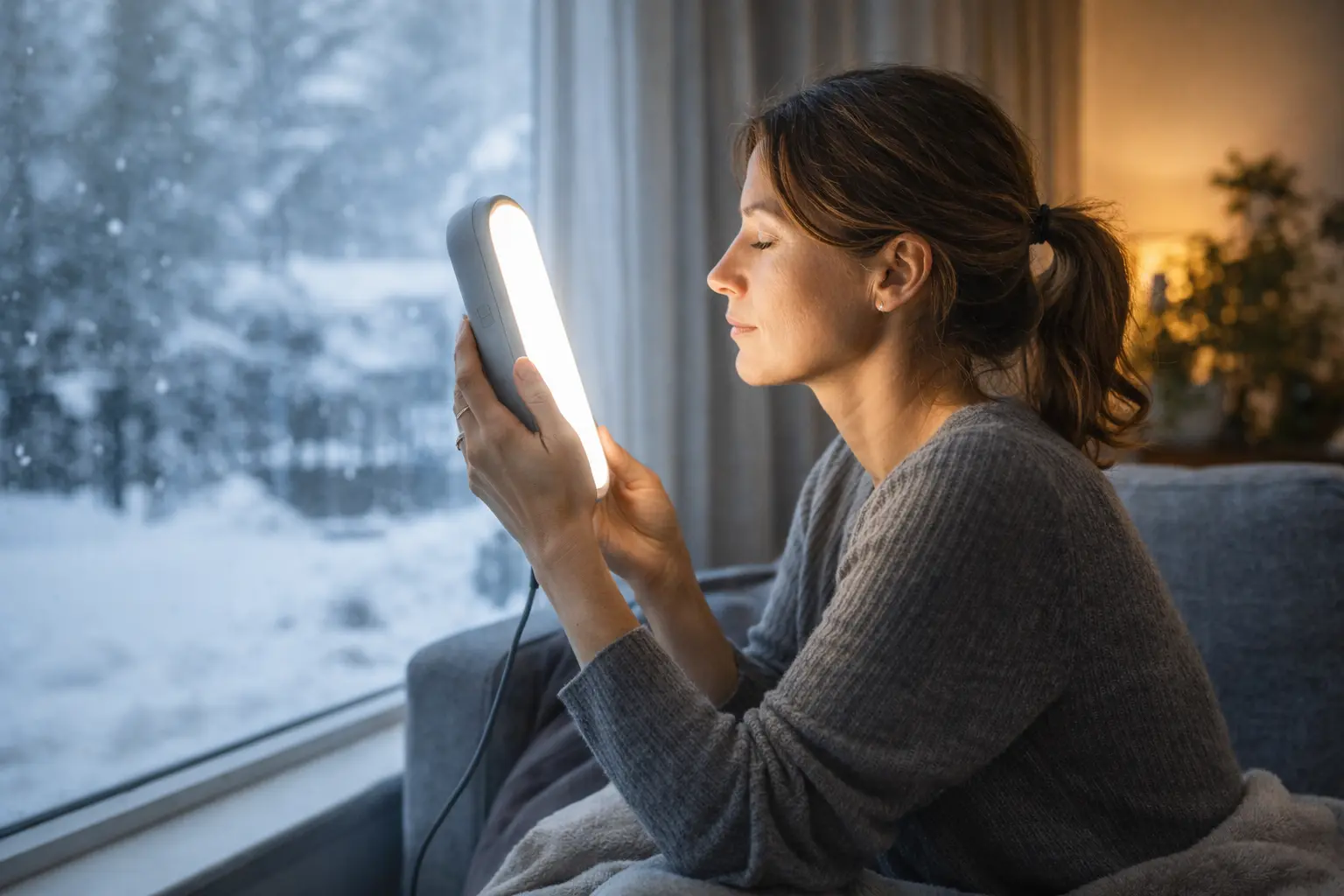
When November hits and the sun disappears by 4 PM, that heavy fog settles in your chest and suddenly getting out of bed feels impossible, you’re not alone in fighting to prevent winter depression symptoms that steal your energy and mood.
Light therapy: brighten up your days
I remember sitting in my apartment last January, barely able to drag myself to work, when my roommate suggested light therapy. Honestly, I was skeptical. How could a box of light actually change how I felt? But here’s what happened: light therapy works by mimicking natural sunlight and signaling your brain to regulate serotonin and melatonin. Just 30 minutes each morning with a 10,000 lux light box positioned about 16 inches from your face can genuinely shift your energy levels. Think of it like this: during winter, your body thinks it’s time to hibernate, so your circadian rhythm gets confused. Light therapy resets that internal clock. I started using mine right after my coffee, and within a week I noticed I wasn’t hitting snooze five times. The key is consistency and timing, ideally within the first hour of waking up.
- Improves mood by boosting serotonin levels
- Enhances sleep quality and helps with insomnia
- Reduces fatigue and increases alertness
Exercise: sweat out the blues
Here’s something nobody tells you: moving your body when you feel depressed is genuinely hard. Your brain is screaming at you to stay in bed, and the couch feels like the safest place on earth. But regular physical activity releases endorphins, those feel-good chemicals that actually combat stress and anxiety at a neurological level. I’m not talking about becoming a gym rat. Even a 20-minute walk outside, a dance session in your room to your favorite playlist, or a beginner yoga video can shift your mood noticeably. The trick is starting small and building momentum. One young adult I know started with just 10-minute walks and gradually increased to 30 minutes most days. Within two weeks, she noticed her sleep improved and her morning anxiety lessened. Exercise doesn’t just distract you from winter blues, it rewires how your brain processes mood.
💬 Ready to feel better in 2 minutes?choose where to begin:
Healthy diet: nourish your body and brain
Winter cravings hit different. You want carbs, sugar, comfort foods. But here’s the reality: what you eat directly impacts your mental health. A balanced diet rich in fruits, vegetables, whole grains, and lean proteins provides the building blocks your brain needs to produce mood-regulating neurotransmitters. Omega-3 fatty acids in salmon, walnuts, and flaxseeds have been shown to help alleviate depressive symptoms. I started tracking what I ate and noticed that days when I had a proper breakfast with protein and whole grains, my mood was noticeably better than days I grabbed processed snacks. Try adding just one omega-3 rich food to your meals this week. Swap your usual snack for almonds or add salmon to dinner. Small changes compound. Your gut health and brain health are deeply connected, so feeding yourself well isn’t vanity, it’s mental health maintenance.
Social connection: banish isolation blues
Winter naturally isolates us. It’s cold, dark, and cozy inside alone. But isolation amplifies winter blues dramatically. Staying connected with friends and loved ones, whether through video calls, in-person meetups, or group activities, lifts your spirits in ways that are hard to quantify but impossible to ignore. I had a friend who went through a rough winter alone in her apartment, and the loneliness made everything feel worse. Once she committed to weekly coffee dates and group fitness classes, her entire perspective shifted. Social interaction provides a sense of belonging and reminds you that you’re not struggling alone. Even texting a friend consistently or joining an online community around shared interests counts. The point is breaking the isolation cycle that winter creates. You don’t need elaborate plans, just consistent human connection.
Discover effective strategies to prevent winter depression symptoms through light therapy, exercise, a healthy diet, and social connection. These evidence-backed solutions can help improve your mood, energy levels, and overall well-being during the colder months.
Can light therapy really help with winter blues?
Yes, light therapy is a scientifically proven method to alleviate symptoms of seasonal affective disorder by mimicking natural sunlight and regulating mood.
How often should I exercise to combat winter blues?
Aim for at least 30 minutes of moderate exercise most days of the week to experience the mood-boosting benefits of physical activity.
Others also read:
Disclaimer: This article is for informational purposes only and is not a substitute for professional medical advice. Always consult a healthcare professional for personal guidance.
This article presents an experience-based perspective and has been reviewed by the GlobalHealthBeacon editorial team in 2026. It provides structured, evidence-based information to support informed health decisions.
