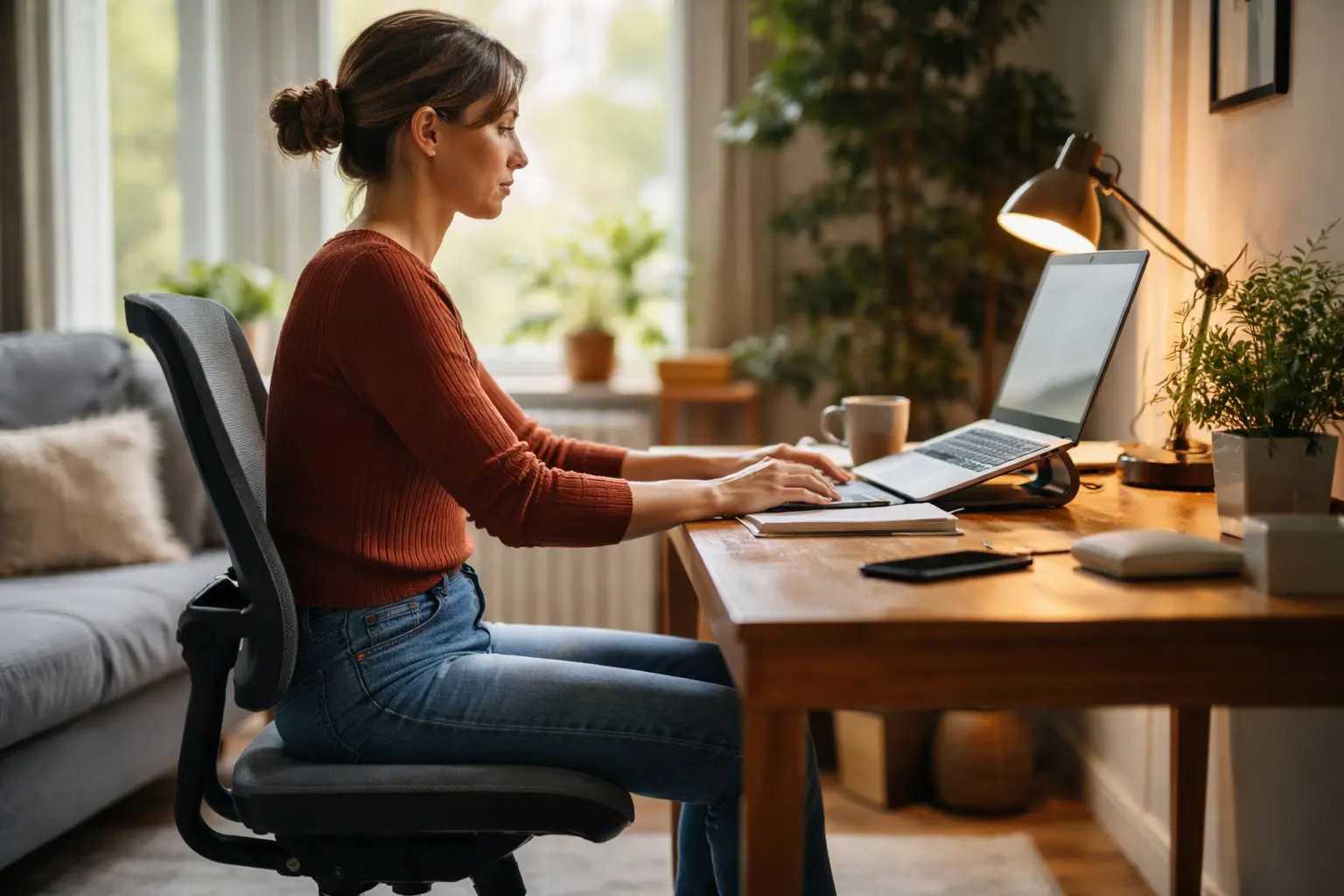
Your neck aches by noon, your lower back feels like it’s screaming by 3pm, and you can’t figure out why proper sitting posture for home working feels impossible when you’re just trying to get through your day without pain.
Ergonomic chairs: the game-changer
I spent three years hunched over a standard office chair I’d grabbed from a thrift store, thinking I was fine until my chiropractor gently suggested I was slowly compressing my spine. An ergonomic chair changed everything. These aren’t just fancy seats; they’re engineered to support your natural spine curve with lumbar support that actually cradles your lower back instead of letting it collapse. The adjustable height means your feet sit flat on the ground, your thighs are parallel to your desk, and your arms rest at a 90-degree angle. One woman I know went from taking four ibuprofen a day to zero within two weeks of switching. The tilt functionality lets you recline slightly during calls, reducing the constant forward tension in your shoulders. Yes, they cost more upfront, but consider it an investment in not spending your evenings applying heating pads and stretching in frustration.
- Promotes healthy spine alignment
- Reduces strain on neck and shoulders
- Enhances overall comfort during long hours of sitting
Sit-stand desks: versatile posture solutions
Standing all day is just sitting all day’s evil twin, but alternating between the two? That’s the sweet spot. A sit-stand desk lets you switch positions every 30 to 45 minutes, which sounds simple until you realize how much it transforms your energy and pain levels. When you stand, your core engages naturally, your circulation improves, and that sluggish afternoon brain fog lifts. When you sit again, your legs get a break. I watched my colleague Sarah go from barely making it to 5pm without back pain to actually having energy after work. The key is not to stand for hours straight; it’s the movement between positions that matters. Your muscles aren’t locked in one static posture, your blood keeps flowing properly, and you avoid that creeping numbness in your hips and thighs. Many women find they can focus better too, since the position changes act like mini-breaks for both body and mind.
💬 Ready to feel better in 2 minutes?choose where to begin:
Posture correctors: gentle reminder for alignment
These look like simple fabric straps, but they work by creating gentle tension that cues your body when you’re slouching. Think of it like a friend tapping your shoulder saying, ‘Hey, sit up.’ The best ones are barely noticeable under clothing, and they don’t restrict your movement or make you feel trapped. I initially thought they’d feel restrictive, but after wearing one for a week, my muscle memory actually started shifting. My shoulders naturally wanted to roll back instead of hunching forward. The science here is that your body learns through repetition; the corrector provides that constant, gentle feedback. Some women use them during video calls or important meetings when they’re most likely to collapse into bad posture. Others wear them for a few hours daily while building better habits. They’re not a permanent solution, but as a training tool to retrain your body’s natural alignment? They genuinely work.
Stretch breaks: vital for posture maintenance
You know that feeling when you finally stand up after three hours of work and your entire upper body feels like concrete? That’s what happens when you skip stretch breaks. I started setting a timer for every 45 minutes, and it sounds annoying until you realize how much better you feel. A simple neck roll, shoulder shrugs, and a gentle forward fold for your hamstrings takes literally two minutes but resets your entire system. Your muscles don’t tighten up, your circulation keeps flowing, and you avoid that afternoon stiffness that makes you feel 20 years older than you are. One woman I know does cat-cow stretches at her desk; another stands and reaches her arms overhead for a full-body extension. The point isn’t perfection; it’s movement. When you break up long sitting periods with even brief movement, your posture naturally improves because your muscles aren’t fatigued and screaming for relief. Your back stays supple, your shoulders stay loose, and you finish your workday feeling like yourself instead of a creaky door.
Exploring various posture improvement methods like ergonomic chairs, sit-stand desks, posture correctors, and stretch breaks can significantly enhance your work-from-home experience. By prioritizing proper sitting posture for home working, you can reduce discomfort and boost productivity.
Are posture correctors uncomfortable to wear?
Posture correctors are designed to be comfortable and unobtrusive. They provide gentle reminders to maintain proper posture without causing discomfort.
How often should I take stretch breaks during the workday?
It’s recommended to take short stretch breaks every 30 minutes to an hour while working. These breaks help prevent muscle stiffness and promote better posture.
Others also read:
Disclaimer: This article is for informational purposes only and is not a substitute for professional medical advice. Always consult a healthcare professional for personal guidance.
This article presents an experience-based perspective and has been reviewed by the GlobalHealthBeacon editorial team in 2026. It provides structured, evidence-based information to support informed health decisions.
← Back to the main proper sitting posture for home working page
