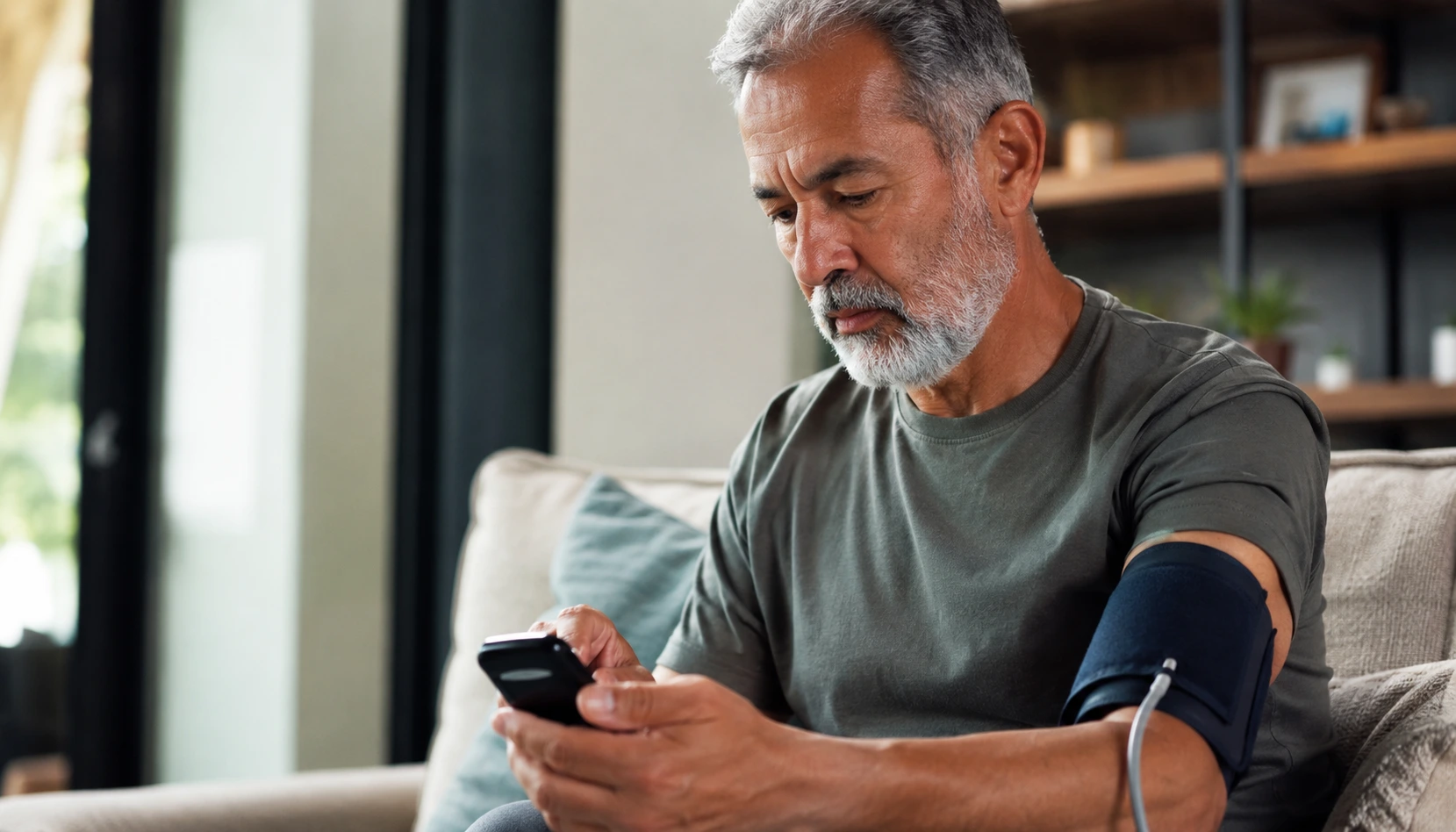
You’re tired of waiting weeks for appointment results, guessing whether that chest flutter matters, and feeling like your health is happening to you instead of with you—but remote patient monitoring devices are changing that by putting real-time health data directly into your hands and your doctor’s.
Understanding remote patient monitoring devices
Remote patient monitoring devices represent a fundamental shift in how health data flows between patients and healthcare providers. These tools range from wearable sensors like smartwatches and chest patches to handheld devices and smartphone applications that continuously track vital signs including heart rate, blood pressure, blood glucose, oxygen saturation, and even electrocardiogram patterns. Consider Sarah, a 58-year-old woman managing hypertension who uses a connected blood pressure monitor. Each morning, she takes her reading, and the data automatically syncs to her phone and her cardiologist’s portal. This continuous stream of information creates a much richer picture of her health than the single snapshot she’d get during a quarterly office visit. The devices work by collecting data through various sensors, processing it through algorithms, and transmitting it securely to cloud-based platforms where healthcare providers can access and analyze it. Understanding how these systems operate helps women make informed decisions about which technology might fit their specific health situation and lifestyle.
Benefits of RPM technology for women
Remote patient monitoring devices offer women several distinct advantages in managing their health proactively. Real-time monitoring enables early detection of concerning patterns before they escalate into serious health events. For women managing diabetes, for instance, continuous glucose monitors provide minute-by-minute readings that reveal how different foods, stress levels, and activity patterns affect blood sugar, allowing for immediate adjustments rather than waiting for monthly lab results. Women with atrial fibrillation can detect irregular rhythms as they occur, prompting timely medical intervention. Beyond detection, these devices facilitate more personalized healthcare conversations. When a woman arrives at her doctor’s appointment with weeks of objective data rather than vague recollections, the discussion shifts from general symptom descriptions to specific patterns and trends. This is particularly valuable for women experiencing perimenopause or menopause, where hormonal fluctuations can affect heart rate, blood pressure, and sleep quality in complex ways. The psychological benefit matters too: having concrete data reduces anxiety about unexplained symptoms and builds confidence in health management decisions.
Comparison of different RPM devices
Selecting the right remote patient monitoring device requires evaluating multiple dimensions beyond simple brand recognition. Accuracy is paramount—a blood pressure monitor that reads 10 points high creates false alarms and unnecessary anxiety. Look for devices that have undergone clinical validation studies, particularly those tested on diverse populations including women. Ease of use determines whether a device becomes part of your daily routine or collects dust on a shelf. A 65-year-old woman with arthritis needs a device with large buttons and simple navigation, while a tech-savvy 45-year-old might prefer advanced app features. Data integration matters significantly: does your device sync with your electronic health record? Can your doctor access readings directly, or must you manually report them? Compatibility extends beyond your phone to whether the device works with your smartwatch ecosystem, fitness apps, or other health tools you already use. Some devices like Omron’s connected monitors excel at simplicity and clinical accuracy for blood pressure, while continuous glucose monitors like Dexcom offer sophisticated trend analysis for diabetes management. Wearable patches provide convenience but may sacrifice some accuracy. The most expensive device isn’t necessarily the best for your situation.
- Research various remote patient monitoring devices available in the market by reading clinical validation studies and user reviews from women in your age group and health situation.
- Compare the features, benefits, and limitations of each device by testing them in person if possible and checking compatibility with your existing health apps and devices.
- Choose a device that best fits your lifestyle and healthcare needs by considering ease of use, data accuracy, integration with your doctor’s system, and long-term cost.
🔬 Science-backed benefits in 2 minuteschoose where to begin:
Scientific insights on RPM technology
Research demonstrates measurable benefits from remote patient monitoring across multiple health conditions common in women. A landmark study published in the Journal of the American Medical Association found that women with hypertension using connected home blood pressure monitors achieved better blood pressure control and experienced fewer cardiovascular events compared to those using traditional office-only monitoring. The mechanism is straightforward: more frequent data points reveal patterns that single office visits cannot capture, including white-coat hypertension (elevated readings only at the doctor’s office) and masked hypertension (normal office readings but elevated at home). For women with heart failure, remote monitoring of weight, blood pressure, and symptoms enables clinicians to adjust medications before fluid accumulation becomes severe enough to require hospitalization. Studies show this approach reduces emergency department visits by up to 30 percent. The data also reveals how women’s health conditions fluctuate differently than men’s—hormonal cycles affect blood pressure and heart rate variability in ways that become visible only through continuous monitoring. Machine learning algorithms are beginning to identify these patterns, enabling truly personalized treatment recommendations based on an individual woman’s physiological signature rather than population averages.
Future of RPM devices for women’s health
The trajectory of remote patient monitoring technology promises increasingly sophisticated and personalized applications for women’s health. Artificial intelligence and machine learning are moving beyond simple data collection toward predictive analytics that can forecast health events days or weeks before they occur. Imagine a system that learns your individual blood pressure patterns and alerts you when readings deviate in ways that historically preceded a migraine or anxiety episode, giving you time to intervene preventively. Wearable technology is becoming less obtrusive and more capable, with flexible sensors that integrate into clothing or patches barely larger than a postage stamp. Hormonal monitoring is advancing rapidly, with devices in development that can track estrogen, progesterone, and other hormones non-invasively, offering women unprecedented insight into how their cycles affect energy, mood, and physical symptoms. Integration with home environments is expanding too, with smart home systems that monitor activity levels, sleep quality, and environmental factors like air quality and light exposure. The convergence of these technologies means future RPM systems will provide holistic health pictures rather than isolated vital signs, enabling women to understand the complex interactions between their bodies, behaviors, and environments.
Ethical considerations in RPM technology
As remote patient monitoring becomes more prevalent, protecting women’s privacy and autonomy requires careful attention. Health data is deeply personal, and women have experienced historical breaches of medical privacy, making data security concerns particularly significant. Before adopting any RPM device, understand exactly what data is collected, how long it’s stored, who can access it, and whether it’s sold to third parties or used for research. Some devices collect far more information than necessary for clinical care, including location data, activity patterns, and even audio recordings. Women should have explicit control over data sharing and the ability to revoke access at any time. There’s also an equity dimension: RPM devices require reliable internet, smartphones, and often ongoing subscription costs, creating disparities in access. Some women may feel pressured to adopt monitoring technology by healthcare providers or employers, raising questions about true consent. Additionally, the psychological impact of constant monitoring shouldn’t be dismissed. Some women find continuous data reassuring, while others experience anxiety from obsessively checking readings. The technology should serve women’s health goals, not create new sources of stress or surveillance.
Remote patient monitoring devices offer women a scientifically-supported approach to understanding and managing their health with greater precision and autonomy. By comparing different RPM devices based on accuracy, usability, and integration capabilities, and understanding the scientific evidence behind how these technologies improve health outcomes, women can make informed decisions that align with their individual health needs and values. The future of RPM technology promises even more personalized and predictive capabilities, though ethical considerations around privacy and equitable access remain important as these tools become more widespread.
Can remote patient monitoring devices replace regular visits to healthcare providers?
Remote patient monitoring devices complement traditional healthcare by providing continuous health data that enriches clinical conversations, but they cannot replace comprehensive in-person evaluations. Physical examinations, detailed health histories, and complex diagnostic assessments still require direct provider interaction. Think of RPM as providing the soundtrack to your health story between office visits, while your doctor still needs to see the full film in person periodically.
Are remote patient monitoring devices suitable for all health conditions?
Remote patient monitoring devices are most beneficial for chronic conditions like diabetes, hypertension, heart disease, and asthma where continuous data reveals patterns and enables early intervention. They are not appropriate for acute emergencies requiring immediate medical attention or conditions where diagnosis requires physical examination or imaging. Your healthcare provider can help determine whether RPM is suitable for your specific health situation.
Others also read:
Disclaimer: This article is for informational purposes only and is not a substitute for professional medical advice. Always consult a healthcare professional for personal guidance.
This article has been prepared and reviewed by the GlobalHealthBeacon editorial team and is based on current medical research and published scientific literature available in 2026. It provides structured, evidence-based information to support informed health decisions.
← Back to the Main page on: remote patient monitoring devices
