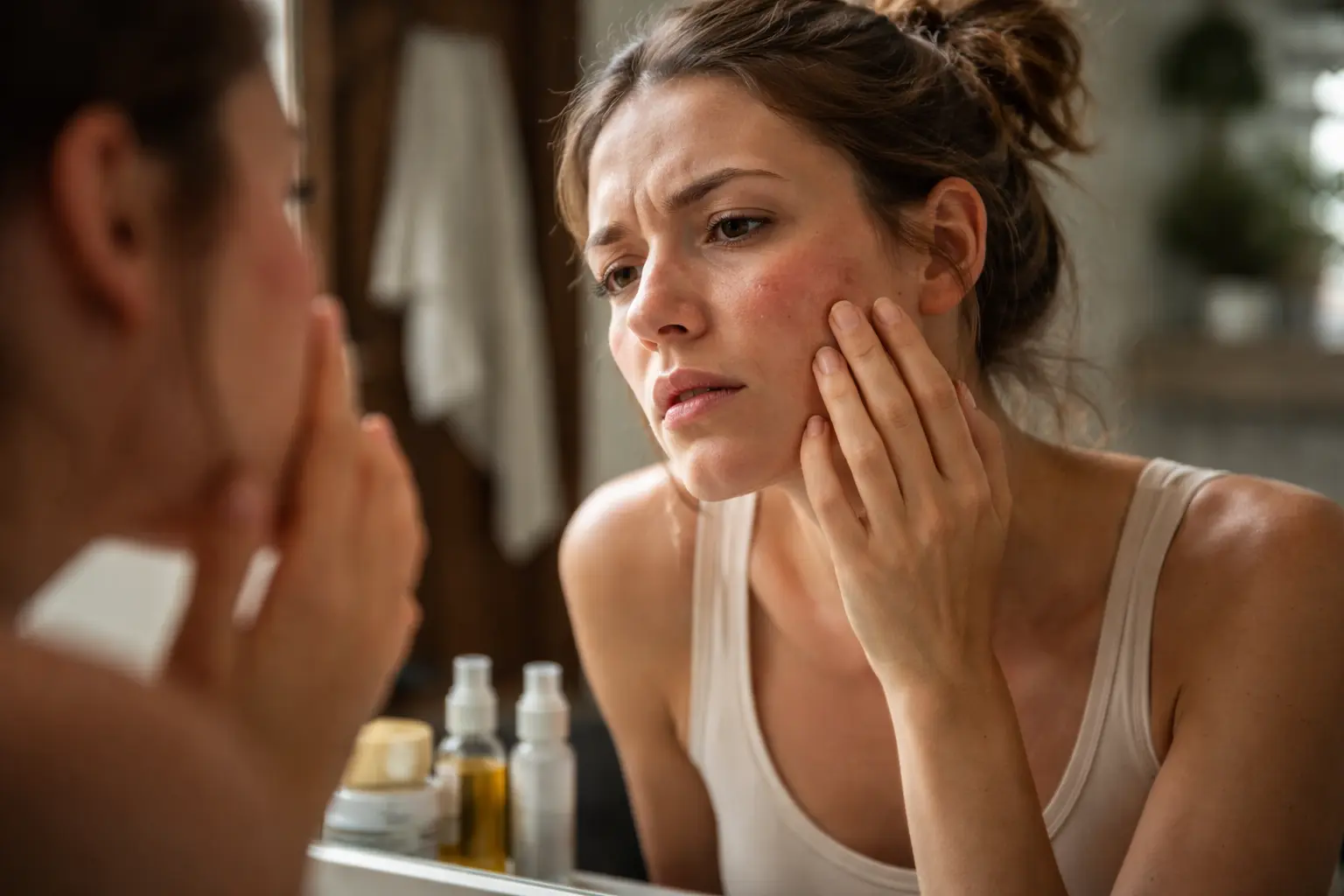
Your skin feels tight, flaky, and uncomfortable after starting retinol, and you’re wondering if you’re doing something wrong or if your skin just can’t handle it—but retinol side effects don’t have to mean giving up on results.
Understanding retinol side effects
Retinol is one of the most effective anti-aging ingredients available, but it comes with a learning curve. When you first introduce retinol into your routine, your skin undergoes a process called retinization, where it gradually adapts to the ingredient. During this adjustment period, many women experience dryness, redness, and flakiness. This happens because retinol increases cell turnover, speeding up the natural shedding of dead skin cells. For some women, this process feels manageable; for others, it feels like their skin barrier is under siege. The key is understanding that these side effects are temporary and predictable. Your skin’s moisture barrier, which acts like a protective shield, becomes temporarily compromised as retinol does its work. Rather than abandoning retinol entirely, the goal is to support your skin through this transition with targeted hydration and protective measures.
- Keep skin well hydrated by drinking plenty of water throughout the day.
- Avoid harsh exfoliants that can further strip the skin of moisture.
- Incorporate a gentle, hydrating moisturizer into your skincare routine to combat dryness.
Hydration is key
Hydration is your first line of defense against retinol-induced dryness, and it works on two levels: internal and external. Start by increasing your water intake to at least eight glasses daily, though some women find they need more depending on their activity level and climate. This internal hydration supports your skin from within, helping maintain elasticity and resilience. On the external front, layer hydrating products strategically. After cleansing, apply a hydrating toner or essence while your skin is still slightly damp, then follow with a rich moisturizer. Consider products containing hyaluronic acid, glycerin, or peptides, which draw moisture into the skin and lock it in place. Many women find that applying moisturizer to damp skin significantly improves absorption and effectiveness. At night, you can even apply an occlusive layer like a facial oil or sleeping mask over your moisturizer to prevent water loss while you sleep. This multi-step hydration approach creates a buffer that allows retinol to work effectively without leaving your skin feeling parched and uncomfortable.
📘 Fix your day in under 2 minuteschoose where to begin:
Gentle cleansing for sensitive skin
Your cleansing routine becomes critically important when using retinol, because harsh cleansers strip away the natural oils your skin desperately needs during this adjustment period. Switch to a gentle, creamy cleanser that removes makeup and impurities without disrupting your skin barrier. Look for cleansers labeled as hydrating or nourishing, and avoid anything with sulfates, which are drying and can intensify retinol irritation. Micellar water, oil cleansers, or milk-based formulas are excellent choices for retinol users. When cleansing, use lukewarm water rather than hot water, which can further dehydrate skin. Gently massage your cleanser in circular motions for about 30 seconds, then rinse thoroughly. Pat your skin dry with a soft towel rather than rubbing, which can cause micro-tears in sensitive skin. This gentle approach preserves your skin’s natural moisture while effectively removing daily buildup. Many women notice that upgrading their cleanser alone significantly reduces the severity of retinol-related dryness.
Moisture-boosting serums
Serums are concentrated formulations that deliver active ingredients deep into the skin, making them invaluable for managing retinol dryness. A hydrating serum applied before your moisturizer creates an extra layer of nourishment that combats flakiness and tightness. Look for serums containing niacinamide, which strengthens the skin barrier and reduces irritation; squalane, which mimics skin’s natural oils; or hyaluronic acid, which holds up to 1000 times its weight in water. Some women also benefit from serums with ceramides or centella asiatica, both of which soothe and protect compromised skin. Apply your serum to clean, damp skin, then layer your moisturizer on top to seal in hydration. If you’re using retinol at night, consider applying your serum before the retinol, allowing it to absorb fully, then applying a rich moisturizer afterward. This sandwich method protects your skin while allowing retinol to penetrate effectively. Many women find that adding a quality hydrating serum to their routine reduces dryness so significantly that they can tolerate higher retinol concentrations or more frequent applications.
Sun protection is essential
Sun protection becomes non-negotiable when using retinol because your skin is more vulnerable to UV damage during the retinization phase. Retinol increases skin sensitivity to sunlight, and sun exposure can worsen dryness, irritation, and redness. Apply a broad-spectrum sunscreen with SPF 30 or higher every single day, even on cloudy days or when you’re mostly indoors. Choose a sunscreen that won’t further dry your skin, such as mineral formulas with hydrating ingredients or hybrid sunscreens designed for sensitive skin. Apply sunscreen as the last step in your morning routine, about 15 minutes before sun exposure, and reapply every two hours if you’re spending time outdoors. Many women using retinol also find that wearing a wide-brimmed hat or seeking shade during peak sun hours (10 AM to 4 PM) provides additional protection. Consistent sun protection not only prevents further damage and irritation but also supports your skin barrier’s healing process, allowing retinol to work more effectively without triggering excessive dryness or sensitivity.
Managing retinol-induced dryness requires a multi-faceted approach: prioritize internal and external hydration, switch to gentle cleansing products, incorporate hydrating serums, and maintain consistent sun protection. These strategies work together to support your skin barrier while allowing retinol to deliver its anti-aging benefits.
Can retinol cause dryness in all skin types?
While retinol can lead to dryness in most skin types, individuals with naturally dry or sensitive skin may experience more pronounced dryness when using retinol. Even oily skin types can experience temporary dryness during the initial adjustment period. The severity and duration vary based on your skin’s baseline sensitivity, the retinol concentration you’re using, and how frequently you apply it.
How long does it take for retinol dryness to subside?
Retinol-induced dryness usually improves within a few weeks as your skin adjusts to the ingredient. However, if dryness persists or worsens, consult a dermatologist for personalized advice. Some women see improvement within 2-3 weeks, while others need 4-6 weeks of consistent use with proper hydration support before their skin fully adapts.
Others also read:
Disclaimer: This article is for informational purposes only and is not a substitute for professional medical advice. Always consult a healthcare professional for personal guidance.
This guide has been prepared and reviewed by the GlobalHealthBeacon editorial team and reflects current medical research as of 2026. It provides structured, evidence-based information to support informed health decisions.
