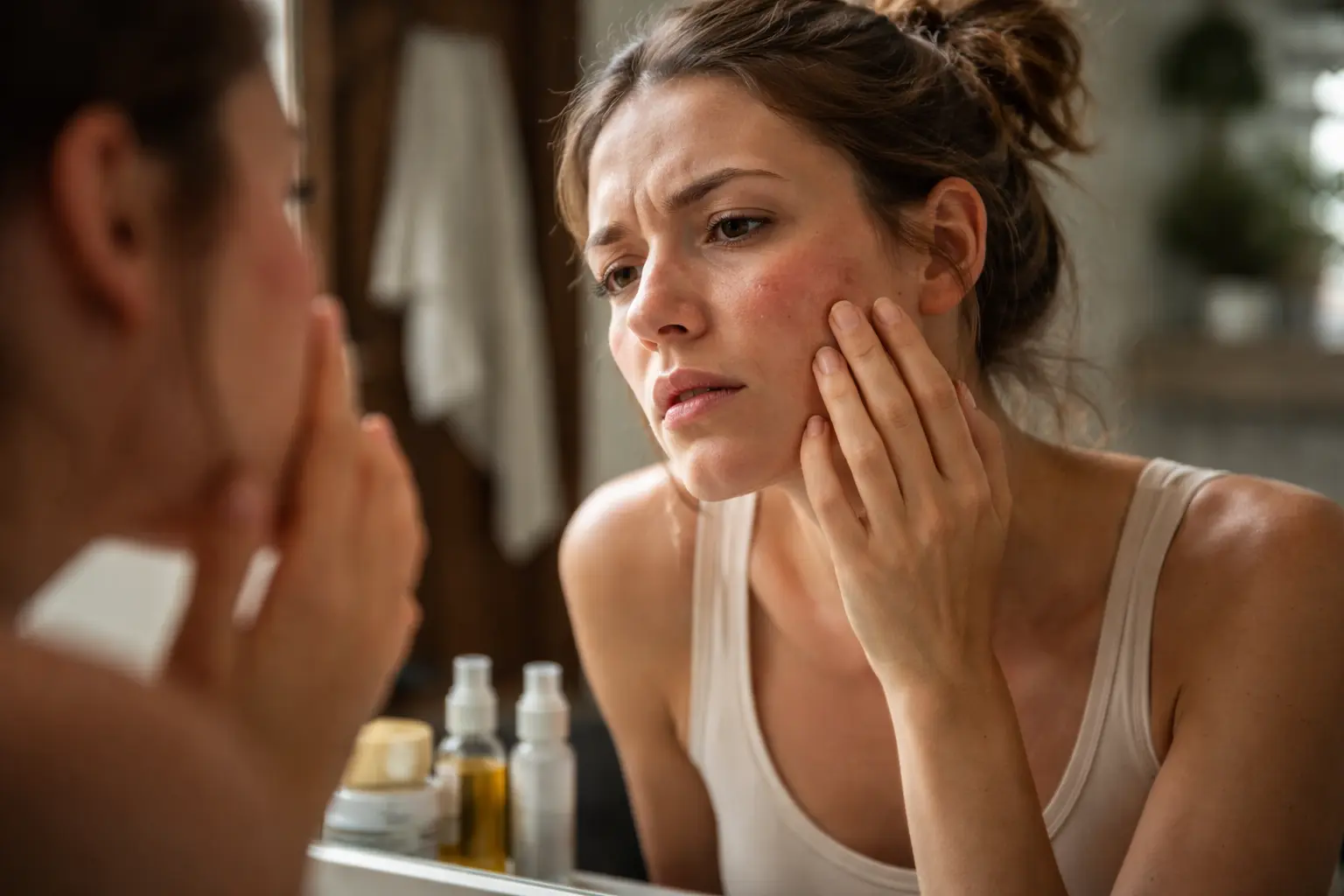
Your skin is burning red after applying retinol, and you’re wondering if you made a huge mistake with your skincare routine, but here’s the truth: retinol side effects like redness are completely normal, and you’re about to learn exactly how to fix it.
Understanding retinol redness
Retinol is a powerhouse ingredient that works by increasing cell turnover, which means your skin is essentially speeding up its natural renewal process. When you first introduce retinol, your skin barrier hasn’t adapted yet, so it responds with redness, flaking, and sometimes mild irritation. Think of it like starting a new workout routine, your muscles need time to adjust. The redness typically appears within hours of application and can last anywhere from a few days to a couple of weeks, depending on your skin sensitivity and the concentration you’re using. A 25-year-old using a 0.5% retinol might experience mild pinkness, while someone jumping straight into a 1% formula could see more pronounced redness. The key is understanding that this reaction signals your skin is working, not that something is wrong. Most users see the redness fade significantly once their skin acclimates, usually within two to four weeks of consistent use.
- Apply retinol products sparingly at first to allow your skin to acclimate.
- Use a gentle moisturizer to hydrate and soothe the skin after applying retinol.
- Protect your skin from the sun with a broad-spectrum sunscreen to prevent further irritation.
Soothing skin sensitivity
Once redness appears, your immediate instinct might be to stop using retinol entirely, but that’s actually counterproductive. Instead, focus on calming your skin with targeted ingredients. Aloe vera works by reducing inflammation and providing a cooling sensation that feels immediate relief. Niacinamide, found in many serums, strengthens your skin barrier and reduces redness within days. Centella asiatica, also called cica, is particularly effective for retinol-induced irritation because it contains compounds that accelerate skin healing. A common mistake young adults make is layering multiple actives on top of retinol, thinking they’ll speed up results. This actually intensifies redness and can damage your barrier. Instead, simplify your routine: cleanse gently, apply retinol, wait five minutes, then add a hydrating serum and moisturizer. Skip vitamin C, acids, and other actives on retinol nights. If redness becomes severe, take a break for a few days, then resume at a lower frequency, like once or twice weekly instead of nightly.
📘 Fix your day in under 2 minuteschoose where to begin:
Optimizing your skincare routine
Your entire routine matters when managing retinol redness, not just what you apply with the retinol. Start with a non-stripping cleanser, something milk-based or oil-based rather than foaming, because foaming cleansers strip away protective oils your skin needs right now. After cleansing, pat your skin dry completely, because applying retinol to damp skin increases penetration and irritation. Wait at least 20 minutes before applying retinol to ensure your skin is fully dry. When you do apply retinol, use a pea-sized amount for your entire face, not a quarter-sized dollop. Many people overapply thinking more product equals faster results, which only amplifies redness. Follow with a hydrating serum containing hyaluronic acid or glycerin to plump your skin and reduce visible redness. Finish with a nourishing moisturizer that includes ceramides or peptides to repair your barrier. At night, you might add a sleeping mask over everything to lock in hydration. During the day, sunscreen is non-negotiable because retinol makes your skin more photosensitive, meaning UV damage happens faster and can worsen redness.
Seeking professional advice
If you’ve been using retinol for six weeks and redness hasn’t improved, or if it’s accompanied by severe burning, persistent peeling, or signs of barrier damage like sensitivity to water, it’s time to see a dermatologist. A professional can assess whether your skin is simply adjusting or if you have an actual allergy or sensitivity to retinol. They might recommend switching to a gentler retinoid like retinyl palmitate or adapalene, which are less irritating than pure retinol. Some dermatologists suggest starting with prescription-strength retinoids like tretinoin at very low concentrations, because the irritation is often shorter and more predictable than over-the-counter retinol. They can also rule out other causes of redness, like rosacea or dermatitis, which might be exacerbated by retinol. If you’re taking certain medications like isotretinoin or have conditions like eczema, a dermatologist can guide you on whether retinol is appropriate for you at all. Don’t hesitate to reach out, especially if you’re experiencing physical discomfort beyond mild redness.
Patience and persistence
Managing retinol redness isn’t a quick fix, and that’s actually a good sign because it means your skin is responding to a genuinely effective ingredient. Young adults often expect results overnight, but retinol works on a timeline of weeks and months, not days. Your skin cells take about 28 days to turn over, so meaningful improvements in texture, tone, and clarity appear around the four to six week mark. During the adjustment phase, redness might fluctuate, sometimes looking better, sometimes worse, depending on factors like stress, sleep, hydration, and hormonal cycles. This is completely normal. The mistake many people make is abandoning retinol too early because they interpret redness as failure. Instead, view it as evidence that the ingredient is working. Stay consistent with your routine, keep your barrier protected with moisturizer and sunscreen, and resist the urge to add other actives. By week eight, most users notice their skin has adapted and redness has diminished significantly. By week twelve, they’re seeing real improvements in fine lines, texture, and overall skin clarity. The patience you invest now pays dividends in healthier, more resilient skin for years to come.
Understanding and managing retinol redness is key to maintaining a healthy skincare routine. By following gentle skincare practices, incorporating soothing ingredients, adjusting your routine, seeking professional advice when needed, and staying committed to the process, you can effectively address and alleviate redness in young adults.
How long does retinol redness last?
Retinol redness can vary from person to person. In most cases, redness may subside within a few weeks as your skin adjusts to the retinol treatment. If redness persists or worsens, consult a dermatologist for further evaluation and guidance.
Can I use makeup to cover retinol redness?
You can use makeup to conceal redness caused by retinol, but opt for non-comedogenic and fragrance-free products to avoid further irritation. Ensure to cleanse your skin thoroughly before applying makeup and remove it gently at the end of the day to prevent clogged pores and exacerbating redness.
Others also read:
Disclaimer: This article is for informational purposes only and is not a substitute for professional medical advice. Always consult a healthcare professional for personal guidance.
This guide has been prepared and reviewed by the GlobalHealthBeacon editorial team and reflects current medical research as of 2026. It provides structured, evidence-based information to support informed health decisions.
