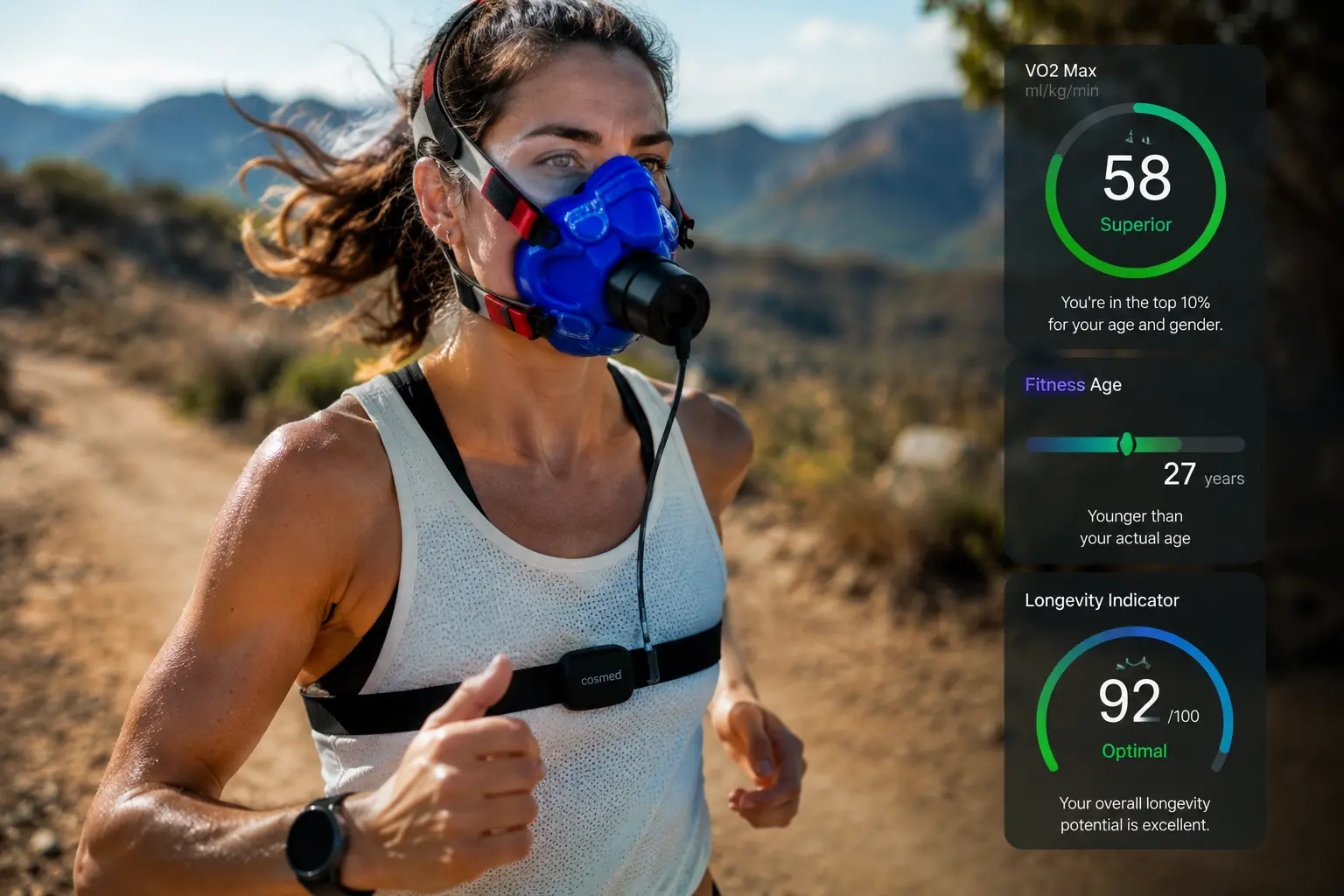
You’re exhausted after climbing stairs, your workouts feel harder than they should, and you know something needs to change—your vo2 max longevity marker is telling you that your body isn’t processing oxygen the way it could, and that’s exactly what this guide fixes.
Understanding VO2 max
VO2 max represents the maximum amount of oxygen your body can utilize during intense exercise, measured in milliliters of oxygen per kilogram of body weight per minute. Think of it as your cardiovascular engine’s horsepower. When you’re running up a hill and feel that burning sensation in your lungs, your body is working at or near its VO2 max. For women, understanding this metric matters because it directly influences how long you can sustain effort, whether you’re training for a race, keeping up with daily activities, or building resilience as you age. Your VO2 max isn’t fixed—it responds to training. A woman who starts at 35 ml/kg/min can realistically reach 45 ml/kg/min with consistent effort. This improvement translates to real-world benefits: climbing stairs without breathlessness, recovering faster after workouts, and feeling more energized throughout your day.
- VO2 max is influenced by genetics, age, gender, and training status.
- A higher VO2 max means your body can transport and utilize oxygen more efficiently.
- Improving your VO2 max can lead to increased stamina, better performance, and overall health benefits.
Best practices for VO2 max training
High-intensity interval training (HIIT) is the most effective method for boosting VO2 max because it forces your cardiovascular system to adapt quickly. A practical example: sprint for 90 seconds at 85-90% of your maximum effort, then recover for 2-3 minutes at a comfortable pace. Repeat this cycle 4-6 times. You might do this on a treadmill, bike, rowing machine, or even outdoors running. The key is pushing hard enough that conversation becomes impossible during the intense phase. Many women make the mistake of going too easy during the recovery periods or not pushing hard enough during sprints. Another effective approach is tempo training: sustain a challenging pace (around 75-85% effort) for 20-40 minutes. Combine HIIT sessions twice weekly with one longer aerobic session, and you’ll see measurable improvements within 4-6 weeks. Start conservatively if you’re new to this—your body needs time to adapt to the stress.
📘 Fix your day in under 2 minuteschoose where to begin:
Nutrition and recovery
Your training creates the stimulus, but nutrition and recovery build the adaptation. Eat protein-rich foods within 30-60 minutes after intense workouts—aim for 20-30 grams of protein paired with carbohydrates to replenish glycogen stores. A practical example: Greek yogurt with berries, grilled chicken with sweet potato, or a protein smoothie. Hydration matters too; drink water consistently throughout the day, not just during workouts. Women often underestimate their hydration needs, especially during training. Sleep is where the real magic happens—your body releases growth hormone and repairs muscle tissue during deep sleep. Aim for 7-9 hours nightly. If you’re training hard but sleeping only 5-6 hours, you’re sabotaging your progress. Iron intake is particularly important for women of reproductive age, as menstruation increases iron loss. Include lean red meat, spinach, or fortified cereals in your diet. Electrolytes matter too, especially if you’re sweating heavily during HIIT sessions.
Monitoring progress
Tracking metrics gives you concrete feedback and keeps you motivated. Use a fitness watch or app to monitor resting heart rate—as your fitness improves, your resting heart rate typically drops by 1-2 beats per minute monthly. Record your workout pace and how you feel during efforts; over time, the same pace should feel easier. Many apps estimate VO2 max based on heart rate and pace data, giving you a numerical target to chase. A real scenario: Sarah started at an estimated 38 ml/kg/min. After 8 weeks of consistent HIIT and aerobic training, her watch showed 42 ml/kg/min. More importantly, she noticed she could run her usual 5K route 90 seconds faster without feeling as exhausted. Perceived exertion is equally valuable—if a workout that felt impossibly hard three months ago now feels moderate, you’re improving. Keep a simple log: date, workout type, duration, intensity level, and how you felt. Review it monthly to spot trends and adjust your training accordingly.
Consistency is key
Building VO2 max isn’t about one perfect workout; it’s about showing up repeatedly, even when motivation dips. Most women see noticeable changes within 4-8 weeks of consistent training, but plateaus happen. When progress stalls, resist the urge to quit—instead, vary your training. If you’ve been doing HIIT on the treadmill, try cycling or rowing. If you’ve been running outdoors, move to a track. Small changes prevent boredom and challenge your body in new ways. Life gets messy: work stress, illness, travel, and family demands interrupt routines. The goal isn’t perfection but resilience. Missing one workout isn’t failure; missing four in a row is. Build training into your schedule like any other appointment. Find a workout time that fits your life—early morning, lunch break, or evening—and protect it. Consider finding an accountability partner or joining a group fitness class. Training with others creates commitment and makes the process enjoyable rather than another chore on your to-do list.
Improving your VO2 max through targeted training and lifestyle choices can enhance your overall fitness, endurance, and well-being. Consistency, proper nutrition, and monitoring progress are key factors in optimizing your VO2 max and achieving your fitness goals.
How long does it take to see improvements in VO2 max?
The rate of improvement in VO2 max varies depending on individual factors, but most people can expect to see noticeable changes within a few weeks to a few months of consistent training.
Can women achieve the same VO2 max levels as men?
While men generally have higher absolute VO2 max values due to physiological differences, women can achieve similar relative improvements in VO2 max through targeted training and consistent effort.
Others also read:
Disclaimer: This article is for informational purposes only and is not a substitute for professional medical advice. Always consult a healthcare professional for personal guidance.
This guide has been prepared and reviewed by the GlobalHealthBeacon editorial team and reflects current medical research as of 2026. It provides structured, evidence-based information to support informed health decisions.
