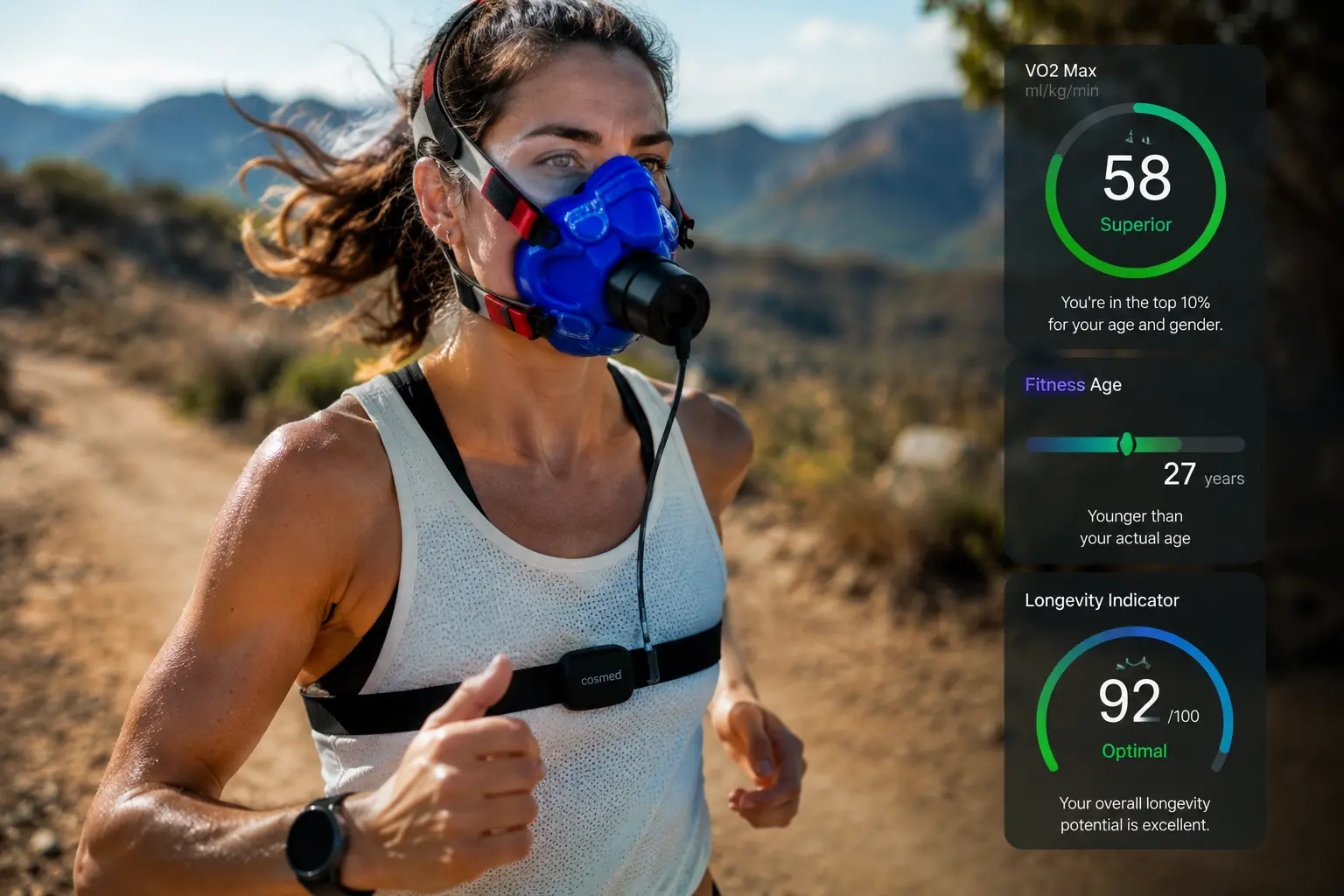
You’re hitting the gym regularly but still feel like your cardio fitness is stuck in neutral, and deep down you’re worried that your vo2 max longevity marker isn’t where it should be for your age.
Understanding VO2 max
VO2 max, or maximal oxygen consumption, is the maximum amount of oxygen your body can utilize during intense exercise, measured in milliliters of oxygen per kilogram of body weight per minute. Think of it as your aerobic engine’s horsepower. A 25-year-old male with a VO2 max of 45 ml/kg/min is considered excellent, while a female of the same age at 40 ml/kg/min is in the superior range. Your VO2 max directly correlates with cardiovascular health, endurance capacity, and longevity. It’s not just about running faster or cycling longer; studies show that higher VO2 max levels are associated with reduced risk of heart disease, stroke, and early mortality. Genetics set your baseline, but training can push you 15 to 25 percent higher than your natural starting point. Age, body composition, and training history all influence where you currently stand.
- Regular aerobic exercise like running, biking, or swimming can increase VO2 max by engaging your cardiovascular system consistently over weeks and months.
- Interval training, which involves short bursts of intense activity followed by rest or low-intensity exercise, is an effective way to boost VO2 max faster than steady-state cardio alone.
- Factors like age, genetics, and training history can influence your VO2 max levels, but consistent effort can overcome genetic predisposition.
Optimizing your training routine
Building a VO2 max training plan means balancing three types of workouts across your week. Start with one or two high-intensity interval training sessions, where you alternate 3 to 5 minute efforts at 85 to 95 percent of your max heart rate with equal recovery periods. For example, a 20-minute HIIT session might look like 3 minutes hard running, 3 minutes easy jogging, repeated 3 times. Add one longer, steady-state aerobic workout at 60 to 75 percent max heart rate for 45 to 60 minutes to build your aerobic base. Fill the remaining days with low-intensity activity like walking or easy cycling to promote recovery without adding stress. Common mistake: jumping into too much high-intensity work too fast leads to burnout and injury. Start with one HIIT session per week, then progress to two after 4 weeks. Track your heart rate zones using a monitor or app to ensure you’re working at the right intensity.
📘 Fix your day in under 2 minuteschoose where to begin:
Balanced nutrition for VO2 max
Your diet fuels the adaptations your body makes during training. Carbohydrates are your primary fuel source during high-intensity efforts, so aim for 5 to 7 grams per kilogram of body weight on training days. A 70-kilogram young adult would target 350 to 490 grams daily. Lean proteins like chicken, fish, and legumes support muscle repair and recovery, aiming for 1.6 to 2 grams per kilogram of body weight. Healthy fats from avocados, nuts, and olive oil reduce inflammation and support hormone production. Hydration is critical: drink half your body weight in ounces of water daily, plus additional fluids during and after workouts. A practical example: if you weigh 160 pounds, aim for 80 ounces baseline plus 16 to 24 ounces during a 60-minute workout. Iron-rich foods like spinach, red meat, and fortified cereals enhance oxygen transport in your blood. Many young adults overlook micronutrients; a simple blood test can reveal deficiencies in iron, B12, or vitamin D that directly impact VO2 max development.
Rest and recovery
Your VO2 max doesn’t improve during workouts; it improves during recovery when your body adapts to the stress you’ve imposed. Aim for 7 to 9 hours of quality sleep nightly, as this is when growth hormone peaks and your cardiovascular system consolidates training gains. Sleep deprivation reduces VO2 max gains by up to 30 percent. Between hard workouts, take at least one full rest day or engage in active recovery like gentle yoga or a 20-minute walk. Overtraining is a silent killer of progress; if you feel persistently fatigued, notice declining performance, or develop persistent soreness, dial back intensity for 3 to 5 days. Stress management matters too. Chronic stress elevates cortisol, which impairs recovery and limits VO2 max improvements. Try meditation, journaling, or time in nature for 10 to 15 minutes daily. Many young adults push hard but skip the recovery piece, then wonder why they plateau. The magic happens in the rest, not the effort.
Monitoring progress and adjusting goals
Tracking VO2 max progress keeps you accountable and reveals what’s working. The gold standard is a lab-based VO2 max test using a treadmill or bike with breath analysis, typically costing 100 to 300 dollars and providing exact measurements. Alternatively, fitness apps like Strava, Garmin, or Apple Health estimate VO2 max using heart rate recovery data and pace, which is 85 to 90 percent accurate for most people. Test yourself every 8 to 12 weeks rather than weekly, as meaningful improvements take time. Beyond VO2 max, track resting heart rate, which should drop 1 to 2 beats per minute every 4 to 6 weeks of consistent training. Monitor your 5-kilometer run time or 20-minute bike distance as practical performance markers. A hypothetical scenario: you start at 38 ml/kg/min and set a 12-week goal of 42 ml/kg/min. After 4 weeks of consistent HIIT plus steady-state work, your resting heart rate drops from 68 to 65 bpm, signaling adaptation. By week 12, you hit 41 ml/kg/min. Adjust your plan based on these signals; if progress stalls, increase HIIT frequency or volume slightly.
Increasing your VO2 max naturally involves a comprehensive approach that includes targeted training with high-intensity intervals and steady-state aerobic work, proper nutrition rich in carbohydrates and lean proteins, adequate sleep and recovery, and consistent monitoring of progress every 8 to 12 weeks. By implementing these strategies systematically and avoiding the common pitfall of overtraining without recovery, you can optimize your aerobic fitness levels and overall health.
How long does it take to see improvements in VO2 max?
Individual response times vary, but with consistent training and a well-rounded approach, you may start to see improvements in your VO2 max within a few weeks to a couple of months. Beginners often see faster gains in the first 8 to 12 weeks, while those already trained may progress more slowly.
Can genetics impact VO2 max levels?
Yes, genetics play a role in determining an individual’s baseline VO2 max potential. However, with appropriate training and lifestyle modifications, you can still make significant improvements in your aerobic capacity, typically gaining 15 to 25 percent above your genetic starting point.
Others also read:
Disclaimer: This article is for informational purposes only and is not a substitute for professional medical advice. Always consult a healthcare professional for personal guidance.
This guide has been prepared and reviewed by the GlobalHealthBeacon editorial team and reflects current medical research as of 2026. It provides structured, evidence-based information to support informed health decisions.
