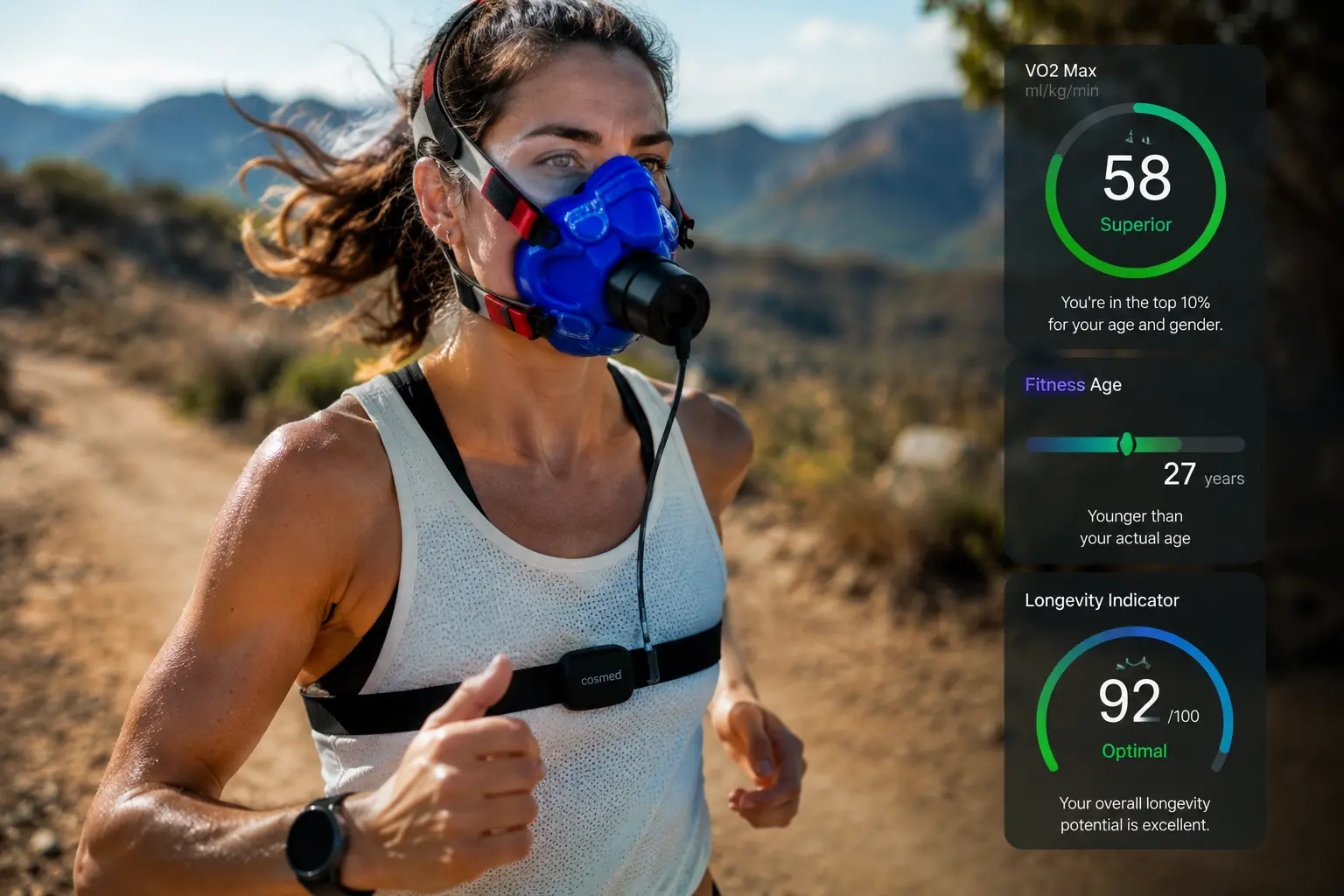
You’re grinding through workouts, eating right, but have no idea if you’re actually building the cardiovascular fitness that’ll keep you healthy for decades, and that’s where understanding your vo2 max longevity marker becomes the missing piece that changes everything.
Understanding VO2 max
VO2 max, or maximal oxygen uptake, represents the maximum amount of oxygen your body can utilize during intense physical exertion, measured in milliliters of oxygen per kilogram of body weight per minute (ml/kg/min). Think of it as your aerobic engine’s horsepower. When you push hard during exercise, your lungs pull in oxygen, your heart pumps it through your bloodstream, and your muscles extract and use that oxygen to produce energy. A higher VO2 max means your cardiovascular system and muscles work together more efficiently. For context, an untrained young adult might have a VO2 max around 35-40 ml/kg/min, while endurance athletes can reach 60-85 ml/kg/min. This metric matters because it directly reflects how well your heart, lungs, and muscles coordinate during sustained effort, making it a reliable window into your overall aerobic fitness level.
VO2 max and longevity
Research from major cardiovascular studies has consistently shown that individuals with higher VO2 max levels tend to have lower mortality rates across all age groups. A landmark study following thousands of participants over decades found that each additional unit increase in VO2 max correlated with measurable reductions in death from all causes. The mechanism is straightforward: better aerobic fitness means your cardiovascular system handles stress more effectively, your blood vessels remain more flexible, and your body manages inflammation better. People with strong VO2 max levels also show reduced risk for chronic diseases including heart disease, type 2 diabetes, and certain cancers. It’s not that VO2 max guarantees longevity, but rather that the biological adaptations required to build high aerobic capacity create protective effects throughout your entire body. Think of it as a marker of how well your fundamental systems are functioning.
How to improve your VO2 max
Building VO2 max requires strategic training that challenges your aerobic system progressively. Start with consistent aerobic exercise like running, cycling, or swimming at moderate intensity for 30-45 minutes, three to four times weekly. This builds your aerobic base. Next, layer in high-intensity interval training (HIIT) once or twice per week, alternating between short bursts of near-maximum effort (like 30-second sprints) and recovery periods. This type of training forces your body to adapt by improving oxygen delivery and utilization. A practical example: warm up for 5 minutes, then alternate 30 seconds of hard cycling with 90 seconds of easy pedaling, repeat for 15-20 minutes. Simultaneously, maintain a nutrient-dense diet rich in antioxidants, omega-3 fatty acids, and adequate carbohydrates to fuel your training. Consistency matters more than intensity; steady progress over months builds lasting improvements. Common mistake: jumping into intense training without an aerobic base, which leads to burnout or injury.
- Engage in regular aerobic exercise
- Incorporate HIIT
- Maintain a heart-healthy diet
🔬 Science-backed benefits in 2 minuteschoose where to begin:
Measuring VO2 max
Laboratory testing provides the gold standard for VO2 max measurement. You’ll exercise on a treadmill or stationary bike while wearing a mask that measures oxygen consumption and carbon dioxide production. The test gradually increases in intensity until you reach maximum effort, and specialized software calculates your VO2 max. This direct method is highly accurate but requires access to specialized equipment and trained technicians. For most people, wearable fitness trackers and smartwatches offer a practical alternative by estimating VO2 max using algorithms based on your heart rate response to exercise, age, and fitness level. These estimates are reasonably reliable for tracking trends over time, though they’re less precise than lab testing. Some fitness apps use running pace and heart rate data to estimate VO2 max. If you’re serious about tracking progress, consider a lab test as your baseline, then use wearables for ongoing monitoring between professional assessments.
Factors influencing VO2 max
Your genetic blueprint sets a ceiling for your potential VO2 max, but that ceiling is higher than most people realize. Age naturally reduces VO2 max by roughly 10 percent per decade after age 25, though regular training significantly slows this decline. Gender differences exist because men typically have higher VO2 max values than women due to differences in hemoglobin levels and muscle mass, but women can absolutely achieve excellent aerobic fitness for their demographic. Your training status is the most controllable factor; sedentary individuals can improve VO2 max by 15-25 percent through consistent exercise, while already-fit people see smaller percentage gains but from a higher baseline. Body composition matters too, since VO2 max is measured relative to body weight, meaning leaner athletes have advantages. Environmental factors like altitude training can trigger adaptations that boost oxygen-carrying capacity. The encouraging reality: genetics might determine your starting point, but training determines how far you actually go.
Conclusion on VO2 max studies
Tracking VO2 max offers genuine insight into your cardiovascular fitness and serves as a measurable proxy for aerobic health. The research linking higher VO2 max to better longevity outcomes is compelling and consistent across populations. However, VO2 max is one piece of a larger health puzzle, not a magic number that guarantees anything. Someone with an excellent VO2 max who smokes or eats poorly won’t experience the full longevity benefits. The real value lies in using VO2 max as motivation to build the aerobic fitness that requires consistent exercise, good nutrition, and lifestyle choices that benefit your entire body. Whether you track it through lab testing or wearable estimates, the act of monitoring creates accountability and helps you see progress over months and years. The deeper insight: improving your VO2 max isn’t just about the number itself, it’s about the daily habits and training discipline required to achieve it.
Higher VO2 max levels are linked to better longevity outcomes and reduced disease risk. Regular aerobic exercise, high-intensity interval training, and a nutrient-rich diet can improve your VO2 max, though genetics and age also play roles. Tracking this metric provides valuable feedback on cardiovascular fitness progress.
Can VO2 max be improved with age?
Yes, VO2 max can improve at any age through consistent training, though the rate of improvement may be slower in older adults. Regular aerobic exercise and HIIT can help maintain and even increase aerobic capacity, counteracting the natural age-related decline of roughly 10 percent per decade.
Is VO2 max a reliable indicator of overall health?
VO2 max is a valuable marker of cardiovascular fitness and aerobic capacity, and research links it to longevity outcomes. However, it should be considered alongside other health metrics like blood pressure, cholesterol, body composition, and lifestyle factors for a complete health assessment.
Others also read:
Disclaimer: This article is for informational purposes only and is not a substitute for professional medical advice. Always consult a healthcare professional for personal guidance.
This article has been prepared and reviewed by the GlobalHealthBeacon editorial team and is based on current medical research and published scientific literature available in 2026. It provides structured, evidence-based information to support informed health decisions.
