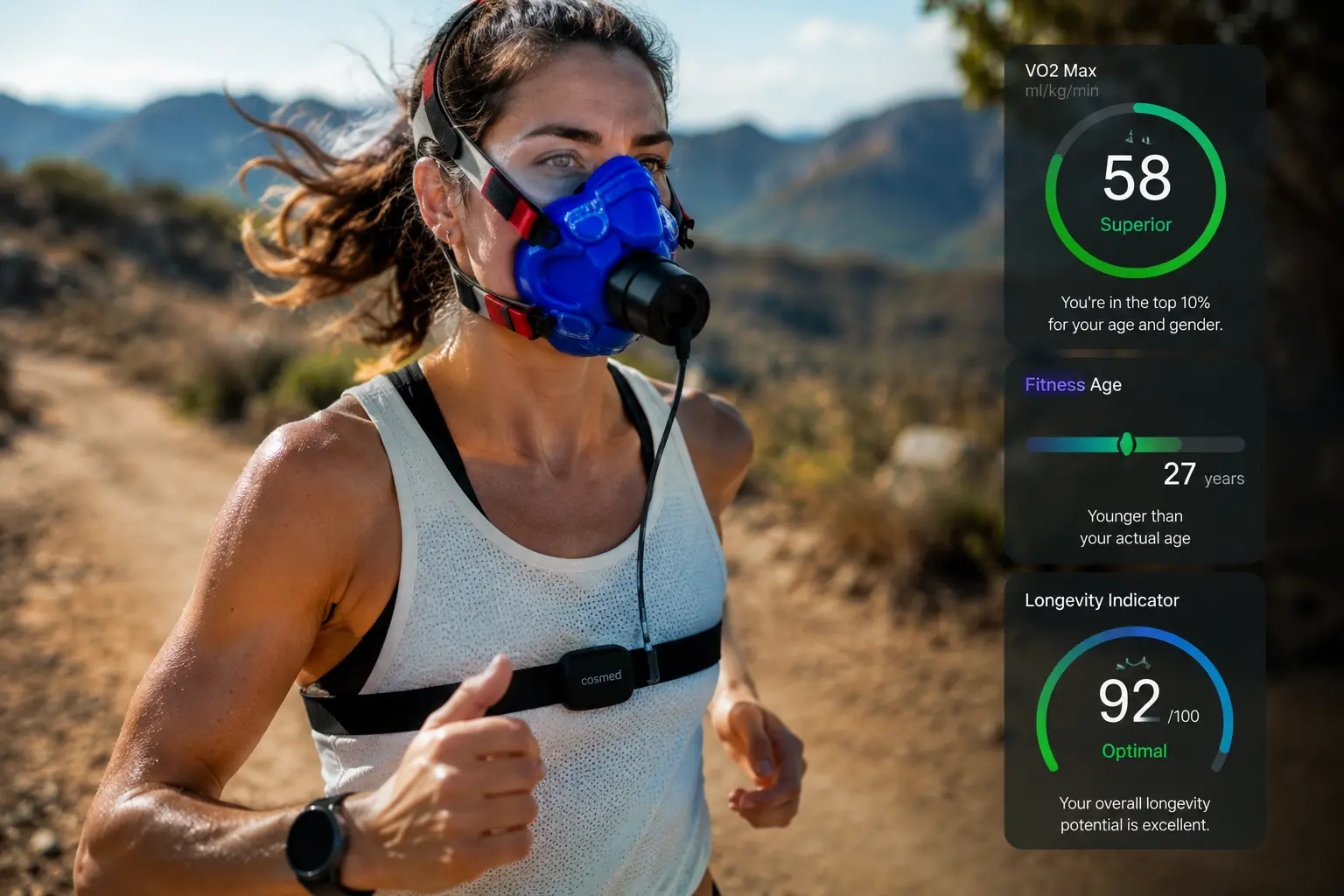
You feel it happening: stairs take longer, walks leave you winded, and that energy you used to have just isn’t there anymore, but understanding VO2 max longevity marker could be the key to understanding what’s actually going on with your body and how to fight back.
What is VO2 max?
VO2 max, or maximal oxygen consumption, represents the maximum amount of oxygen your body can utilize during intense physical activity, measured in milliliters of oxygen per kilogram of body weight per minute. Think of it as your aerobic engine’s horsepower. When you exercise hard, your lungs pull in oxygen, your heart pumps it through your bloodstream, and your muscles extract and use it for energy. VO2 max captures this entire process at its peak capacity. For a 70-year-old who walks regularly, VO2 max might be around 20-25 ml/kg/min, while a trained athlete of the same age could reach 35-40 or higher. This metric matters because it directly reflects how efficiently your cardiovascular and respiratory systems work together. Health professionals use VO2 max as a window into your aerobic fitness, endurance capacity, and overall physical resilience. It’s not just a number on a test result; it’s a tangible measure of how much oxygen your body can process and convert into movement and vitality.
Significance of VO2 max in aging
As you age, your VO2 max naturally declines, typically dropping about 10% per decade after age 30, though this rate varies widely depending on your lifestyle. This decline reflects real changes happening in your cardiovascular system: your heart becomes slightly less efficient at pumping blood, your blood vessels lose some elasticity, and your muscles become less able to extract oxygen from the bloodstream. The consequence is noticeable: you tire more easily, climbing stairs feels harder, and recovery from exertion takes longer. A 65-year-old who was sedentary might see their VO2 max drop to 15-18 ml/kg/min, while an active peer maintains 25-30 ml/kg/min. This gap isn’t just about fitness; research shows it correlates with longevity, disease risk, and independence in daily life. Monitoring your VO2 max over time provides concrete feedback about whether your aging is accelerating or slowing down. It transforms vague feelings of decline into measurable data, helping you understand whether your current lifestyle is serving you well or whether adjustments could help preserve your vitality.
Factors influencing VO2 max
Your VO2 max isn’t fixed; it’s shaped by a combination of factors you can and cannot control. Genetics set your baseline potential, explaining why some people naturally have higher aerobic capacity than others. Age, gender, and body composition all play roles. But here’s the empowering part: your training status and lifestyle choices dramatically influence where you land within your genetic range. A 72-year-old who swims three times weekly might have a VO2 max 40% higher than a sedentary peer of the same age. Regular aerobic exercise, whether walking, cycling, swimming, or dancing, consistently improves VO2 max by strengthening your heart, expanding blood vessel networks, and enhancing muscle oxygen utilization. Strength training supports this by preserving muscle mass, which is crucial because muscles are where oxygen actually gets used. Even modest improvements matter: increasing your VO2 max by just 3-5 ml/kg/min can meaningfully extend life expectancy and reduce disease risk. Your overall health status, including cardiovascular health, lung function, and metabolic fitness, all influence your aerobic capacity. The encouraging reality is that at any age, consistent physical activity can reverse decline and build capacity you thought was permanently lost.
- Engage in regular aerobic exercise such as brisk walking, swimming, or cycling for at least 150 minutes weekly to improve cardiovascular fitness and increase VO2 max capacity
- Include strength training two to three times per week to preserve muscle mass, maintain bone density, and support the oxygen utilization process in your muscles
- Monitor changes in VO2 max over time through fitness trackers, periodic testing, or how you feel during daily activities to track progress and adjust your exercise routines accordingly
🔬 Science-backed benefits in 2 minuteschoose where to begin:
Assessing VO2 max in aging individuals
If you want to know your actual VO2 max, health professionals use graded exercise tests, typically performed on a treadmill or stationary bike while your oxygen consumption is measured directly. The test starts easy and gradually increases in intensity until you reach your maximum effort. It sounds intimidating, but it’s safe when supervised by trained professionals, and many aging adults complete it without issue. Your doctor might recommend this if you’re starting a new exercise program, have cardiovascular concerns, or want a baseline to track progress. Alternatively, submaximal tests estimate VO2 max without pushing you to absolute maximum, making them practical for routine assessment. Some modern fitness trackers estimate VO2 max using heart rate data and activity patterns, though these estimates are less precise than lab testing. Understanding your actual VO2 max removes guesswork from your fitness decisions. Instead of wondering if you’re doing enough, you have concrete data. You can see whether your training is working, set realistic goals, and make informed choices about your exercise habits and overall health strategy.
Implications for longevity and quality of life
The connection between VO2 max and how long you live is surprisingly strong. Research consistently shows that people with higher aerobic fitness live longer and spend more of those years in good health. A study following thousands of adults found that those with the lowest VO2 max had significantly higher mortality risk from all causes, while those with higher aerobic capacity enjoyed extended lifespans. Beyond longevity, VO2 max directly affects quality of life right now. Higher aerobic fitness means you can play with grandchildren without exhaustion, travel without dreading airports, and maintain independence longer. You recover faster from illness, sleep better, and have more energy for activities you enjoy. Cardiovascular fitness also reduces risk of heart disease, stroke, diabetes, and cognitive decline. The mechanism is elegant: when your cardiovascular system works efficiently, every cell in your body receives better oxygen supply, inflammation decreases, and your entire physiology functions more optimally. Maintaining or improving your VO2 max through regular activity isn’t just about adding years to your life; it’s about adding life to your years, preserving the vitality and independence that make aging feel like living rather than merely surviving.
Research and future directions
Scientists continue investigating why VO2 max declines with age and how to slow or reverse this process. Recent research explores whether specific types of exercise, intensity levels, or training patterns work better for older adults. Some studies examine whether high-intensity interval training, despite seeming risky for seniors, might actually produce superior improvements in aerobic capacity compared to steady-state exercise. Others investigate how VO2 max relates to brain health, discovering that aerobic fitness correlates with better memory, sharper thinking, and lower dementia risk. Emerging research also explores whether certain supplements, medications, or interventions might enhance the effects of exercise on VO2 max. The field is moving toward personalized approaches, recognizing that optimal training for a 65-year-old with heart disease differs from that for a healthy 75-year-old athlete. As our understanding deepens, researchers aim to develop targeted interventions that help aging individuals maintain aerobic capacity longer, recover lost fitness more effectively, and ultimately extend both lifespan and healthspan through evidence-based strategies tailored to individual circumstances.
VO2 max, a key marker of cardiovascular fitness, plays a crucial role in assessing aerobic capacity and endurance levels. Monitoring changes in VO2 max can offer valuable insights into the aging process, guiding individuals to make informed decisions about their exercise habits and overall health.
How can I improve my VO2 max as I age?
Engaging in regular aerobic exercise, including activities like walking, cycling, or swimming, can help improve your VO2 max levels and overall cardiovascular fitness. Consult with a healthcare professional or fitness instructor to develop a tailored exercise plan that suits your individual needs and goals.
Is VO2 max testing necessary for all aging individuals?
VO2 max testing may be beneficial for aging individuals who are looking to assess their aerobic capacity, fitness levels, and overall health. Consult with a healthcare provider to determine if VO2 max testing is appropriate based on your current health status and fitness goals.
Others also read:
Disclaimer: This article is for informational purposes only and is not a substitute for professional medical advice. Always consult a healthcare professional for personal guidance.
This article has been prepared and reviewed by the GlobalHealthBeacon editorial team and is based on current medical research and published scientific literature available in 2026. It provides structured, evidence-based information to support informed health decisions.
