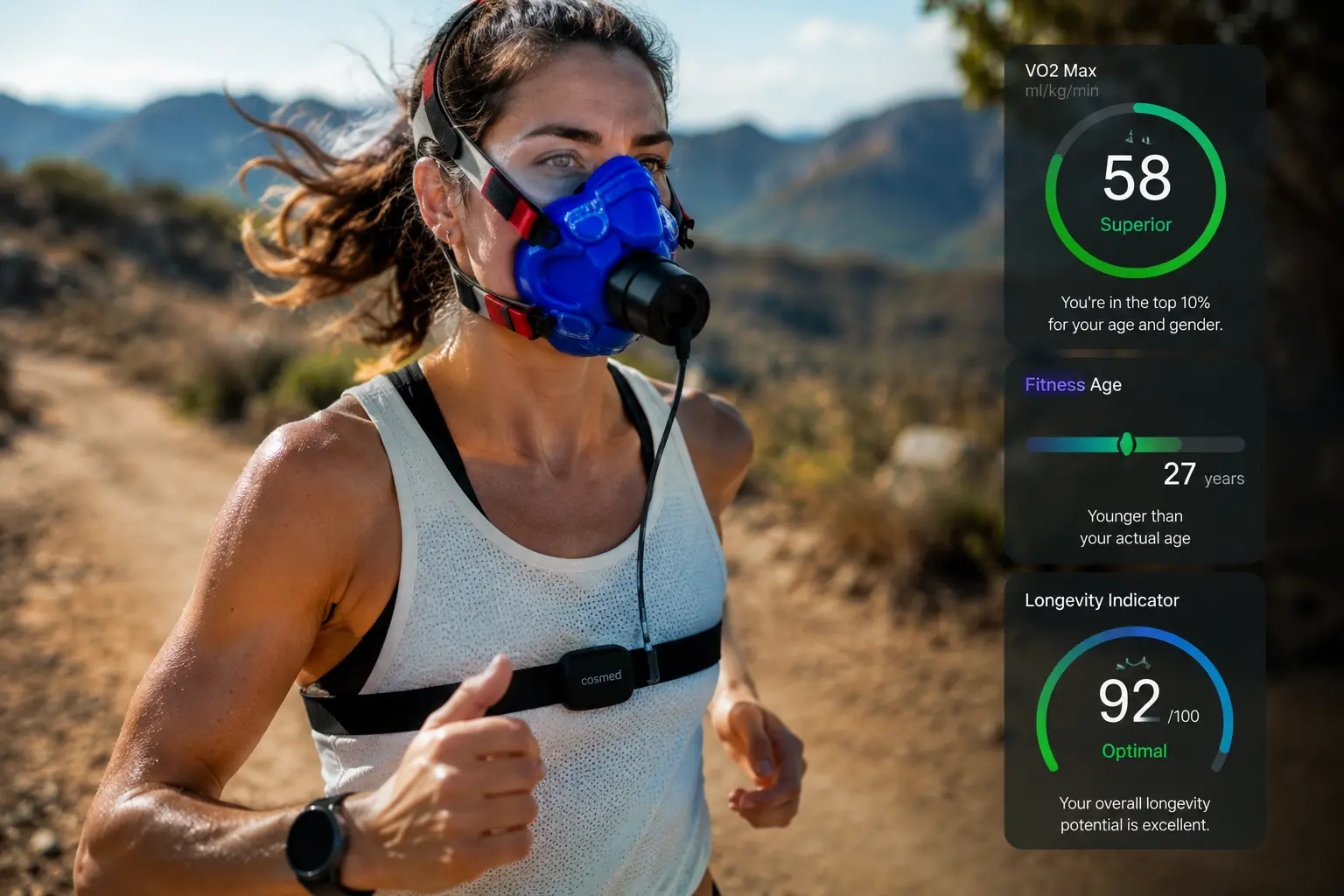
You’re hitting the gym consistently, eating right, but wondering if you’re actually building the cardiovascular strength that matters for living longer—and that’s where understanding your vo2 max longevity marker becomes the game-changer you didn’t know you needed.
Understanding VO2 max
VO2 max, or maximal oxygen uptake, represents the maximum amount of oxygen your body can utilize during intense physical activity, measured in milliliters of oxygen per kilogram of body weight per minute. Think of it as your cardiovascular engine’s horsepower. When you exercise, your lungs pull in oxygen, your heart pumps it through your bloodstream, and your muscles extract and use it for energy. A woman with a higher VO2 max can deliver more oxygen to her muscles, meaning she can sustain harder efforts longer without fatigue. This measurement has become a cornerstone of fitness assessment because it directly reflects how efficiently your aerobic system works. For women specifically, understanding this metric provides insight into cardiovascular capacity, which naturally declines with age but can be improved through targeted training. It’s not just about running faster or cycling longer; it’s about the biological efficiency that underpins endurance, recovery, and overall metabolic health.
Appraisal of VO2 max accuracy
Measuring VO2 max requires specialized laboratory equipment, typically a treadmill or stationary bike paired with a metabolic analyzer that measures oxygen consumption and carbon dioxide production in real time. The gold standard involves maximal exercise testing where you push to your absolute limit while wearing a mask that captures every breath. However, accuracy depends on several variables. Age plays a role because baseline VO2 max naturally declines roughly 10 percent per decade after age 25. Genetics influence your ceiling; some women are naturally built for aerobic performance. Training history matters enormously—a sedentary woman and an athlete will show vastly different results. Body composition affects the calculation since VO2 max is typically expressed relative to body weight. Hormonal fluctuations across the menstrual cycle can also influence performance on test day. Field tests like the Cooper 12-minute run or step tests offer reasonable estimates but lack the precision of lab testing. Understanding these factors helps you interpret your own results realistically rather than comparing yourself to standardized charts that may not account for your individual circumstances.
Real benefits for women
Knowing your VO2 max opens a practical window into your cardiovascular health and provides a baseline for meaningful progress. Consider Sarah, a 52-year-old woman who discovered her VO2 max was 28 ml/kg/min, below average for her age group. Rather than feeling discouraged, she used this information to structure her training intentionally. She incorporated three sessions of interval training weekly, mixing high-intensity bursts with recovery periods, plus two steady-state cardio sessions. Six months later, her VO2 max improved to 32 ml/kg/min, a significant jump that translated into noticeably better energy levels and easier breathing during daily activities. This concrete metric gave her something tangible to work toward instead of vague fitness goals. For women navigating midlife, perimenopause, or postmenopause, VO2 max becomes especially valuable because cardiovascular capacity directly influences how you feel day-to-day, your ability to keep up with grandchildren, and your resilience against age-related decline. It’s not vanity; it’s functional independence and longevity.
- Schedule a VO2 max assessment with a sports medicine clinic or exercise physiology lab that has proper equipment and trained technicians to conduct maximal exercise testing safely.
- Establish your baseline measurement and ask for a detailed report explaining your results relative to age-matched norms and what the numbers mean for your individual fitness level.
- Design a training plan that targets aerobic capacity through a mix of steady-state cardio, interval training, and strength work, adjusting intensity based on your current VO2 max and fitness goals.
- Retest every 6 to 12 months to track improvements and adjust your program as needed, celebrating measurable progress rather than chasing arbitrary numbers.
🔬 Science-backed benefits in 2 minuteschoose where to begin:
Factors affecting VO2 max
Multiple biological and lifestyle variables shape your VO2 max at any given moment. Age is inevitable; women typically see gradual decline starting in their 30s, accelerating after 60 unless they maintain consistent aerobic training. Physical activity level is perhaps the most controllable factor. Women who exercise regularly, especially those doing high-intensity interval training or endurance sports, maintain significantly higher VO2 max than sedentary peers. Body composition matters because VO2 max is expressed relative to body weight; carrying excess body fat lowers the ratio even if absolute oxygen uptake remains stable. Underlying health conditions like asthma, heart disease, or metabolic disorders can suppress VO2 max independent of fitness level. Hormonal status influences performance too; some women notice their VO2 max fluctuates slightly across their menstrual cycle or changes after menopause due to declining estrogen. Altitude acclimatization, sleep quality, nutrition, and even hydration status on test day can affect results. Environmental factors like air quality and temperature during testing also play subtle roles. Recognizing these variables helps you avoid misinterpreting a single test result and instead view VO2 max as a dynamic marker that responds to your training and life circumstances.
Women’s fitness and longevity
The connection between cardiovascular fitness and lifespan has been documented extensively in research. Women with higher VO2 max levels consistently show lower mortality rates from all causes, particularly cardiovascular disease. This isn’t coincidental; a strong aerobic system means your heart works more efficiently, your blood vessels remain more elastic, and your body manages inflammation better. When you improve your VO2 max through regular exercise, you’re essentially investing in your future health. A woman who goes from sedentary to moderately fit, raising her VO2 max from 25 to 35 ml/kg/min, isn’t just becoming a better runner; she’s reducing her risk of heart attack, stroke, and metabolic disease. The beauty is that this improvement happens at any age. Women in their 60s and 70s who start training can still meaningfully boost their VO2 max and reap longevity benefits. It’s not about becoming an athlete; it’s about maintaining the cardiovascular capacity that lets you live independently, travel, play with grandchildren, and enjoy your later decades with vitality. Your VO2 max is essentially a biological vote for the kind of aging you want.
VO2 max and healthy aging
As women age, cardiovascular function naturally declines unless actively maintained. Peak VO2 max typically occurs in the late 20s, then drops roughly 1 percent annually in sedentary individuals. However, women who engage in consistent aerobic exercise can slow this decline dramatically, sometimes by 50 percent or more. This matters profoundly because cardiovascular capacity directly determines your ability to handle physical stress, recover from illness, and maintain independence. A 65-year-old woman with a VO2 max of 32 ml/kg/min can climb stairs without breathlessness, walk briskly with friends, and bounce back quickly from a cold. The same woman with a VO2 max of 20 ml/kg/min struggles with basic activities and tires easily. The difference isn’t genetics alone; it’s the cumulative effect of movement choices made over decades. By monitoring your VO2 max as you age and adjusting your training to maintain or improve it, you’re actively counteracting the biological clock. This isn’t about defying aging; it’s about aging with function, resilience, and the ability to do the things that make life meaningful.
VO2 max serves as a measurable window into your cardiovascular fitness and, by extension, your longevity potential. For women, understanding this metric provides clarity about where you stand and a concrete target for improvement. The accuracy of VO2 max testing depends on multiple factors including age, genetics, training history, and body composition, but when interpreted thoughtfully, it offers valuable guidance for tailoring your fitness approach. The real benefit lies not in chasing a number but in recognizing that improving your aerobic capacity directly enhances your quality of life, functional independence, and long-term health outcomes. By taking your VO2 max seriously and building training around it, you’re making a tangible investment in how you age and the vitality you carry into your later years.
Can VO2 max be improved with exercise?
Yes, VO2 max responds well to training, particularly high-intensity interval training and consistent aerobic exercise. Women can expect meaningful improvements within 6 to 12 weeks of structured training, with continued gains possible at any age. The key is consistency and progressive challenge to your cardiovascular system.
Is VO2 max a reliable indicator of fitness for women?
VO2 max is a valuable and scientifically validated measure of aerobic fitness in women, though it should be considered alongside other health markers. It’s most useful when interpreted in context of your age, activity level, health status, and individual goals rather than compared to generic population averages.
Others also read:
Disclaimer: This article is for informational purposes only and is not a substitute for professional medical advice. Always consult a healthcare professional for personal guidance.
This article has been prepared and reviewed by the GlobalHealthBeacon editorial team and is based on current medical research and published scientific literature available in 2026. It provides structured, evidence-based information to support informed health decisions.
