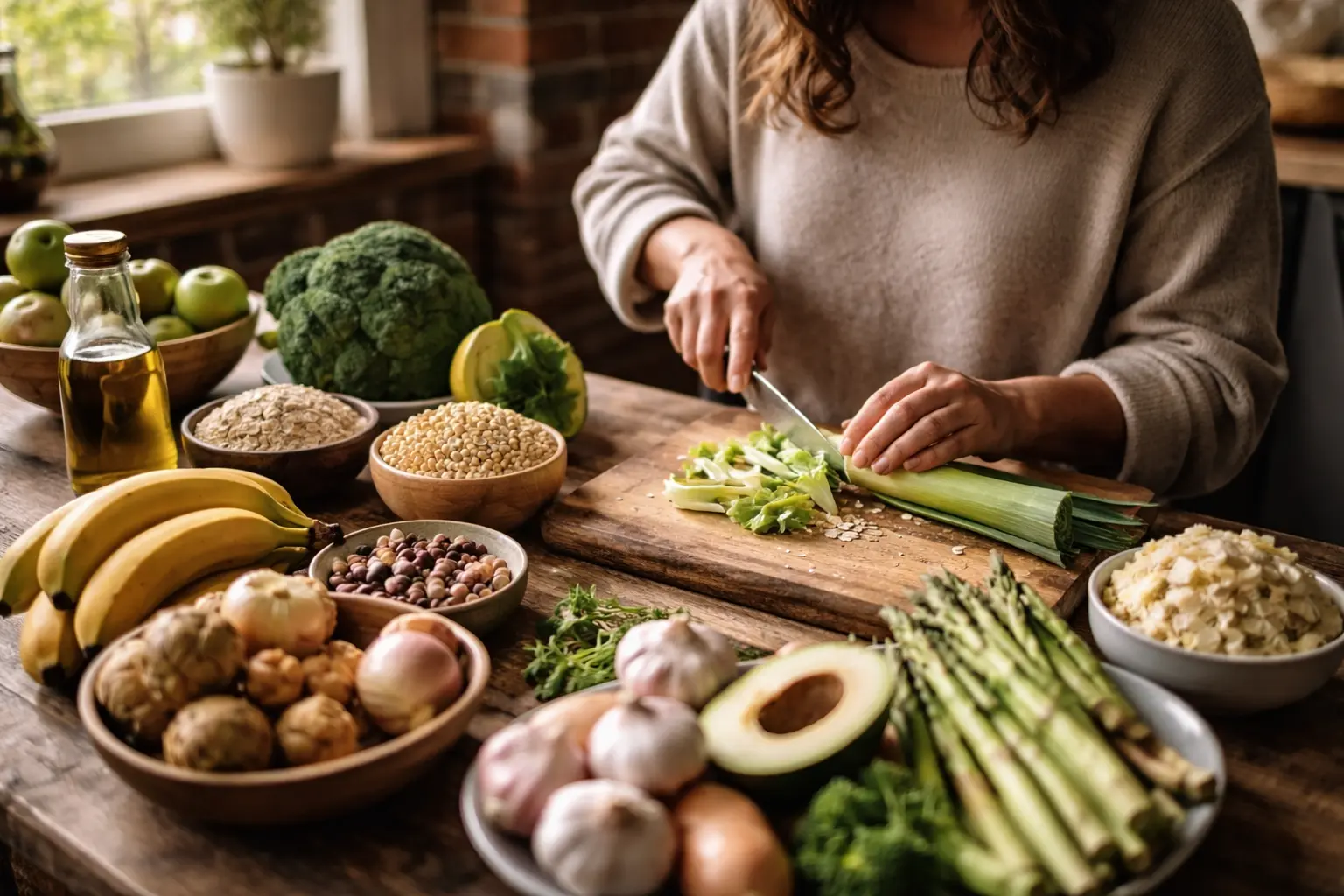
Your stomach feels bloated after meals, your digestion feels sluggish, and you are tired of feeling uncomfortable in your own body, so let’s talk about prebiotics foods list and how they might actually help you feel better again.
What are prebiotics?
Prebiotics are non-digestible fibers found in certain foods that your body cannot break down on its own. Instead of being absorbed in your small intestine like regular nutrients, these fibers travel to your colon where they become food for the beneficial bacteria living there. Think of your gut bacteria as a garden that needs fertilizer. Prebiotics are that fertilizer. Your gut naturally hosts trillions of microorganisms, and when you feed the good ones with prebiotic fibers, they thrive and multiply. This creates what scientists call a healthy microbiome balance. Common prebiotic fibers include inulin and fructooligosaccharides, which are found in foods like chicory root, garlic, onions, and bananas. As you age, maintaining this microbial balance becomes increasingly important because your natural gut flora tends to shift. Understanding how prebiotics work helps explain why they matter so much for your digestive wellness.
Benefits of prebiotics
Research over the past two decades has shown that prebiotics support several important bodily functions, particularly as we age. When beneficial bacteria ferment prebiotic fibers, they produce short-chain fatty acids that nourish your colon lining and reduce inflammation throughout your digestive tract. This process improves how your body absorbs essential minerals like calcium and magnesium, which becomes critical for bone health in your senior years. Studies also suggest that a healthy prebiotic-fed microbiome strengthens your intestinal barrier, which acts as a gatekeeper against harmful substances entering your bloodstream. Your immune system relies heavily on this barrier, so supporting it indirectly boosts your body’s defense mechanisms. Additionally, emerging research indicates that prebiotics may influence mood and cognitive function through the gut-brain axis, a communication network between your digestive system and central nervous system. For seniors specifically, these benefits translate to better nutrient absorption, reduced digestive discomfort, stronger immunity, and potentially improved mental clarity.
Top prebiotic foods for seniors
Building a practical prebiotics foods list starts with foods you likely already know and can easily find. Chicory root stands out as one of the most concentrated prebiotic sources, containing up to 65 percent inulin by weight, though it tastes quite bitter on its own so many people enjoy it roasted as a coffee substitute. Garlic delivers prebiotic benefits alongside sulfur compounds that have been studied for their immune-supporting properties, and you can add minced garlic to soups, roasted vegetables, or salad dressings without much effort. Leeks, which are milder than garlic, work beautifully in potato soups or can be roasted as a side dish. Onions of all varieties contain inulin and become sweeter and more digestible when cooked slowly. Bananas, especially slightly underripe ones, provide resistant starch along with prebiotic fiber and make convenient snacks or smoothie additions. Oats offer both soluble fiber and prebiotic compounds, perfect for breakfast. Asparagus, whole grains like barley, and legumes like lentils round out an accessible list. The key is choosing foods you actually enjoy eating so you will stick with them long-term.
- Start by identifying which prebiotic foods you already enjoy eating, whether that is garlic in your pasta, bananas in your breakfast, or oats in your cereal.
- Introduce one new prebiotic food at a time over the course of a week, allowing your digestive system to adapt gradually rather than overwhelming it with sudden changes.
- Track how your body responds to each food by noting any changes in digestion, energy levels, or comfort, keeping a simple food journal if helpful.
- Experiment with different cooking methods and recipes to make prebiotic foods more appealing, such as roasting garlic and onions until caramelized or blending cooked asparagus into soups.
- Aim to include at least two to three prebiotic sources in your daily meals, spreading them throughout breakfast, lunch, and dinner rather than consuming large amounts at once.
- Consult your healthcare provider before making significant dietary changes, especially if you take medications that interact with fiber or have conditions like irritable bowel syndrome.
🔬 Science-backed benefits in 2 minuteschoose where to begin:
Potential risks of prebiotics
While prebiotics offer genuine benefits, they are not risk-free for everyone, and understanding potential side effects helps you make informed choices. When you introduce prebiotics, your gut bacteria ferment these fibers and produce gas as a byproduct, which can cause bloating, flatulence, or abdominal discomfort, particularly in the first few weeks. Some people experience cramping or loose stools as their microbiome adjusts. These symptoms typically subside within two to three weeks as your body adapts, but they can be frustrating in the meantime. Seniors with certain digestive conditions like small intestinal bacterial overgrowth (SIBO) or inflammatory bowel disease may find that prebiotics worsen their symptoms rather than improve them. The key is introducing prebiotic foods gradually in small amounts rather than making dramatic dietary shifts overnight. If you have a history of digestive issues, starting with just one-quarter of a normal serving and increasing slowly over several weeks gives your system time to adjust. Keeping a food diary helps you identify which specific prebiotics cause problems for your body, since individual responses vary considerably.
How to incorporate prebiotics into your diet
Practical integration of prebiotics into your existing eating patterns works better than overhauling your entire diet at once. For breakfast, swap regular oats for steel-cut oats and top them with sliced banana, or add a tablespoon of ground chicory root to your morning coffee for a subtle prebiotic boost. At lunch, build salads with roasted onions, garlic-infused olive oil dressing, and asparagus tips, or add leeks to your favorite soup recipe. Dinner offers endless possibilities: roast garlic cloves alongside your vegetables, include legumes in stews or grain bowls, or prepare a simple side of roasted asparagus with olive oil. Snacks can include banana with almond butter or a small handful of whole grain crackers. The beauty of this approach is that you are not eating strange new foods but rather tweaking meals you already enjoy. Start with foods you genuinely like because consistency matters more than perfection. Many seniors find that batch cooking on weekends, such as preparing roasted garlic and onions or cooking a big pot of lentil soup, makes it easier to include prebiotics throughout the week without extra daily effort.
Consult your healthcare provider
Before you make any significant dietary changes, especially as a senior managing multiple health conditions or taking various medications, a conversation with your healthcare provider is essential. Some medications interact with high-fiber foods, and certain medical conditions require dietary modifications that might conflict with increasing prebiotic intake. For example, if you take blood thinners, some prebiotic-rich foods like garlic may have mild anticoagulant effects worth discussing. If you have kidney disease, diabetes, or autoimmune conditions, your doctor can advise whether prebiotics are appropriate for your specific situation. Your healthcare provider can also help you distinguish between normal adjustment symptoms and genuine adverse reactions. They may recommend starting with very small amounts, spacing out introductions, or choosing specific prebiotic sources that work best with your health profile. This conversation also creates an opportunity to discuss your digestive concerns more broadly and rule out underlying conditions that might need different treatment. Think of your healthcare provider as a partner in optimizing your nutrition rather than an obstacle to overcome.
Prebiotics are non-digestible fibers that feed beneficial bacteria in your gut, supporting digestive health, nutrient absorption, and immune function as you age. Common prebiotic foods include chicory root, garlic, leeks, onions, bananas, oats, and asparagus, all of which can be easily incorporated into your daily meals. While prebiotics offer significant benefits, introducing them gradually helps minimize bloating or digestive discomfort during the adjustment period. Understanding potential risks and consulting your healthcare provider ensures that adding prebiotics to your diet is safe and suitable for your individual health situation. By choosing prebiotic-rich foods you genuinely enjoy and integrating them thoughtfully into your existing eating patterns, you support your gut health and overall wellness in a sustainable way.
Are prebiotic foods safe for seniors with digestive issues?
Prebiotic foods can benefit most seniors, but those with existing digestive issues should introduce them very gradually to minimize discomfort. Starting with small amounts and spacing them throughout the day allows your gut bacteria time to adjust. Seniors with conditions like SIBO or inflammatory bowel disease should consult their healthcare provider before significantly increasing prebiotic intake, as these conditions may respond differently to increased fiber.
Can I take prebiotic supplements instead of consuming prebiotic foods?
Whole foods remain the preferred source of prebiotics because they provide fiber alongside other beneficial nutrients, vitamins, and compounds that supplements cannot replicate. Prebiotic supplements may work for some people, but they lack the nutritional complexity of foods like bananas, garlic, and oats. Additionally, supplement quality and effectiveness vary considerably between brands. Focusing on including prebiotic-rich whole foods in your daily diet provides more comprehensive nutritional support and allows you to monitor how your body responds.
Others also read:
Disclaimer: This article is for informational purposes only and is not a substitute for professional medical advice. Always consult a healthcare professional for personal guidance.
This article has been prepared and reviewed by the GlobalHealthBeacon editorial team and is based on current medical research and published scientific literature available in 2026. It provides structured, evidence-based information to support informed health decisions.
