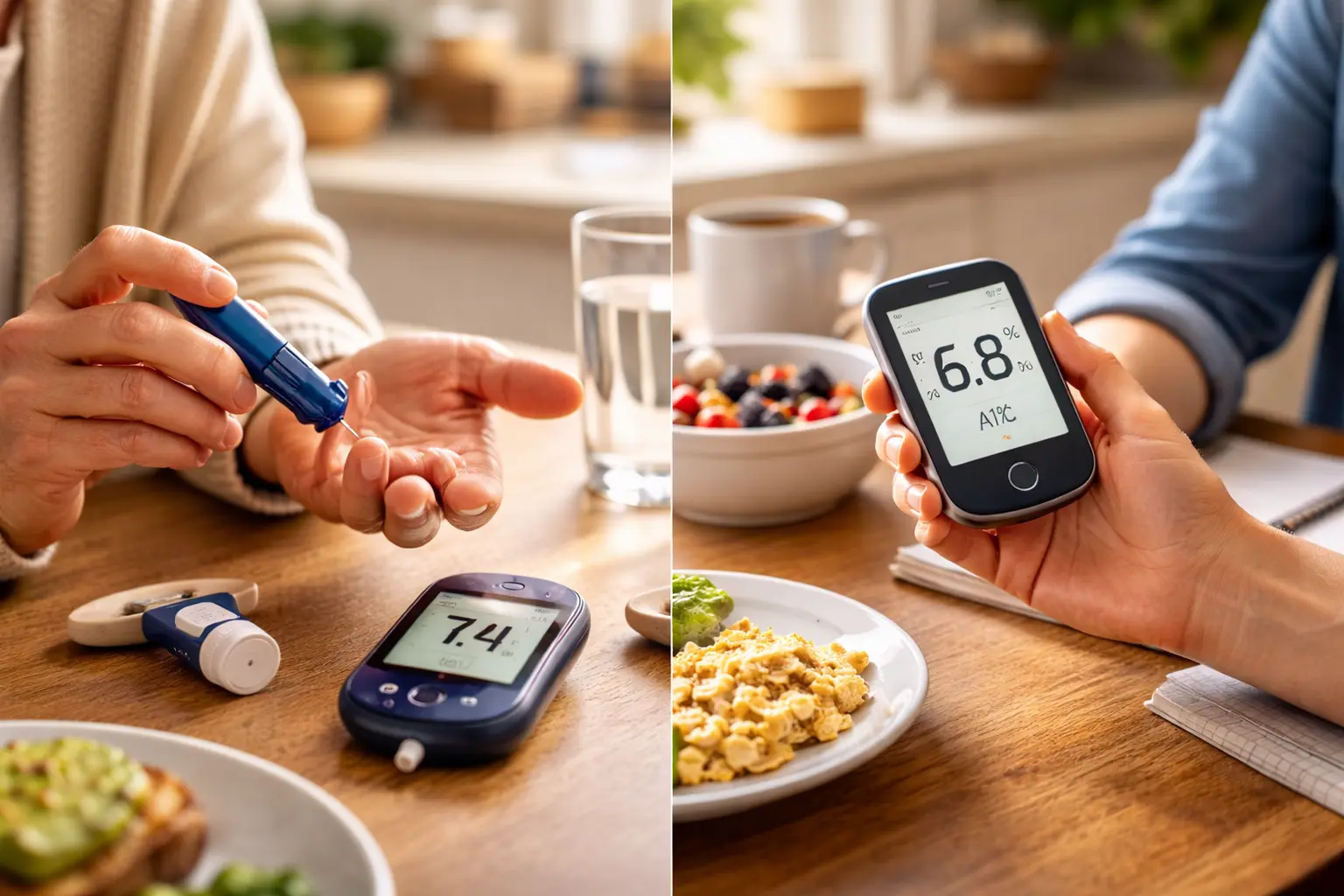
You’re staring at lab results wondering if your blood sugar is actually under control, but the numbers seem to tell different stories depending on which test your doctor ordered, and honestly, nobody explained the difference between a1c versus fasting glucose in a way that actually made sense.
Understanding A1C test
The A1C test functions like a three-month health report card for your blood sugar. Instead of capturing a single moment in time, it measures the percentage of your hemoglobin that has glucose attached to it, revealing your average blood sugar levels over the past 8 to 12 weeks. This test is particularly valuable because it shows the bigger picture of how well you’ve been managing your blood sugar day in and day out. Imagine it as the difference between checking your bank account on one random Tuesday versus reviewing your spending patterns across an entire season. You don’t need to fast before taking this test, which makes it remarkably convenient for busy schedules. Many women appreciate this flexibility because it fits easily into routine doctor visits without requiring special preparation or early morning appointments. The A1C test is especially helpful when monitoring diabetes management over time, allowing your healthcare provider to see whether your current treatment plan is working effectively or if adjustments are needed.
- Provides a long-term average of blood sugar levels spanning 8 to 12 weeks
- Does not require fasting before the test, making scheduling flexible
- Helpful in monitoring diabetes management and tracking treatment effectiveness
Understanding fasting glucose test
The fasting glucose test captures a snapshot of your blood sugar at a specific moment in time, typically after you’ve gone without food or drink (except water) for at least 8 hours, usually overnight. This test measures exactly how your body is processing sugar right now, giving your doctor immediate insight into your baseline glucose levels. Think of it like taking a photograph versus recording a video. The fasting glucose test tells you what’s happening in this exact frame, which can be incredibly revealing about your metabolic function. Many women find this test useful because it’s straightforward and quick, requiring just one blood draw at a lab or clinic. The preparation is simple: skip dinner or eat an early meal, fast overnight, and arrive at your appointment in the morning. This test is particularly valuable for detecting prediabetes or diabetes in its early stages, as elevated fasting glucose levels can be an early warning sign that your body is struggling to regulate blood sugar efficiently.
📘 Fix your day in under 2 minuteschoose where to begin:
Comparison of results
These two tests work together like different instruments in an orchestra, each playing its own important part in the overall picture of your metabolic health. The A1C test reveals your long-term trends and patterns, showing whether you’ve been consistently managing your blood sugar well or if there have been periods of higher levels you might not have noticed. The fasting glucose test, by contrast, gives your doctor a baseline measurement that can help identify acute concerns or sudden changes in your metabolism. Consider this scenario: a woman might have a normal A1C reading indicating good overall control, but a slightly elevated fasting glucose suggesting her body struggles most in the morning hours. This information helps her doctor understand when her blood sugar tends to spike and might lead to recommendations like adjusting meal timing or medication schedules. Neither test is superior to the other because they answer different questions. Your healthcare provider uses both to build a complete understanding of how your body manages glucose, much like how a mechanic uses different diagnostic tools to fully assess a car’s health.
Choosing the right test
Selecting which test makes sense for your situation requires a conversation with your healthcare provider who understands your complete medical picture. Your doctor considers factors like your family history of diabetes, your current weight and activity level, any symptoms you’ve experienced, and whether you’re in a preventive stage or actively managing a diabetes diagnosis. If you’re a woman in your 40s with no diabetes symptoms but a family history of the disease, your doctor might recommend starting with a fasting glucose test to establish a baseline. If you’ve already been diagnosed with diabetes, your doctor likely wants both tests because they provide complementary information about your overall control. Be honest with your provider about your lifestyle, stress levels, and any changes you’ve noticed in how you feel. Women sometimes experience blood sugar fluctuations related to hormonal cycles, so mentioning these patterns helps your doctor interpret results more accurately. Your provider can also explain which test frequency makes sense for you, whether that’s annual screening or more frequent monitoring depending on your risk factors.
Regular monitoring and follow-up
Both the A1C and fasting glucose tests serve as valuable checkpoints in your ongoing health journey, not one-time events that you complete and forget about. Regular monitoring allows your healthcare team to spot trends early, whether that’s gradual improvement from lifestyle changes or a concerning shift that requires treatment adjustments. Many women benefit from establishing a testing schedule with their provider, perhaps getting fasting glucose checked annually during routine physicals and A1C tested every three to six months if managing diabetes. Between appointments, you can support your healthcare team’s efforts by tracking your own patterns: noting how different foods affect your energy, keeping a simple food journal, and paying attention to how exercise impacts your overall wellbeing. When you return for follow-up appointments, share these observations because they provide context that lab numbers alone cannot capture. Your doctor uses both the objective data from these tests and your personal observations to make informed decisions about whether your current approach is working or if modifications to diet, exercise, medication, or other factors would be beneficial. Think of this as an ongoing conversation with your healthcare provider rather than isolated test results.
The A1C and fasting glucose tests offer unique insights into blood sugar control from different angles. While the A1C test provides a long-term average showing your overall management over weeks and months, the fasting glucose test offers a snapshot of your current baseline levels. Consulting with your healthcare provider is key to choosing the right test for your needs and understanding what your results mean for your individual health situation.
Is the A1C test better than the fasting glucose test?
Neither test is inherently better than the other. The A1C test and fasting glucose test serve different purposes and provide distinct information about blood sugar control. Your healthcare provider can help determine which test is more appropriate for your specific situation, and often both tests together give the most complete picture of your metabolic health.
Do these tests require any preparation?
The A1C test does not require any fasting, so you can eat and drink normally before your appointment. The fasting glucose test necessitates at least 8 hours of fasting before the test, typically meaning you skip dinner or eat an early meal and arrive at your appointment in the morning. Follow your healthcare provider’s instructions for any specific preparation needed before the tests.
Others also read:
Disclaimer: This article is for informational purposes only and is not a substitute for professional medical advice. Always consult a healthcare professional for personal guidance.
This guide has been prepared and reviewed by the GlobalHealthBeacon editorial team and reflects current medical research as of 2026. It provides structured, evidence-based information to support informed health decisions.
