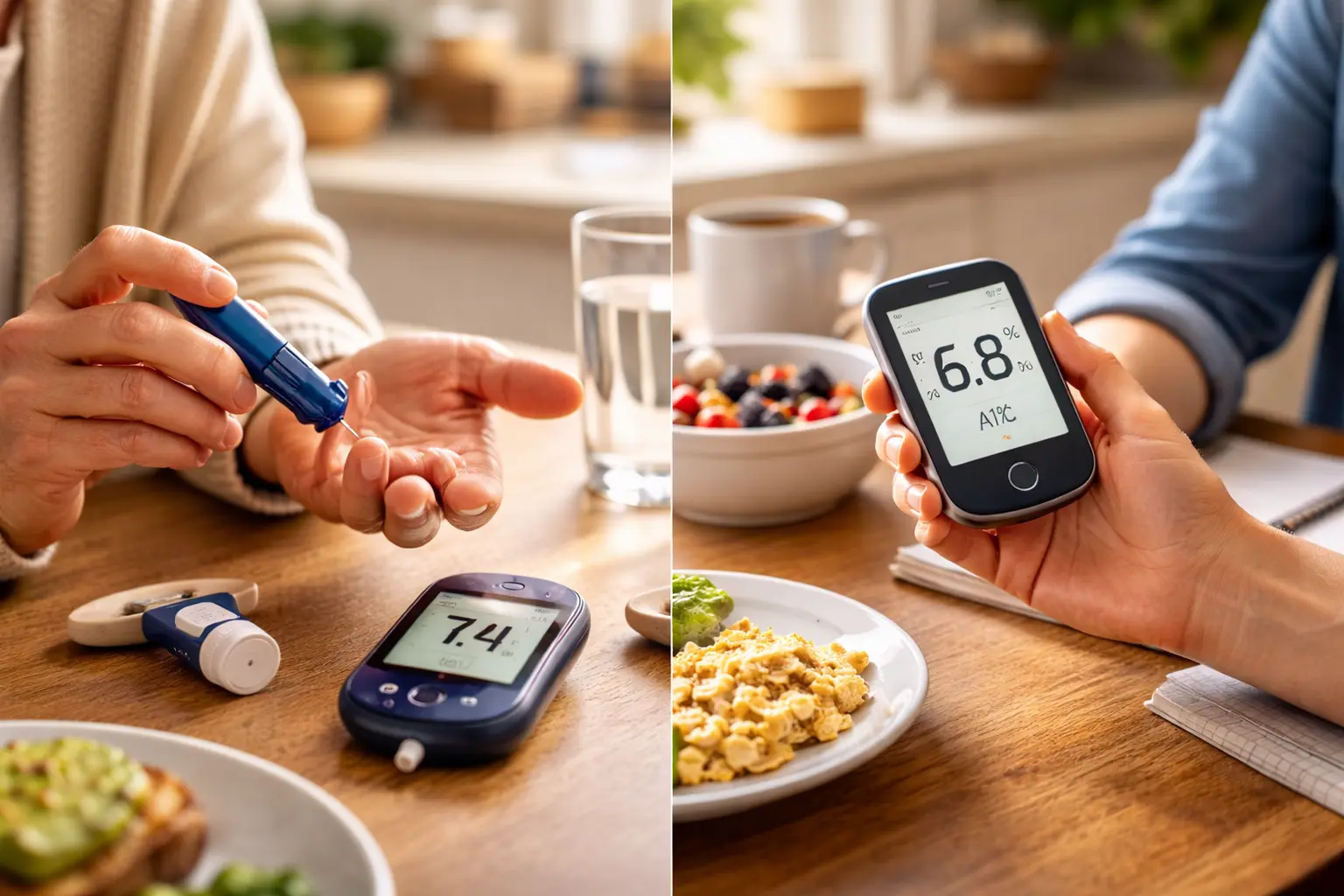
You’re sitting in your doctor’s office, blood work in hand, staring at numbers that feel like a foreign language, wondering if your A1C tells the real story or if that fasting glucose test is what actually matters for keeping your blood sugar in check.
A1C test explained
The A1C test works like a three-month snapshot of your blood sugar patterns. It measures the percentage of hemoglobin, the protein in red blood cells that carries oxygen, that has bonded with glucose molecules. Think of it this way: when glucose stays elevated in your bloodstream, it attaches itself to hemoglobin, and the higher that attachment rate, the higher your A1C percentage. Since red blood cells live about three months, the A1C reflects your average blood sugar during that entire window. For seniors managing diabetes, this test reveals whether your daily habits and medications have kept blood sugar stable over time. A reading below 5.7 percent is typically considered normal, between 5.7 and 6.4 percent suggests prediabetes, and 6.5 percent or higher indicates diabetes. Many healthcare providers prefer this test because it shows the bigger picture, not just one moment in time.
Fasting glucose test overview
A fasting glucose test is straightforward: you skip food and drinks for eight to ten hours overnight, then have blood drawn first thing in the morning. This captures your blood sugar at a specific moment, giving doctors immediate insight into how your body manages glucose when it has been without food for an extended period. For seniors, this test can reveal how well your pancreas produces insulin and how your cells respond to it during fasting. A normal fasting glucose level is typically below 100 milligrams per deciliter, while 100 to 125 indicates prediabetes, and 126 or higher suggests diabetes. The advantage here is simplicity and speed. You get a clear reading of your baseline glucose without the complexity of long-term averages. However, this single measurement cannot tell you how your blood sugar behaves throughout the day or how it responds to meals.
Comparison of A1C and fasting glucose tests
Imagine two seniors with different blood sugar patterns. Margaret has consistently elevated fasting glucose readings of 130, but her A1C hovers around 6.2 percent because she manages her diet well throughout the day. Robert’s fasting glucose is a healthy 95, yet his A1C climbs to 7.8 percent because he struggles with afternoon and evening snacking. Their stories illustrate why both tests matter. The A1C captures long-term control and reveals patterns you might miss with a single fasting test. It is less affected by stress, illness, or what you ate the day before. Fasting glucose, meanwhile, catches immediate problems and can detect sudden metabolic shifts. A1C may miss dangerous blood sugar spikes after meals, while fasting glucose cannot reveal whether you are managing your glucose well throughout the day. Many doctors recommend using both tests together because they answer different questions: A1C asks how you are doing overall, while fasting glucose asks how you are doing right now.
- Schedule a conversation with your healthcare provider to discuss which tests align with your specific health situation and any symptoms you have noticed.
- Follow pre-test instructions carefully, such as fasting overnight for glucose tests and maintaining normal eating patterns before A1C testing.
- After receiving results, sit down with your provider to understand what the numbers mean for your individual health picture and what changes might help.
🔬 Science-backed benefits in 2 minuteschoose where to begin:
Interpreting test results
Reading these test results requires context. An elevated A1C above 7 percent typically signals that blood sugar has been running higher than target over the past three months, suggesting your current management approach may need adjustment. High fasting glucose above 125 indicates your body is struggling to regulate glucose during rest periods, which could point to insulin resistance or pancreatic function issues. But numbers alone do not tell the whole story. A senior with an A1C of 7.2 percent and a fasting glucose of 110 might be doing well given their age and other health conditions, while someone younger with the same readings might need more aggressive treatment. Doctors consider your overall health, medications, other conditions, and life expectancy when interpreting results. A sudden jump in either test warrants investigation. Sometimes stress, infection, or medication changes cause temporary spikes. Other times, they signal that your diabetes management plan needs fine-tuning.
Considerations for senior health
Aging changes how your body handles blood sugar. Your metabolism slows, your kidneys filter glucose differently, and your cells may become more insulin resistant. These natural shifts mean seniors often need different target ranges than younger adults. A1C targets for seniors might be higher than the standard 7 percent, sometimes aiming for 7 to 8 percent, because overly aggressive control can cause dangerous low blood sugar episodes. Regular monitoring with both tests helps catch problems early before they lead to complications like neuropathy, vision changes, or kidney issues. Many seniors benefit from checking fasting glucose monthly and A1C every three to six months, though your provider may recommend different intervals based on your situation. Keeping a simple log of when you test and what your results are helps you and your doctor spot trends. Some seniors find that combining these tests with home glucose monitoring gives them the clearest picture of how their daily choices affect their blood sugar.
Key takeaways
The A1C and fasting glucose tests serve different but complementary purposes in managing blood sugar. A1C reveals your three-month average and shows whether your overall approach is working, while fasting glucose captures your baseline and can catch acute problems. Neither test is superior; they simply answer different questions. For seniors, using both provides a fuller understanding of blood sugar patterns and helps guide treatment decisions. Understanding what each test measures, how to prepare for it, and what the results mean empowers you to take an active role in your health. Work closely with your healthcare team to establish a testing schedule that fits your situation, and do not hesitate to ask questions about your results or what they suggest about your management plan.
Both the A1C and fasting glucose tests play important roles in understanding blood sugar control for seniors. A1C measures long-term patterns while fasting glucose captures immediate glucose levels. Using both tests together provides a comprehensive view that helps guide personalized blood sugar management strategies.
Which test is more reliable for assessing blood sugar levels in seniors?
Both tests are reliable but measure different things. A1C is more reliable for assessing long-term glucose control and is less affected by daily fluctuations, stress, or what you ate recently. Fasting glucose is reliable for measuring your baseline glucose level and catching immediate problems. Healthcare providers often recommend using both tests together because they provide complementary information. Your doctor might rely more heavily on one test or the other depending on your individual health situation, medications, and goals.
How often should seniors undergo A1C and fasting glucose tests?
Testing frequency depends on your individual situation and your healthcare provider’s recommendations. Seniors with well-controlled blood sugar might have A1C testing once or twice yearly, while those with newly diagnosed diabetes or unstable control may need testing every three months. Fasting glucose tests can be done more frequently if needed to monitor changes. Your provider will suggest a schedule based on your current control, medications, other health conditions, and how your blood sugar responds to changes in diet or activity. Regular monitoring helps catch problems early and guides adjustments to your management plan.
Others also read:
Disclaimer: This article is for informational purposes only and is not a substitute for professional medical advice. Always consult a healthcare professional for personal guidance.
This article has been prepared and reviewed by the GlobalHealthBeacon editorial team and is based on current medical research and published scientific literature available in 2026. It provides structured, evidence-based information to support informed health decisions.
