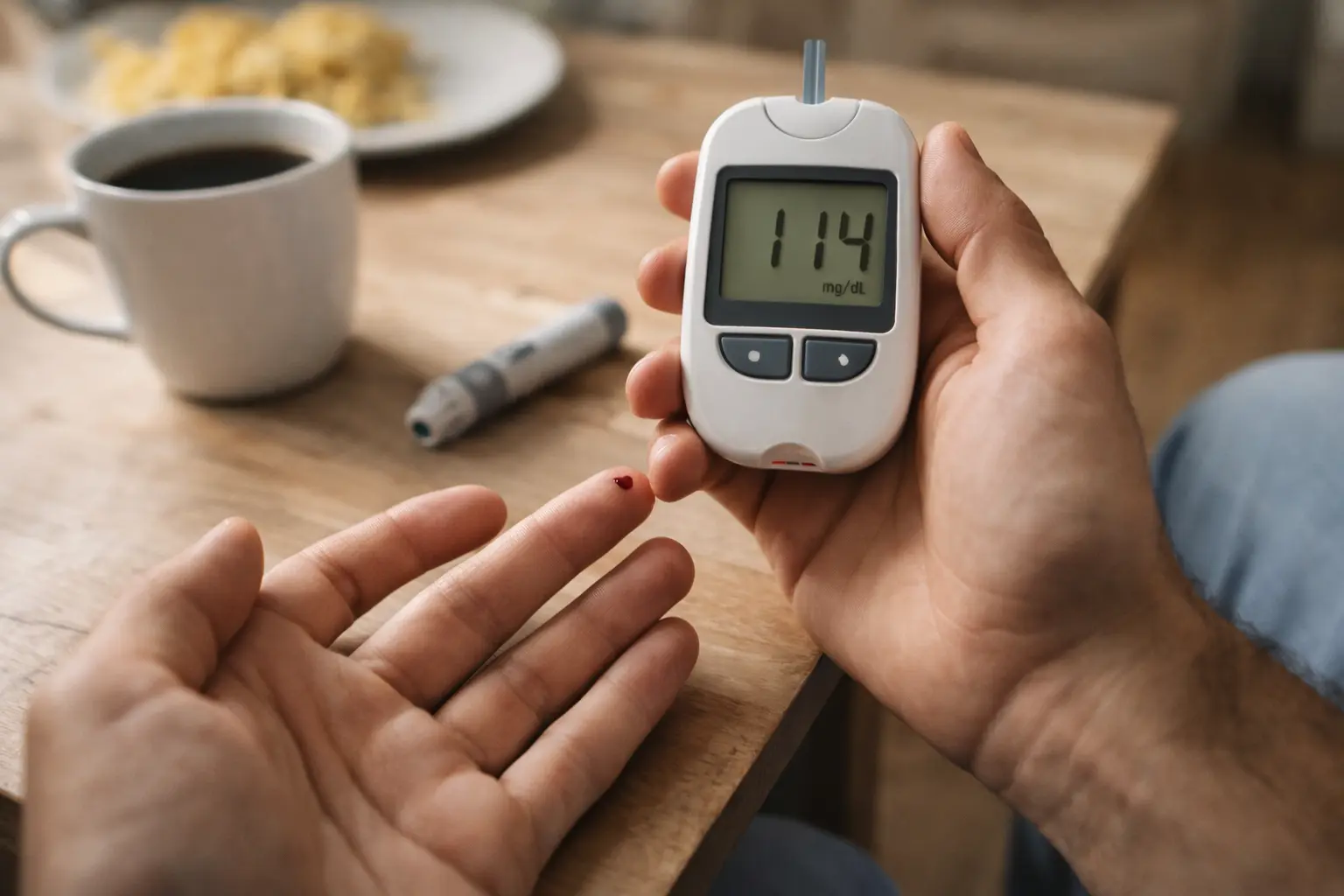
You wake up, check your blood work, and see that number staring back at you—your fasting blood sugar levels are climbing, and nobody’s really explaining what that means or how to fix it without medication.
Understanding fasting blood sugar levels
Fasting blood sugar levels measure glucose concentration in your bloodstream after at least eight hours without food, typically measured first thing in the morning. This metric matters because it reveals how your body manages glucose when it’s at rest, without the interference of meals or daily activity. Normal fasting levels fall between 70 and 100 mg/dL, while 100 to 125 mg/dL signals prediabetes territory. Think of it like checking your car’s idle speed—it tells you something fundamental about how your engine runs when nothing else is demanding its attention. Young adults often dismiss this number because they feel fine, but high fasting blood sugar is a silent signal that your insulin sensitivity is declining. Your pancreas is working harder than it should just to keep glucose in check during rest periods. Understanding this baseline helps you recognize whether lifestyle changes are actually working or if you need additional medical support.
- Learn your personal baseline by tracking fasting levels weekly for two weeks to establish a pattern.
- Schedule a conversation with your doctor to rule out underlying conditions and get personalized targets.
- Recognize that fasting blood sugar responds quickly to diet and exercise changes, often improving within two to four weeks.
Dietary tips to lower high fasting blood sugar
What you eat in the evening directly influences your morning fasting number because your liver continues processing food while you sleep. Swap refined carbohydrates like white bread and sugary cereals for whole grains, legumes, and vegetables that digest slowly and prevent blood sugar spikes before bed. A practical example: instead of a pasta dinner at 7 PM, try grilled chicken with quinoa and roasted broccoli. The fiber in vegetables slows glucose absorption, while protein stabilizes energy levels overnight. Avoid eating large meals within three hours of bedtime, as your body struggles to regulate glucose when you’re horizontal and inactive. Include healthy fats from avocados, nuts, and olive oil because they further slow carbohydrate digestion. One common mistake young adults make is cutting carbs entirely, which backfires because your body becomes carb-sensitive and overreacts when you eventually reintroduce them. Instead, focus on portion control and pairing carbs with protein and fat at every meal.
📘 Fix your day in under 2 minuteschoose where to begin:
Exercise strategies for better blood sugar control
Physical activity improves insulin sensitivity within hours, meaning your cells respond better to insulin and require less of it to move glucose out of your bloodstream. A 20-minute walk after dinner can reduce your next morning’s fasting blood sugar by 10 to 15 mg/dL, especially if you’ve eaten a carbohydrate-heavy meal. Strength training matters equally because muscle tissue is a glucose sink—the more muscle you have, the more glucose your body can store without raising blood sugar. Aim for three resistance sessions weekly, targeting major muscle groups like legs, chest, and back. Young adults often assume cardio is the answer, but resistance training actually creates longer-lasting improvements in fasting glucose. A realistic routine might look like 30 minutes of walking three days weekly plus two 30-minute strength sessions. Consistency beats intensity here; a moderate routine you’ll actually follow outperforms an aggressive plan you’ll abandon after two weeks. Start where you are, whether that’s a 10-minute daily walk or bodyweight exercises at home.
Stress management techniques for blood sugar balance
Cortisol, your stress hormone, triggers your liver to release stored glucose even when you haven’t eaten, which is why chronic stress pushes fasting blood sugar upward. Young adults juggling work, relationships, and financial pressure often dismiss stress as just part of life, but it’s actively sabotaging their metabolic health. Deep breathing exercises for five minutes each morning activate your parasympathetic nervous system, signaling your body that it’s safe to relax and stop dumping glucose into your bloodstream. Yoga, particularly slower styles like Hatha or restorative yoga, combines breathing with gentle movement to lower cortisol over time. Spending 15 minutes in nature, whether a park walk or sitting outside, measurably reduces stress hormones. Meditation apps like Insight Timer offer guided sessions as short as three minutes, making it realistic to fit into a busy schedule. One overlooked strategy is improving sleep quality because poor sleep elevates cortisol and worsens fasting blood sugar. Aim for consistent bedtimes, limit screens an hour before bed, and keep your bedroom cool and dark.
The importance of regular monitoring and follow-up
Tracking fasting blood sugar weekly creates accountability and reveals which lifestyle changes actually move your numbers. Many young adults test once and assume they understand their pattern, but blood sugar fluctuates based on stress, sleep, exercise timing, and menstrual cycles in women. Use a simple spreadsheet or app to log your fasting level, the previous evening’s dinner, your sleep quality, and stress level. Over four to eight weeks, patterns emerge showing you exactly which habits help and which ones don’t. Schedule follow-up appointments with your doctor every three months to reassess your numbers and adjust your approach if needed. Home testing strips are affordable and give you real-time feedback without waiting for lab appointments. A realistic scenario: you test on Monday and see 118 mg/dL, feel discouraged, then test again Friday after a week of better sleep and exercise and see 103 mg/dL. That tangible progress motivates continued effort. Consistency in monitoring transforms abstract health goals into concrete, measurable wins that keep you engaged.
Managing high fasting blood sugar levels as a young adult requires a multi-pronged approach combining dietary adjustments, regular exercise, stress reduction, and consistent monitoring. By understanding what your fasting number means and taking deliberate action through lifestyle changes, you can reverse prediabetic trends and prevent progression to type 2 diabetes. The key is starting now, before complications develop, and staying accountable through regular tracking and healthcare provider communication.
What are the common symptoms of high fasting blood sugar?
Common symptoms include increased thirst, frequent urination especially at night, persistent fatigue despite adequate sleep, blurred vision, slow-healing cuts or infections, and tingling in your hands or feet. However, many young adults experience no noticeable symptoms until fasting levels are significantly elevated, which is why regular testing matters even if you feel fine.
Can high fasting blood sugar levels be reversed naturally?
Yes, with consistent lifestyle modifications including dietary changes, regular exercise, stress management, and adequate sleep, most young adults can lower high fasting blood sugar levels naturally and restore normal metabolic function. Results typically appear within four to eight weeks of sustained effort. Consistency and regular monitoring are essential because sporadic efforts won’t create lasting change.
Others also read:
Disclaimer: This article is for informational purposes only and is not a substitute for professional medical advice. Always consult a healthcare professional for personal guidance.
This guide has been prepared and reviewed by the GlobalHealthBeacon editorial team and reflects current medical research as of 2026. It provides structured, evidence-based information to support informed health decisions.
