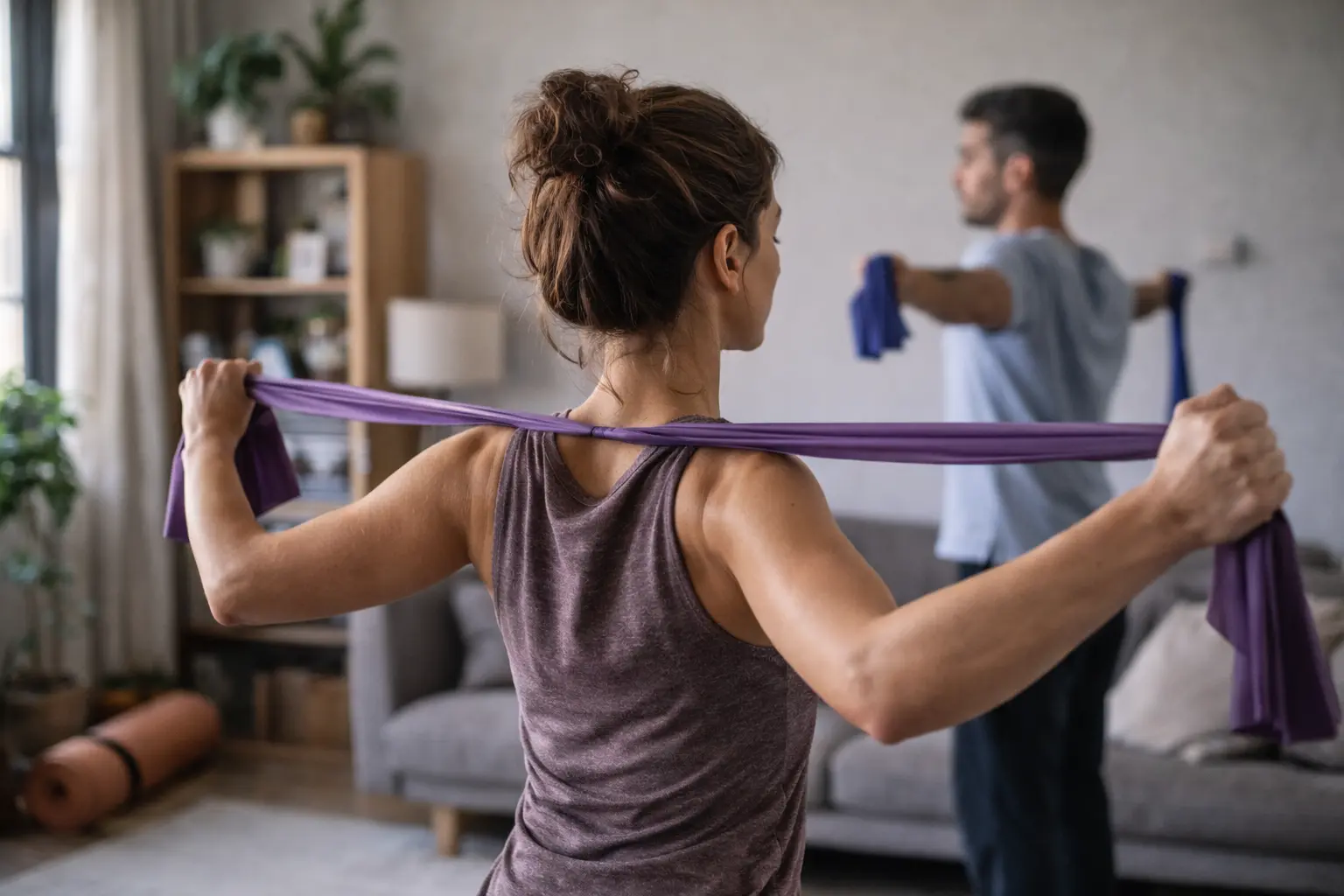
Your shoulders are creeping toward your ears, your lower back aches by 3pm, and you catch yourself hunched over your desk again, but posture correction exercises can actually fix this without expensive treatments or complicated routines.
Effective posture correction exercises
Building better posture starts with targeting the specific muscle groups that have weakened from daily habits. Most women spend hours sitting at desks, driving, or looking down at phones, which gradually tightens the chest and weakens the upper back. The exercises below address these imbalances directly. Shoulder blade squeezes wake up your rhomboids and middle trapezius, the muscles responsible for pulling your shoulders back and down. Planks engage your entire core, which acts as a stabilizer for your spine and prevents your lower back from sagging forward. Wall angels open up your chest and reset your shoulder position, counteracting the rounded-shoulder posture that develops from forward-focused activities. Start with two to three sets of each exercise, holding for 15 to 30 seconds, and perform them daily. You should feel a gentle activation in your muscles, not pain. Common mistakes include holding your breath during planks or forcing your shoulders too far back during squeezes. Instead, breathe steadily and move within a comfortable range. Many women notice improved alignment within two weeks of consistent practice.
- Shoulder blade squeezes: Strengthen the upper back muscles by gently squeezing your shoulder blades together.
- Plank: Engage your core and back muscles with a plank to improve overall posture.
- Wall angels: Perform this exercise against a wall to open up the chest and improve shoulder alignment.
Importance of proper alignment
Posture is not just about looking confident, though that matters. Proper spinal alignment reduces strain on your neck, shoulders, and lower back by distributing your body weight evenly. When you slouch, your head moves forward, adding roughly 10 pounds of pressure to your cervical spine with every inch of forward tilt. Over months and years, this creates chronic pain, tension headaches, and even breathing difficulties. Women are particularly susceptible to postural issues because of differences in muscle mass distribution and hormonal factors that affect ligament laxity. Beyond pain relief, corrected posture improves your lung capacity, digestion, and circulation. Your organs have more space to function when your ribcage is upright. Many women report feeling more energized and sleeping better after improving their alignment. The psychological benefits are equally important: standing tall naturally shifts your mindset toward confidence and presence. Regular posture exercises essentially reset your nervous system, teaching your body its optimal position so good posture becomes automatic rather than something you have to force.
📘 Fix your day in under 2 minuteschoose where to begin:
Maintaining posture throughout the day
Exercises alone are not enough if you spend the rest of your day undoing the progress. Posture maintenance requires awareness and small environmental adjustments. Start by evaluating your workspace: your monitor should be at eye level, your keyboard at elbow height, and your chair supporting your lower back’s natural curve. If you work from home, you might be using a laptop on your couch, which forces your neck and shoulders into a compromised position. Moving to a desk with proper support takes minutes but protects your spine for hours. Set phone reminders every 90 minutes to do a posture check: shoulders back and down, chin parallel to the ground, weight balanced through both feet. During phone calls, avoid cradling your phone between your ear and shoulder, which creates asymmetrical tension. Take short walking breaks to interrupt prolonged sitting. When standing in line or waiting, engage your core slightly and imagine a string pulling the crown of your head upward. These micro-practices throughout the day reinforce the muscle memory built during your exercise routine, making good posture feel natural rather than exhausting.
Seeking professional guidance
While self-directed exercises help many women, a physical therapist or posture specialist offers personalized assessment that targets your specific imbalances. Some women have tight hip flexors pulling their pelvis forward, while others have weak glutes failing to stabilize their hips. A professional can identify these patterns through movement screening and design a progression tailored to your body. This is especially important if you have a history of injury, chronic pain, or conditions like scoliosis or hyperkyphosis. A therapist also teaches you proper form, preventing compensation patterns where stronger muscles take over for weaker ones, which can perpetuate imbalance. Many insurance plans cover physical therapy with a doctor’s referral, making professional guidance more accessible than you might think. Even a single session can clarify which exercises matter most for your body and accelerate your progress. If cost is a barrier, many therapists offer telehealth consultations at lower rates, or you can ask for a brief form check during your next doctor’s visit.
Consistency is key
Posture change is not dramatic or quick, which is why many women abandon their routines after a few weeks. Real transformation happens over months of steady practice. Your muscles need time to strengthen, your nervous system needs time to recognize new movement patterns, and your body needs time to trust that this new alignment is safe. Think of it like learning to type or play an instrument: the first week feels awkward, but by week eight, the movements start feeling natural. Set realistic expectations. You might notice subtle improvements in how your clothes fit or how you feel in your shoulders within three weeks. More significant pain relief typically arrives by week six or eight. The key is treating posture exercises like brushing your teeth, not like a short-term fitness challenge. Many women find success by anchoring their routine to an existing habit: doing exercises right after morning coffee or before bed. Tracking progress through photos taken monthly helps you see changes your brain might miss. Some women also find accountability helpful, whether through a workout buddy, online community, or appointment with a trainer. The women who see lasting results are not necessarily those with perfect discipline, but those who make posture practice convenient enough to sustain.
Effective posture correction exercises for women target key muscle groups to enhance alignment and relieve strain. Consistent practice, professional guidance, and mindful adjustments throughout the day are crucial for significant long-term improvement.
How often should I perform posture correction exercises?
It is recommended to incorporate posture correction exercises into your daily routine for best results. Consistency is key to seeing improvement in your alignment and posture.
Can posture correction exercises help alleviate back pain?
Yes, posture correction exercises can help strengthen muscles that support the spine, potentially reducing back pain over time. However, individual results may vary, and it’s essential to consult a healthcare professional for personalized advice.
Others also read:
Disclaimer: This article is for informational purposes only and is not a substitute for professional medical advice. Always consult a healthcare professional for personal guidance.
This guide has been prepared and reviewed by the GlobalHealthBeacon editorial team and reflects current medical research as of 2026. It provides structured, evidence-based information to support informed health decisions.
