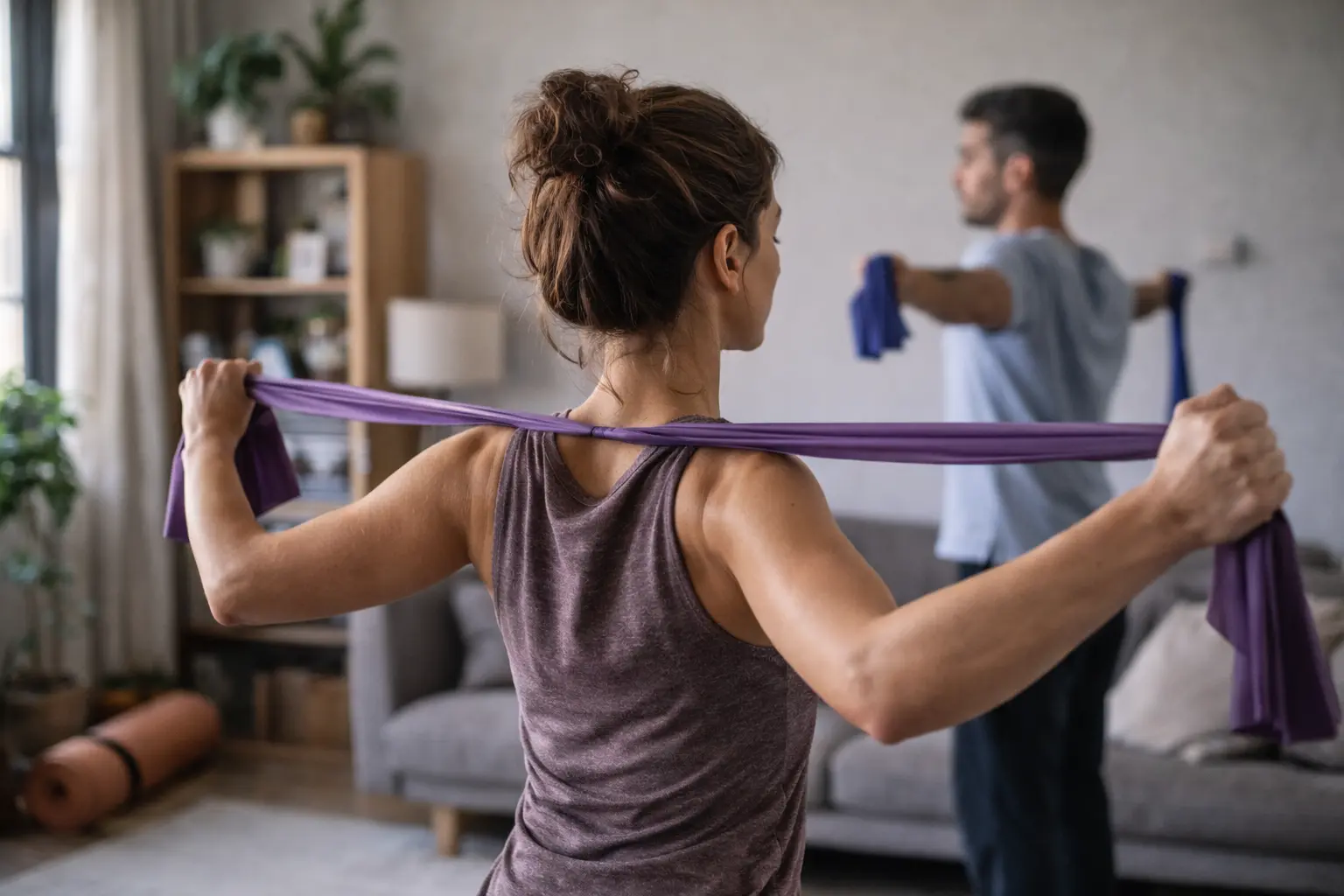
Your back aches, your shoulders creep up toward your ears, and you catch yourself hunching over your phone again, and honestly, posture correction exercises sound exhausting when you’re already dealing with enough pain.
The science behind posture
Posture is far more than just standing tall. It’s the intricate relationship between your bones, muscles, ligaments, and joints working together as an integrated system. When you sit or stand, your spine naturally curves in an S-shape, and these curves exist for a reason: they distribute weight evenly and absorb shock from daily movement. Think of your spine like a stack of building blocks. When those blocks are aligned properly, weight distributes smoothly. When they shift out of alignment, stress concentrates on specific areas, straining muscles and ligaments. Research in biomechanics shows that poor posture forces your muscles to work harder to support your frame, leading to fatigue and discomfort. For seniors, this becomes especially important because bone density naturally decreases with age, making proper alignment even more critical for stability and injury prevention. Your core muscles, which include your abdominals and deep back muscles, act as the foundation for this alignment. When weak, they can’t support your spine effectively, forcing other muscles to compensate.
Benefits of proper posture
The ripple effects of maintaining good posture extend far beyond your back. When your spine is properly aligned, your lungs have more room to expand, allowing for deeper breathing and better oxygen circulation. This improved breathing can enhance cognitive function and reduce fatigue. Your digestive system also benefits: slouching compresses your stomach and intestines, while upright posture gives these organs the space they need to function optimally. Many seniors report that improving posture reduces chronic neck and lower back pain, sometimes significantly. There’s also emerging research suggesting that posture influences mood and confidence. When you stand tall, your body language shifts, which can actually influence how you feel psychologically. Additionally, proper alignment reduces the risk of falls, a major health concern for older adults, because it improves balance and proprioception. Your joints experience less wear and tear when properly aligned, potentially slowing the progression of arthritis. Studies have shown that people with better posture report fewer headaches, better sleep quality, and improved energy levels throughout the day.
Effective posture correction exercises
Improving posture isn’t about forcing yourself into an uncomfortable position. It’s about gradually strengthening the muscles that support your spine and retraining your body’s awareness of neutral alignment. The most effective approach combines targeted strengthening, strategic stretching, and daily habit changes. Your core muscles are the foundation, but many seniors neglect them because they’re not visible like arm muscles. Yet these deep stabilizers are crucial. Chest and shoulder stretches counteract the forward rounding that develops from years of desk work or phone use. Ergonomic adjustments address the environments where you spend most of your time. Body awareness practices like yoga or Pilates teach your nervous system to recognize good posture automatically. Finally, maintaining a healthy weight reduces the burden on your spine. A heavier midsection pulls your center of gravity forward, forcing your back muscles to work overtime to keep you upright. Together, these five approaches create a comprehensive strategy that addresses posture from multiple angles.
- Engage in abdominal exercises like planks and bridges to strengthen your core. Start with modified versions: wall planks or bridge holds while lying on your back. These exercises activate the deep muscles that support your spine without requiring extreme flexibility or strength.
- Incorporate chest stretches using a doorway or wall to open up tight shoulders and chest muscles. Stand in a doorway with your arm bent at 90 degrees, then gently lean forward until you feel a stretch. Hold for 20-30 seconds. This counteracts the forward rounding that develops over decades.
- Adjust workstations and chairs to support good posture. Your monitor should be at eye level, feet flat on the floor, and elbows at 90 degrees. Even small adjustments can prevent strain from accumulating over hours of sitting.
- Mindful movements like Pilates or yoga enhance posture awareness. These practices teach your body to recognize neutral alignment and strengthen stabilizer muscles simultaneously. Many studios offer senior-specific classes that modify poses for safety and comfort.
- Obesity places strain on the spine, so aim for a healthy BMI through balanced nutrition and movement. Even a modest weight loss can significantly reduce pressure on your lower back and improve your ability to maintain upright posture throughout the day.
🔬 Science-backed benefits in 2 minuteschoose where to begin:
Posture improvement progress
Tracking your posture journey keeps you motivated and helps you identify what’s working. Start with a baseline: take a photo of your posture from the side, standing naturally. This becomes your reference point. Many seniors find that mirrors are invaluable for real-time feedback during exercises. Posture apps use your phone’s camera to assess alignment and send reminders throughout the day. Some people benefit from posture braces, which provide tactile feedback when you start to slouch, helping retrain your muscle memory. However, braces work best as temporary tools alongside exercises, not permanent solutions. Keep a simple log noting which exercises you do and how your body feels. You might notice that certain activities, like gardening or cooking, trigger poor posture habits. Identifying these patterns helps you make targeted adjustments. Most importantly, expect gradual progress. Muscle memory takes time to rewire. You might notice improved breathing within days, but structural changes in how you carry yourself typically take weeks to months. Consistency matters far more than intensity.
Consulting with professionals
A physical therapist can assess your specific posture issues and rule out underlying conditions like arthritis or spinal stenosis that might require modified approaches. They create personalized exercise plans based on your individual limitations and goals. Chiropractors and posture specialists offer additional perspectives, though it’s wise to work with licensed professionals. Your primary care doctor can screen for conditions that affect posture, like osteoporosis, and refer you to appropriate specialists. Many insurance plans cover physical therapy, especially if posture problems contribute to pain or mobility issues. A professional evaluation typically involves assessing your alignment in standing, sitting, and moving positions, checking muscle strength and flexibility, and reviewing your daily habits. They might identify surprising culprits: a weak hip on one side, tight calves, or breathing patterns that affect your posture. Getting professional guidance early prevents compensatory patterns from developing. These specialists also teach you how to modify activities you love, so you don’t have to give up hobbies or interests while improving your posture.
Practice makes perfect
Improving posture is genuinely a skill that requires practice, just like learning to play an instrument or a sport. Your nervous system needs time to recognize and reinforce new movement patterns. The first week or two might feel awkward or even uncomfortable as you engage muscles that have been underused. This is normal. Your body is learning. The key is consistency. Even 10 minutes daily of focused posture work beats sporadic hour-long sessions. Many seniors find success by anchoring posture practice to existing habits: do core exercises while your coffee brews, stretch during commercial breaks, or practice body awareness while walking. Over time, good posture becomes automatic rather than something you have to think about constantly. You’ll notice you naturally sit taller, your clothes fit differently, and you move with more confidence. The long-term benefits compound: reduced pain, improved energy, better balance, and enhanced quality of life. Posture improvement is one of the few things within your direct control that yields measurable results. It requires patience and dedication, but the payoff is substantial.
Understanding the science behind posture correction exercises empowers seniors to make informed choices about their spinal health. The evidence supports a multifaceted approach combining core strengthening, targeted stretching, ergonomic adjustments, and professional guidance. Consistency and realistic expectations are essential. Progress takes time, but the benefits of improved posture, reduced pain, and enhanced overall function make the effort worthwhile.
How long does it take to see improvements in posture?
The timeline varies based on individual factors including how consistently you practice, the severity of your current posture issues, and your overall health status. Some seniors notice improved breathing and reduced muscle tension within days. Visible changes in how you carry yourself typically emerge within 3 to 8 weeks of dedicated practice. Structural improvements in spine alignment and muscle strength may take 2 to 3 months. The key is that you’re likely to feel benefits before you see dramatic visual changes. Many people find that maintaining the routine becomes easier once they experience reduced pain or improved energy, which reinforces their commitment to continued practice.
Are posture braces recommended for seniors?
Posture braces can be helpful tools for seniors, particularly in the short term. They provide external support and tactile feedback that reminds you when you’re slouching, helping retrain muscle memory. However, braces work best as supplemental aids used alongside posture correction exercises, not as standalone solutions. Relying solely on a brace without strengthening your core muscles means your muscles never develop the strength needed to support good posture independently. Think of a brace like training wheels on a bicycle: useful for learning, but you eventually need to ride without them. Some seniors benefit from wearing a brace for a few hours daily while doing exercises, then gradually reducing brace use as their muscles strengthen. Always consult with a healthcare provider or physical therapist before using a posture brace to ensure it’s appropriate for your specific situation and that you’re using it correctly.
Others also read:
Disclaimer: This article is for informational purposes only and is not a substitute for professional medical advice. Always consult a healthcare professional for personal guidance.
This article has been prepared and reviewed by the GlobalHealthBeacon editorial team and is based on current medical research and published scientific literature available in 2026. It provides structured, evidence-based information to support informed health decisions.
